
Preparing for epidemics
The horrors of the year 2020 are still fresh in the minds of billions of people across the world. That was the time when the entire world came to a standstill, leaving governments unable to figure out how to contain a novel coronavirus whose danger levels were unprecedented. According to data released by Statista, around 6.86 million died due to the coronavirus globally as of May 2023.
On Sunday (Dec 24), the World Health Organization (WHO) issued a new Covid-19 epidemiological update on the global and regional situation with information on hospitalizations, ICU admissions, updates on the variants of interest and variants under monitoring, It said: the number of new Covid-19 cases has increased by 52 per cent during the 28-day period of November 20 to December 17, 2023 as compared to the previous 28-day period, with over 850,000 new cases reported.
These figures are important for every government which is interested in keeping their countries free from future epidemics and pandemics. The findings have been released a few days before the International Day of Epidemic Preparedness (observed today, December 27, across the world), and they can definitely allow world leaders to come together to tackle structural loopholes apparent in the healthcare system.
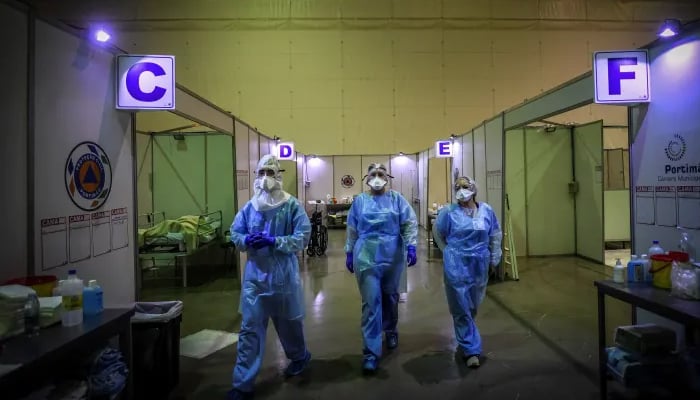
That we may witness more epidemics and pandemics is an unfortunate reality from which we cannot escape. In a world whose consumption habits are a detriment to the environment and often lead to practices that endanger workers’ lives, widespread diseases will be more common. In the recently concluded COP28 meeting, governments for the first time acknowledged how climate change affects people’s health, but it was rather disappointing to note that most countries failed to come up with a draft that compels the world to move away from fossil fuels and shift to renewable energy. There is no time to waste. The past carries great lessons for most countries. One thing that helped manage the Covid-19 crisis was technology and government intervention. In an economically weak country like Pakistan, treatment for most patients could only be possible after the provincial governments set up isolation centres where Covid-19 patients were given the treatment they needed for free. In Karachi and Lahore, expo centres were turned into makeshift healthcare units, and many people, especially those from low-income households, were able to get the urgent medical care.
This is the model that we need to adopt and try to move away from the concept of private healthcare, where a person’s chances of a better life are linked with his/her ability to afford the high medical costs. Similarly, technology also played a big role in underdeveloped countries where SOS calls for oxygen cylinders were answered in minutes. The Covid years saw the essence of community living, where people came forward to fight together against the virus. The Covid-19 pandemic was an awful time, but it can also serve as an opportunity to do better and strengthen healthcare systems. Countries also have to invest in healthcare, which means respecting the staff working at healthcare centres and building well-equipped hospitals that do not collapse under pressure.


