
UK judge delays Arif Naqvi’s extradition to US
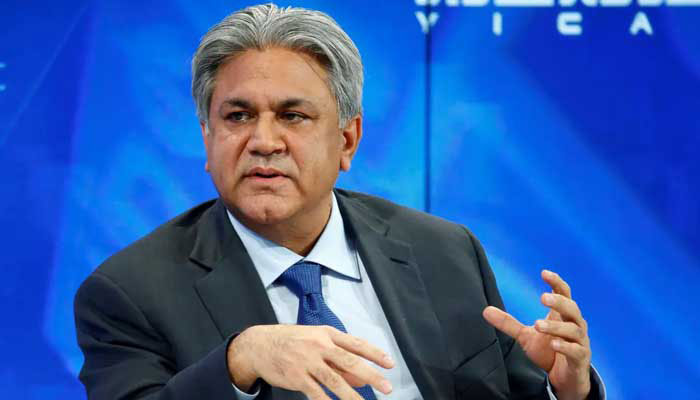
LONDON: A London High Court has ruled that the decision to extradite Pakistani businessman Arif Naqvi to America should be delayed until a legal test on the capacity to resist the impulse of suicide is made in the case of Indian diamond tycoon Nirav Modi, who is currently in prison at Wamdswroth jail and wanted by the Indian government under an extradition warrant.
On Wednesday, upon hearing brief initial evidence provided by Arif Naqvi’s lawyer Edward Fitzgerald QC and lawyer representing the United States government, Mark Summers QC, Judge Philippa Whipple stated that she would prefer to adjourn the matter until a similar point of law was resolved in another high-profile extradition case - that of Nirav Modi, an Indian diamond tycoon who is currently fighting an Indian extradition bid to take him back to India where he would face fraud charges of nearly $2 billion.
Judge Whipple said: “The preferential way forward is to adjourn this permission application. I do that primarily on the basis of the district judge’s decision where she noted that at this point there was no case to be run under Section 91 of the Extradition Act 2003.”
In her ruling, Judge Whipple held that Naqvi “should have the opportunity” to see the outcome of Nirav Modi’s appeal which challenges the suicide test as a matter of law to determine the risks to the life of an accused if extradited. The judge said the outcome in Modi’s case could allow Naqvi to argue that his extradition would be oppressive if the bar is lowered
The point of law that is in contention in both the cases is in relation to Section-91 - under the Extradition Act of 2003 - which deals with whether someone’s mental condition would remove their capacity for self-harm and potential suicide. Psychiatrists acting for both Naqvi’s lawyers and the US government have concluded that the Karachi-born Abraaj founder suffers from serious mental health illnesses that would likely lead him to a high risk of suicide.
This same test is also at the heart of Julian Assange’s defence against the United States government in his own extradition challenge that he faces at a UK jail. In that case, the test was met and the US government appealed on the basis that they felt the court did not apply the test correctly on the basis that the decision was on future potential deterioration vs. his current state.
Arif Naqvi’s appeal for leave also relates to Article 3, where arguments have been made on the basis of the lack of fundamental human rights in the US prisons based on abhorrent prison conditions that have been uncovered in recent years, notably at the institutions, such as the MCC, which has since closed; the MDC and the ECC, the latter of which the US government intends to send Naqvi.
At its peak, The Abraaj Group was the largest private equity firm in the world operating in emerging markets, with over US$ 14 billion of assets under management. Largely focused on what they called impact investing, it is said to have indirectly employed close to a million people through its portfolio companies. Following the stunning collapse of The Abraaj Group in 2018 alongside a delayed sale of its prized asset, K-Electric, Naqvi was arrested upon returning to Heathrow Airport from Islamabad in April 2019 under a US indictment with 16 counts of fraud and related money laundering said to have been committed between 2014 and 2018. The American government described him as the “leader of a criminal enterprise that courted Abraaj”, arguing that he had set up Abraaj from the very beginning with criminal intent to defraud US investors.
Naqvi has through his lawyers continued to strongly protest the disturbingly long, 300-year sentence. He said that the charges against him are unjustly motivated and he has been subjected to a media trial to fulfill the vested interests. Furthermore, it was accepted in the court earlier in his proceedings that all investors’ monies were paid back with interest to the investors in the disputed Abraaj Global Healthcare fund.
In January this year, the Westminster Magistrates’ Court ordered the extradition of Abraaj founder and businessman Arif Naqvi to face charges of fraud, money-laundering and racketeering which carry, in total, an incredible 300 years in prison for white-collar offences.
Senior District Judge Emma Arbuthnot had ordered that the Pakistani national businessman should be extradited to the US and that his safety and rights will not be at risk in the US jail as argued by Naqvi’s lawyer during the extradition hearings.


