Greenland as geopolitical hotspot: Why Arctic region matters for US, China & Russia?
Greenland is a resource-rich island of 836,000 square miles and an autonomous territory of Denmark
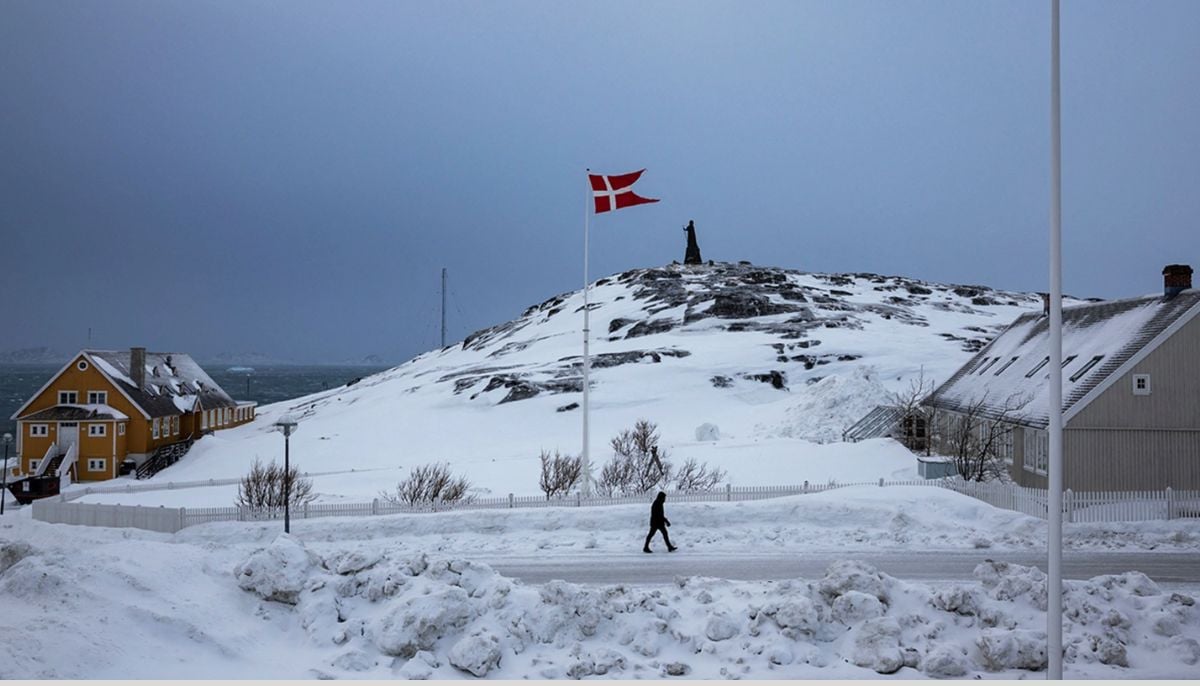
Greenland has become a central geopolitical hotspot as US President Donald Trump repeatedly expressed the desire to take control of autonomous territory, citing national security concerns.
While speaking at a meeting with oil and gas executives at the White House, the US President justified the reason to take control of the strategically important Arctic.
“If we don’t do it, Russia or China will take over Greenland. And we’re not going to have Russia or China as a neighbor,” Trump said.
Given the latest remarks and growing interests of the US in the Arctic territory, it is not wrong to say that Greenland is at the crossroads of geopolitical tensions. Besides America, China and Russia are also eying to take leverage of strategically important Danish territory.
Here are the details of what Greenland means for the US, China, and Russia.
Greenland is a resource-rich island of 836,000 square miles which used to be a Danish colony. But it now is an autonomous territory of Denmark which is situated in the Arctic.
Strategic location of Greenland
Greenland is located between North America and Europe, at the gateway to the Arctic Ocean and North Atlantic. This location along with potential northern shipping routes makes it essential for dominating the North Atlantic for both security and trade.
_updates.jpg)
The Northern Sea Route (NSR) and Transpolar route could cut Asia-Europe shipping time by 30-40 percent.
Rich with Natural resources
Greenland strategic importance is further strengthened by natural resources, including oil, gas, and rare earth minerals. The control over these resources will give the countries dominance over the global economy as these minerals are used in everything from electric cars, EV batteries, semiconductors and wind turbines to defense equipment.
According to a 2023 survey conducted by the European commission, 25 of 34 minerals deemed “critical raw materials.”
The key minerals include Neodymium, Praseodymium, terbium, and dysprosium. Significant reserves of metals, including lithium, cobalt, graphite, nickel, lead, and zinc are also included.
Global warming has made the inaccessible treasure trove of resources accessible to many countries, escalating the competition.
Why does the US want to take control of Greenland?
The answer lies in Arctic territory’s strategic location which makes Greenland highly suitable for the US. Having offered the shortest route from North America to Europe, the US could gain upper hand for its defense and ballistic missile early warning system.
_updates.jpg)
The region is highly suitable for placing early warning systems in the wake of missile attacks and monitoring Chinese and Russian vessels.
Trump told reporters last month, “We need Greenland for national security, not for minerals.”
Greenland also hosts the US-operated Pituffik base. Being a key part of the US defense system, the base hosts space surveillance systems and early warning radar.
Natural resources are also another driving force behind this control. The possession of autonomous territory will give the US edge to compete in tech and semiconductor on a par with China, thereby reducing dependency on it.
What does Greenland mean for China?
In 2018, China released its first official Arctic Policy White Paper, declaring itself as a “Near-Arctic State.” It also views Greenland as a vital part of its “Polar Silk Road” for Arctic shipping.
_updates.jpg)
Being the gateway between the Arctic and Atlantic, Greenland offers short shipping lanes to European markets, bypassing the US-monitored Strait of Malacca.
China is also probing the region by sending 10 scientific expeditions to the Arctic. The country also built research vessels to survey the icy waters in the north of Russia.
The abundance of critical earth minerals in Greenland also gives China an edge over the semiconductor industry as it controls 60–70% of global rare-earth mining and processes ~90% of rare earths worldwide.
Footprint of Russia in Greenland
Russia views Greenland as a strategic counterweight in its backyard. Greenland sits on GUIK Gap (Greenland-Iceland-UK), a critical maritime chokepoint.
It is important for Russia to monitor this point in order to keep running its shipping routes unrestrictedly.
Russia has also been involved in militarization of the Arctic as Greenland acts as a potential flank for NATO.
_updates.jpg)
Russia has reopened Soviet-era Arctic bases, deployed S-400 air defense systems, installed new icebreakers for the northern sea route, and strengthened its Northern fleet.
Russian President Vladimir Putin said during an address in March 2025 at the International Arctic Forum, “Russia has never threatened anyone in the Arctic, but we will closely follow the developments and mount an appropriate response by increasing our military capability and modernizing military infrastructure.”
Russia is also collaborating with China to develop Arctic shipping routes, aiming to deliver more oil and gas to Beijing. In 2025, the oil shipments from Russia to China through NSR surged by a quarter.
Unfortunately, in the midst of geopolitical competition, the countries have forgotten about the Greenlanders and their rights.
In a joint statement issued by Greenland's party leaders said, “We do not want to be Americans, we do not want to be Danes, we want to be Greenlanders. The future of Greenland must be decided by the Greenlandic people.”


-
 Trump defends himself and Elon Musk after Zelenskiy's criticism over Starlink
 -
 Sanae Takaichi under fire for saying women work longer hours because of makeup and chores
 -
 Trump urges Zacharia to reconsider White House spokeswoman role
 -
 Amber Guyger, Dallas officer who shot Botham Jean in his own apartment, released on parole
 -
 Canada changes Express Entry rules for high-paying jobs and removes LMIA requirement
 -
 Istanbul hit by worst floods since 1942, as record rainfall kills four
 -
 Elon Musk's $158 million GOP donations revealed in new federal election filings
 -
 Pope Leo and Putin hold phone call over Ukraine war as Vatican seeks humanitarian ceasefire
-
 Alex Murdaugh lawyers question police handling of murder weapons ahead of retrial
 -
Cyprus court allows British dad to return home after son's fatal fall at holiday resort
-
IMF chief warns AI risks could outweigh benefits without proper safeguards
-
China ready to cooperate with EU on global economic imbalances