
Punjab blames sugar mills for price hike
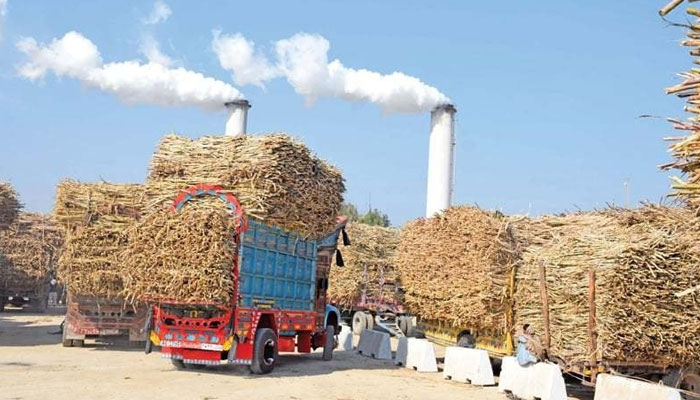
LAHORE: The Punjab government on Thursday put blame on sugar mill owners for what it said ‘artificially’ jacking up sweetener’s price.
“Most of the sugar mills are involved in hoarding and black-marketing of sugar. They are not selling sugar and are thus artificially jacking up prices to mint money,” said Zaman Wattoo, provincial cane commissioner.
However, sugar mill owners contended the argument.
“Do a survey of the market to know sugarcane price being offered to farmers. See, if price of sugarcane is higher, the cost of sugar will naturally tend to increase accordingly,” Waheed Chaudhry, executive member of Pakistan Sugar Mills Association (PSMA) told The News.
Against the official price of Rs200 per maund of sugarcane, farmers are getting Rs215 to Rs250 per maund, said Khalid Khokhar, president of Pakistan Kissan Ittehad.
“However, now from today, sugar mill owners have formed a pool to lower price of sugarcane to Rs200, which is a sheer injustice with the growers,” Khokhar said.
Farmers are wary of the policies of sugar manufactures as they said millers have created a pool to reduce sugarcane price. There is no basis to enhance price of sugar as mill owners are currently offering little premium on sugarcane to farmers, they said.
The cane commissioner office directed the mills to provide data of sale, “which the mills are dilly-dallying.”
“Such act clearly shows that they are involved in selling sugar off-the-book. By doing so, they are earning hefty profits on one hand and evading sales tax on the other,” Wattoo said.
Chaudhry of PSMA denied allegation of not reporting sugar sale data to the government. “The tax collection body is there to monitor sugar supply chain so there is no question of evading general sales tax. Even the FBR asked cane commissioner to depute his staff at sugar mills.”
Since Cane Commissioner’s office is not mandated to take action against hoarding or profiteering, it will analyse the information of sale once received and sent to concerned government agencies for action. “But what can be safely said is that this is an artificial shortage caused by some of the unscrupulous sugar millers and the hoarders,” commissioner Wattoo said.
The provincial government notifies minimum support price of sugarcane before start of every crushing season in accordance with Punjab Sugar Factories Control Act 1950. The mills are bound to start crushing season by present government in the first week of November through an ordinance. According to the law, the sugar mill owners are required to make payment of notified sugarcane price to the sugarcane growers within prescribed time after delivery of sugarcane.
Market insiders said the case of mounting ex-mill sugar price in the middle of crushing season has been unheard of as there are no real basis on which price of sugar can be increased. Not only harvesting of sugarcane continues satisfactorily but sugar demand is low this year due to restrictions on commercial and social activities due to Covid-19 outbreak, they added.







-
 Ariana Grande Opens Up About ‘dark’ PTSD Experience
 -
 Angelina Jolie Says It Loud: 'Scars Define My Life'
 -
 Climate-driven Wildfires Scorch Some Of World’s Oldest Trees In Patagonia
 -
 King Charles’ Ignorance Over Andrew & Jeffrey Epstein Not True? Foreign Office, MI6’s Work Comes Out
 -
 Police Detained 'innocent' Man In Nancy Guthrie's Kidnapping
 -
 Co-founders Of Elon Musk's XAI Resigned: Here's Why
 -
 Dakota Johnson Reveals Smoking Habits, The Leading Cause Of Lung Cancer
 -
 FAA Shuts Down El Paso Airport, Flights Suspended For 10 Days: Here’s Why
 -
 Kate Middleton, Prince William's Major Plan Revealed After Statement On Andrew Scandal
 -
 Teacher Abused Children Worldwide For 55 Years, Kept USB Log Of Assaults
 -
 Nick Jonas Set To Showcase Acting Skills In Upcoming Thriller 'Bodyman'
 -
 Milano-Cortina 2026: Assessing Italy’s Winter Olympics Economic Growth
 -
 Chris, Liam Hemsworth Support Their Father Post Alzheimer’s Diagnosis
 -
 Savannah Guthrie Expresses Fresh Hope As Person Detained For Questioning Over Kidnapping Of Nancy
 -
 ByteDance Suspends Viral Seedance 2.0 Photo-to-voice Feature: Here’s Why
 -
 Tom Hanks Diabetes 2 Management Strategy Laid Bare