
Spain imposes state of emergency in Madrid
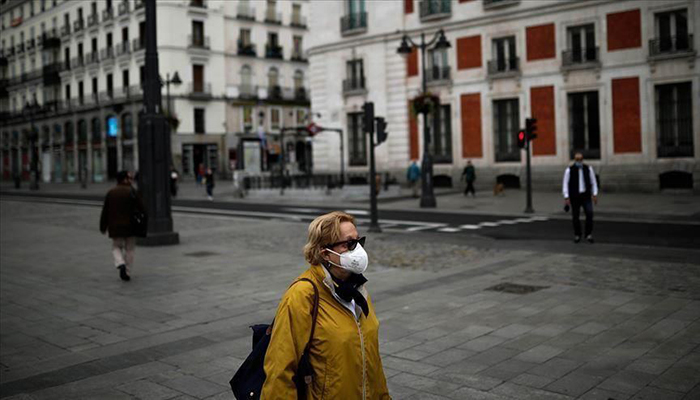
MADRID: Spain’s government on Friday declared a state of emergency in and around Madrid to enforce a partial lockdown to curb rampant virus infections, overriding opposition from the regional authorities.
"The government has decided to declare a state of emergency... for the next 15 days," said Health Minister Salvador Illa following an urgent cabinet meeting after the region’s top court shot down restrictions imposed on 4.5 million people in and around the capital.
"Protecting the health of Madrid’s people is absolutely essential," he said, pointing to figures showing 66 people had died over the past week and some 500 were "fighting for their lives in intensive care".
"Patience has a limit," he said, pointing the finger at Madrid’s regional authorities for failing to act. "Measures must be taken to protect the health of the people of Madrid and to prevent this from spreading to other regions."
Meanwhile, Russia registered a record daily number of new coronavirus infections on Friday, surpassing its previous high from May. Officials reported 12,126 new infections, edging above the previous high of 11,656 on May 11 and bringing the total number of confirmed cases to 1,272,238 -- the fourth highest in the world.
Widespread restrictions were lifted after new cases began to drop in May, and officials have shown no sign of moving to reimpose such broad measures. But the head of consumer watchdog Rospotrebnadzor described the situation as increasingly difficult and warned new measures could lie ahead.
"Either we observe (restrictions) or we will have to introduce new measures," said Anna Popova. Moscow -- the city with the highest number of cases by far -- reimposed some measures last month. The capital’s mayor Sergei Sobyanin ordered over-65s to stay at home and told employers to keep at least a third of their staff working from home.
Russia has confirmed 22,257 deaths since the start of the pandemic, but critics have accused officials of underreporting deaths to hide the severity of the situation.In a related development, Chancellor Angela Merkel warned on Friday that coronavirus hotspots in Germany will be given 10 days to tackle their rising case numbers before tougher action is taken.
"We all sense that the big cities, the urban areas, are now the arena where we will see if we can keep the pandemic under control in Germany as we have done for months, or if we lose control," Merkel said after talks with mayors. "The coming days and weeks will decide how Germany gets through the pandemic this winter."
Capital Berlin and financial hub Frankfurt both joined a growing list of high-risk zones on Germany’s map this week, after crossing the threshold of 50 new cases per 100,000 people over the past seven days.
Among the new measures that kick in once that level is reached are wider mask requirements, including outdoors in busy areas, as well as earlier closing hours for bars and restaurants and limits on alcohol sales and group sizes, Merkel and the mayors agreed.
Merkel said past experience had shown it takes "about 10 days" to see if such efforts succeed in slowing the outbreak. If the infection rate does not stabilise in that time, "further targeted restrictions are unavoidable in order to further reduce public contacts", according to the text agreed at the talks.
Germany, long seen as having managed the pandemic better than most European countries, is on heightened alert after the number of new daily cases spiked from 2,828 on Wednesday to just over 4,000 cases on Thursday -- the highest daily figure since early April.
The country’s Robert Koch Institute for disease control warned that the virus could "spread uncontrollably" if people let their guard down. On Friday, the RKI reported 4,516 new cases. Merkel again asked Germans to stick to the well-known rules of mask wearing, hand washing and social distancing.
She also urged them to use the country’s coronavirus warning app and regularly air out rooms as colder weather approaches and people spend more time indoors. The veteran chancellor said she understood that the earlier closing hours and curbs on alcohol sales would hit the struggling food and hospitality sector hard.
But she said her goal was to avoid the kind of harsh lockdowns that brought Europe’s top economy to a standstill in the spring and kept millions of children home from school and daycare.
She also issued a direct appeal to young people, who have been seen as driving the current spike in infections, urging them to think of the health of elderly relatives and also of their own job and education prospects.
"It will all come back: partying, having fun," she said. "But what matters now is something else." "We have proven that we can stick together against all this. And we must continue to do so."





-
 Jessie Buckley Reveals Why BAFTA Win Felt Extra 'special' With Cillian Murphy
 -
 Halle Berry Reveals Bedroom Performances That Are Off-limits In Her Engagement To Van Hunt
 -
 Why Nicole Kidman 'not Rushing' Into Love After Split From Keith Urban?
 -
 Benny Blanco's Dirty Feet In Debut Podcast Divide The Internet
 -
 Jeffrey Epstein Blamed King Charles As Andrew Left Trade Enjoy Job
 -
 King Charles Asked To Lean On Princess Anne To Avoid ‘media Circus’
 -
 Passenger Wins £10,000 Payout From Heathrow Airport After 100 Ml Liquids Dispute
 -
 Eric Dane's Costar Under Fire For Hurling Accusations At Him After His Death
 -
 Paul Anthony Kelly Breaks Silence Over Online Discussion About His Chest Hair: 'I Own It'
 -
 Queen Camilla Greets The Paddington Bear At BBC’s 500 Words Grand Final
 -
 Chinese Astronauts Finally Reveal Why Spacecraft Left Them ‘stranded’ For 437 Days In Space
 -
 Khloe Kardashian Reacts To AI Videos With Dad Robert Kardashian Kissing Her: 'That Freaks Me Out'
 -
 Sinitta Makes Shock Admission About Marriage To Andy Willner Post Simon Cowell Heartbreak
 -
 Bill Gates Calls Ties To Jeffrey Epstein 'huge Mistake,' Reveals Past 'affairs'
 -
 Switzerland Announces One-time Compensation For Swiss Bar Fire Victims
 -
 Ryan Coogler Shares Thoughts About Building Community Of Actors Amid 'Sinners' Success