
Skin-crawling discovery: ‘body farm’ scientists find corpses move
An Australian scientist has proved that human bodies move around significantly for more than a year after death, in findings that could have implications for detectives and pathologists around the world.
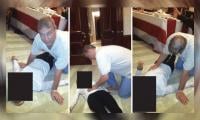
After studying and photographing the movements of a corpse over 17-months, Alyson Wilson told AFP on Friday that she found humans don’t exactly rest in peace. In one case study, arms that began held close to the body ended up flung out to the side.
"We think the movements relate to the process of decomposition, as the body mummifies and the ligaments dry out," she said. To carry out her unusual form of people watching, Wilson took the three-hour flight from Cairns to Sydney every month to check on the progress of a cadaver.
Her subject was one of seventy bodies stored at the Southern Hemisphere’s only "body farm", which sits at a secret bushland location on the outskirts of Australia’s largest city. Officially known as the Australian Facility for Taphonomic Experimental Research (AFTER), the farm is carrying out pioneering research into post-mortem movement.
Wilson and her colleagues were trying to improve a commonly used system for estimating the time of death using time-lapse cameras and in the process found that human bodies actually move around significantly.
Her findings were recently published in the journal "Forensic Science International: Synergy". A better understanding of these movements and the rate of decomposition could be used by police to estimate time of death more accurately.
She hopes the knowledge could, for example, narrow down the number of missing persons that could be linked to an unidentified corpse. A better understanding of post mortem movement could also help to reduce the incorrect cause of death or misinterpretation of a crime scene.
"They’ll map a crime scene, they’ll map the victim’s body position, they’ll map any physical evidence which is found, and they can understand the cause of death." The CQ University criminology graduate says she started her unique project after a trip to Mexico to help classify Mayan-era skeletal remains.
"I was fascinated with death from a child and was always interested in how the body breaks down after death." "I guess that comes about from being raised on a farm and seeing livestock die and watching that process," she said.
"Once I observed a movement in a previous study, I started researching and couldn’t find anywhere in the world that looks at quantifying the movement, so I thought OK, I’m going to do this."





-
 Bangladesh Sees High Turnout In Landmark National Election
 -
 Lufthansa Cancels Hundreds Of Flights Amid Pilot And Cabin Crew Strike
 -
 Video: Prince Harry Tears Up Talking Of His Court Case & Children: ‘Don’t Feel Shame Even If A Judge Makes Demands'
 -
 King Charles Issues New Statement For ‘carers’ Two Days After Promising To Support Police Action Against Andrew
 -
 Gene Simmons Makes Major Claim Against Rock & Roll Hall Of Fame
 -
 Vladyslav Heraskevych Disqualified From Winter Olympics 2026 Over Helmet Controversy
 -
 Late James Van Der Beek Inspires Bowel Cancer Awareness Post Death
 -
 ByteDance’s New AI Video Model ‘Seedance 2.0’ Goes Viral
 -
 Archaeologists Unearthed Possible Fragments Of Hannibal’s War Elephant In Spain
 -
 Khloe Kardashian Reveals Why She Slapped Ex Tristan Thompson
 -
 ‘The Distance’ Song Mastermind, Late Greg Brown Receives Tributes
 -
 Taylor Armstrong Walks Back Remarks On Bad Bunny's Super Bowl Show
 -
 Pal Exposes Sarah Ferguson’s Plans For Her New Home, Settling Down And Post-Andrew Life
 -
 James Van Der Beek's Impact Post Death With Bowel Cancer On The Rise
 -
 Blake Lively, Justin Baldoni At Odds With Each Other Over Settlement
 -
 Thomas Tuchel Set For England Contract Extension Through Euro 2028