Archaeologists unearthed possible fragments of Hannibal’s war elephant in Spain
A 2,200-year-old bone unearthed in Spain could be from one of Hannibal’s war elephants used during the Second Punic War
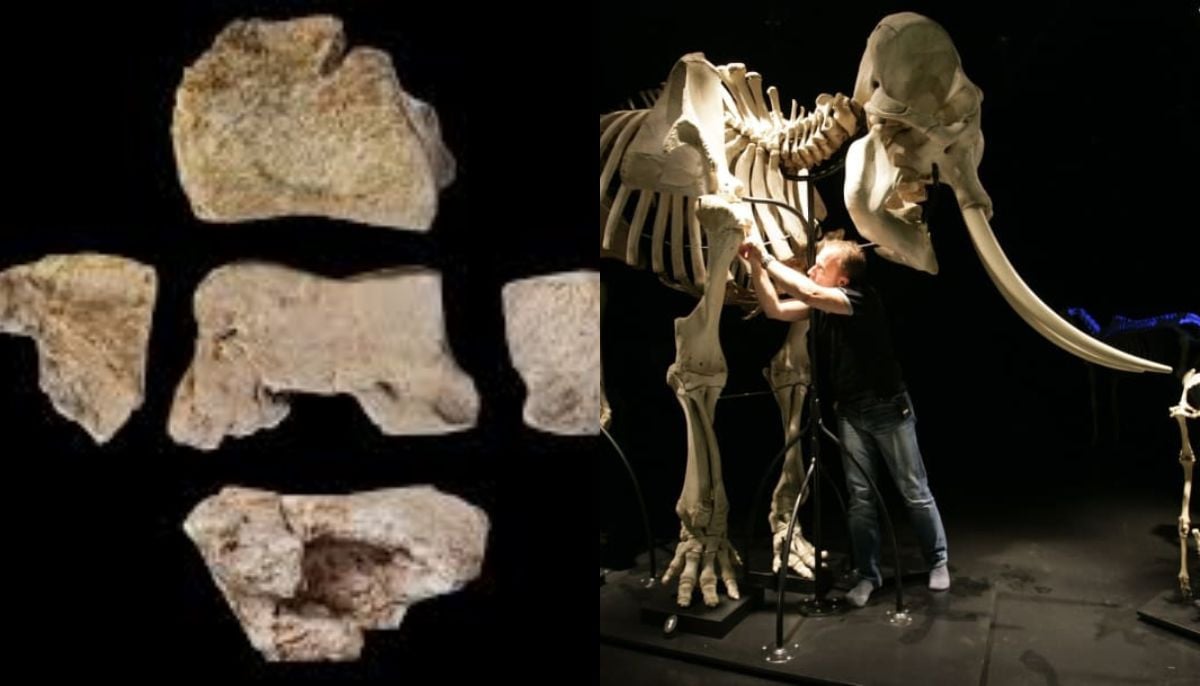
Archaeologists working near Seville unearthed a fossilized ivory fragment and a bronze harness fitting and they've found a bone that could be from Hannibal’s war elephant. Historical narratives reveal that 37 pachyderms marched with Hannibal and his army across the Iberian Peninsula and over the Pyrenees to southern Gaul.
An archaeologist at the University of Cordoba and lead author of the study told Live Science: “This bone could prove to be groundbreaking. Until now there was no direct archaeological evidence for the use of these animals.”
The bone was discovered during archaeological excavations in a southern Spanish village in a soil layer carbon-dated back to approximately 2,250 years ago. Martinez Sanchez noted that it is currently impossible to determine whether the animal was an Asian elephant.
This was the same species that the Greek king Phyrus of Epirus-known for his appellative “Pyrrhic victory”-used against the Romans around 280BC, a decade before the First Punic War when he intervened in southern Italy. Analysis suggests the fragment could belong to an extinct subspecies of African elephant. These animals, favored by the Carthaginians, were beasts and were brought to Spain specifically for that purpose.






-
 SpaceX IPO buzz intensifies as strategists debate $2 trillion valuation
 -
 China to launch Shenzhou 23 crew to Tiangong space station
 -
 Antarctic blizzard sends fuel containers floating on an iceberg: Here’s why
 -
 SpaceX Starship test flight succeeds despite engine failures
 -
 Is this Earth 2.0? NASA’s James Webb telescope spots ‘rare’ giant exoplanet
 -
 SpaceX Starship launch delayed again: Here’s what went wrong
 -
 Why do scientists think Neptune’s moon Nereid survived violent cosmic collision?
 -
 NASA set to unveil major Moon Base strategy and mission update
-
 SpaceX’s upgraded Starship V3 ready for high-stakes test flight: Where to watch live
 -
Scientists hatch live chickens from 3D-printed eggshells: Could artificial wombs be next?
-
SpaceX: Starship V3 all set for debut launch ahead of IPO
-
Four alien species recovered from crashed UFOs, Ex-CIA researcher claims