
Govt, sugar mills fix ex-mill price at Rs165/kg
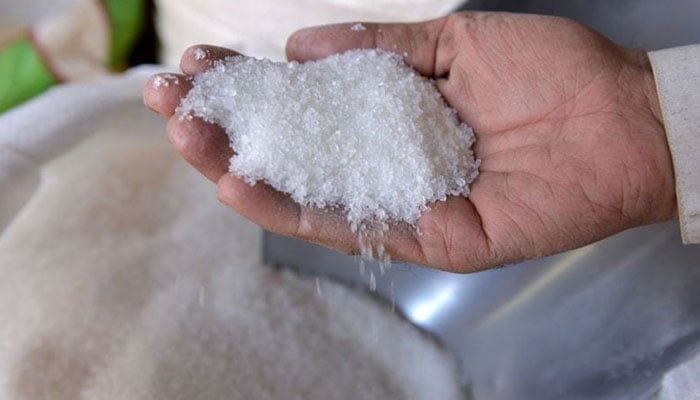
ISLAMABAD: In a bid to rein in runaway sugar prices, the government and sugar mill owners have agreed to fix the ex-mill rate at Rs165 per kilogram, the Ministry of National Food Security announced on Monday, directing provinces to ensure availability at the new price.
The agreement follows weeks of public outcry over sugar retailing as high as Rs200 per kilogram in many areas of the country. Officials blamed the surge on hoarding and manipulation by sugar cartels, despite a temporary suspension of import duties meant to ease supply.
The Pakistan Sugar Mills Association also confirmed to The News that it has reached an agreement with the government to fix the ex-mill sugar price at Rs165 per kilogram.
Notably, on March 18, 2025, Deputy Prime Minister and Foreign Minister Ishaq Dar announced a retail sugar price cap of Rs164 per kilogram, with the ex-mill rate set below Rs159. However, the directive was largely ignored, and prices never dropped below Rs180 per kg — far from Dar’s target — and instead climbed close to Rs200 per kg recently.
However, the move to import $300 million worth of sugar triggered political backlash. Former caretaker privatisation minister Fawad Hasan Fawad slammed the decision, calling it “misguided” and demanding a policy rethink. “The food and beverage industry, not the common man, is the biggest sugar consumer. Surprised?” Fawad posted on X, questioning the true beneficiaries of the imports.
Fawad is former civil servant who served in BPS-22 grade as the principal secretary to three prime ministers -- Nawaz Sharif, Shahid Khaqan Abbasi and Imran Khan, and later as caretaker federal minister for privatisation.
Meanwhile, the International Monetary Fund (IMF) objected to the government’s policy to grant blanket tax exemptions on the import of 0.5 million tons of sugar, indicating that it might distort the domestic market.
The Federal Board of Revenue (FBR) also stopped the sugar millers from lifting the sugar for Rs150 to Rs155 per kg to deduct taxes at a time when the retail price of the sweetener was crossing Rs200 per kilogram at the retail stage.
The sugar millers are blaming the digital invoicing imposed by the FBR for creating hurdles, as the supply got disturbed, and prices were further escalating in the market.
The FBR had granted tax exemption on account of Income Tax, Sales Tax, and Customs Duty on import and subsequent supply of white crystalline sugar up to 500,000 metric tons by Trading Corporation of Pakistan (TCP) or the private sector. The TCP has floated a tender to import 0.5 million tons of sugar till September 30, 2025.
“Yes, the IMF objected over the FBR’s SROs [Statutory Regulatory Orders] to grant tax exemptions on import of sugar and asked the tax authorities to explain their reasons behind this move,” top official sources confirmed while talking to The News here on Monday.
The FBR had issued SROs for granting tax exemption of customs duty, income tax, and sales tax on the import of sugar. The FBR high-ups informed the IMF that the prices of sweeteners might have further escalated with the imposition of all taxes, so there was a need to stabilise the domestic market. The stocks of sugar, according to the sources, would deplete in the coming months, so there was no other choice but to import the sugar in the coming weeks to avoid further escalation in prices.
Ironically, the prices of sugar touched Rs200 per kg in the retail market. The prices of sugar witnessed an upsurge by Rs70 to Rs100 per kg in the domestic market. First of all, the government granted permission to export sugar to earn foreign exchange, provided that the prices would not go up in the domestic market. Then the prices started witnessing a surge in the domestic market. In March 2025, the government fixed the sugar prices around Rs155 per kg in the domestic market.
Now, the prices have further escalated and crossed the Rs200 per kg mark in the market. The government has been left in the lurch, finding no other solution but to allow the import of sugar of 0.5 million tons by utilising precious foreign exchange reserves.
This scribe contacted Dr Khaqan Najeeb, former advisor, Ministry of Finance, who said that Pakistan’s sugar sector crisis underscores the urgent need to move beyond reactive firefighting and adopt structured, tech-driven, and market-aligned frameworks. Addressing this challenge requires deep policy expertise and a commitment to serious, evidence-based reform.
He explained the sector needs six core interventions: boosting per-acre yields through targeted research and development; promoting diversification into ethanol and bagasse-based power; deregulating the market to encourage real competition; enforcing strict anti-cartel laws; introducing tech-enabled supply chain monitoring; and establishing transparent, formula-based pricing linked to sucrose content with timely payments to farmers.
These are not quick fixes — they demand consistent, hard work. But after years of misaligned interventions through poorly timed exports and imports, one thing is clear: there is no easy solution, only the hard path of structural reform, he concluded.







-
 Pamela Anderson, David Hasselhoff's Return To Reimagined Version Of 'Baywatch' Confirmed By Star
 -
 Willie Colón, Salsa Legend, Dies At 75
 -
 Prince Edward Praised After Andrew's Arrest: 'Scandal-free Brother'
 -
 Shawn Levy Recalls Learning Key Comedy Tactic In 'The Pink Panther'
 -
 King Charles Fears More Trouble As Monarchy Faces Growing Pressure
 -
 Inside Channing Tatum's Red Carpet Return After Shoulder Surgery
 -
 Ryan Coogler Brands 'When Harry Met Sally' His Most Favourite Rom Com While Discussing Love For Verstality
 -
 Sarah Pidgeon Explains Key To Portraying Carolyn Bessette Kennedy
 -
 Justin Bieber Rocked The World With Bold Move 15 Years Ago
 -
 Sam Levinson Wins Hearts With Huge Donation To Eric Dane GoFundMe
 -
 Kate Middleton Steps Out First Time Since Andrew Mountbatten-Windsor's Arrest
 -
 Inside Nicole 'Snooki' Polizzi's 'private' Marriage With Husband Jionni LaValle Amid Health Scare
 -
 Germany’s Ruling Coalition Backs Social Media Ban For Children Under 14
 -
 Meghan Markle Shuts Down Harry’s Hopes Of Reconnecting With ‘disgraced’ Uncle
 -
 Liza Minnelli Alleges She Was Ordered To Use Wheelchair At 2022 Academy Awards
 -
 Quinton Aaron Reveals Why He Does Not Want To Speak To Wife Margarita Ever Again