
Population nuances
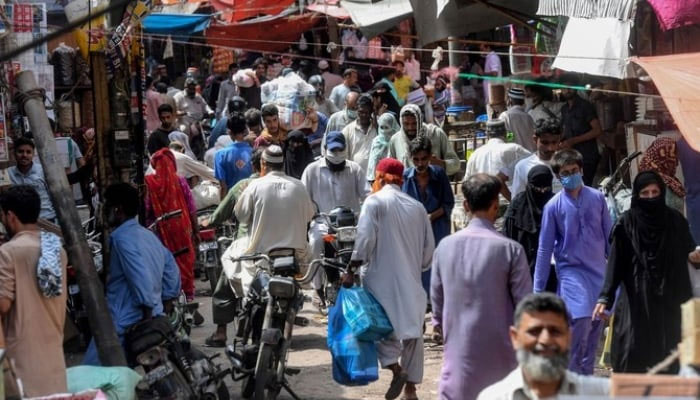
While there are more people on the planet than ever before, around 8.2 billion of them, overpopulation is actually not the main population problem confronting humanity. The theme for this year’s World Population Day, held on July 10, was ‘Empowering Youth to Build the Families They Want’. UN estimates say that the world population is expected to peak at around 10.3 billion by the mid-2080s and then decline to around 10.2 billion. Given that the world population has grown by well over a billion in the last 14 years, it is hard to imagine that experts think it will grow by only around 2.0 billion over the next six decades and then start declining. This slowing population growth is being driven by a sharp decline in total fertility rates (TFR), the average number of children a woman is expected to have in her lifetime. In the early 1970s, women had on average 4.5 children each; by 2015, total fertility for the world had fallen to below 2.5 children per woman. According to experts, this decline is being driven in large part by people feeling unable to create the families they want. In short, it is becoming harder for young people to start a family and have as many children as they would like.
This is a problem that a country where around two-thirds of the population is below the age of 30 needs to think about and one that many young Pakistanis will be familiar with. These days, it is hard enough for a young person with a job to survive on their own, let alone start a family. And those with proper formal employment are often the lucky ones. At the same time, many look at Pakistan’s youth bulge and the population explosion it foretells, with the population expected to double by as soon as 2047, as a sign of trouble. The nation is already unable to produce the food, water, energy and jobs the current population needs. How exactly will it cope when it needs to care for twice as many people? Then there is the question of what a much larger population would do to issues like climate change, with an acceleration in global warming quite possible if current trends persist. While no one would doubt the challenges that come with a higher population, this line of thinking can end up problematising the young and the poor. It is not they who are consuming the vast majority of the country’s resources; that would be the wealthy elite who often fret the most about the rising population. One can also observe this dynamic on a global scale, with the G7 group of the world’s wealthiest countries accounting for approximately a quarter of all energy-related emissions.
Both the resource problem and the challenges faced by young people point to a broader problem of inequality. It must also be noted that the need to address collapsing fertility and help young people start families should not come at the expense of female empowerment, which some elements have tried to erroneously tie to collapsing fertility. What the world’s young people truly require is economic and political empowerment and that can only be achieved through fairer resource distribution. The one per cent simply cannot consume all the world’s resources and deprive younger people of resources and family. As for Pakistan, we need to control the population more for reasons of health, education and urban planning – perhaps that is a message that will resonate more than hollow slogans.







-
 24 Dead In Bangladesh After Bus Plunges Into River During Ferry Boarding
 -
 Dana Carvey Recalls Doing 'SNL' Creator Lorne Michaels' Impersonation: 'My First Reaction Is Terror'
 -
 Everything We Know About Taylor Swift And Travis Kelce Honeymoon Plans
 -
 Metformin’s Hidden Brain Pathway Uncovered After 60 Years
 -
 How Dogs Became Man’s Best Friend 15,800 Years Ago: New Study Reveals
 -
 Prince Harry And Meghan Markle Respond To Major Meta And YouTube Ruling
 -
 Why Josh Duhamel Believes His Fans Will Be 'alienated' If He Talks Politics
 -
 Melania Trump Appears With Humanoid Robot At White House
 -
 ‘Addictive By Design’: Meta, YouTube Found Liable In Historic Verdict
 -
 Bruce Willis' Mom Marlene Makes Another Family Amid Son's Battle With Dementia
 -
 Roblox Safety Warning For Parents: Developer Says Kids Need 24/7 Monitoring
 -
 Chelsea Handler Explains Why She Dates Younger Men
 -
 Chappell Roan's Security Guard Takes 'full Responsibility' For His Interaction With Jorginho's Daughter?
 -
 Rosalía Cuts Concert Short Over Sudden Illness, Fans Shocked
 -
 'Buffy' Star Nicholas Brendon's Death Case Takes Massive Turn
 -
 FKA Twigs Takes Legal Stand Against Ex Shia LaBeouf