
Experts call for leveraging renewed international interest in Kashmir dispute
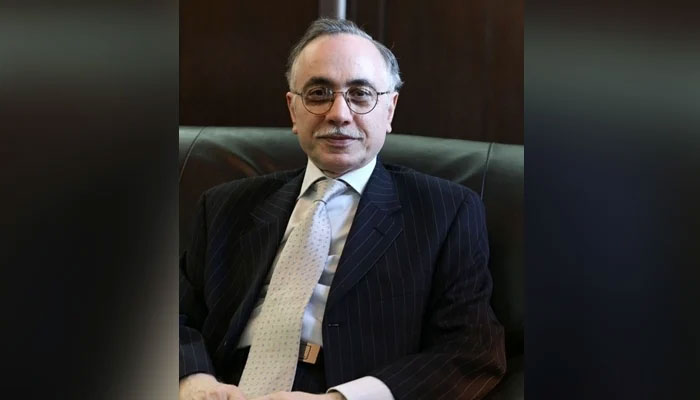
Islamabad: Former ambassador Masood Khalid has stated that the recent exchange of strikes between Pakistan and India renewed international attention on longstanding regional disputes.
Mr Khalid was addressing a discussion on “The pursuit of truth: competing narratives in post-Pahalgam” jointly organised here by Institute of Regional Studies (IRS) and Policy East (PE).
The speaker emphasised that Pakistan should capitalise on this renewed interest, especially from the US, to resolve the Kashmir dispute. He also acknowledged the media's role stating that Pakistan's strategic communication effectively dismantled India's narrative and exposed its weaknesses.
Air Marshal (r) Javaid Ahmed, President, Centre for Aerospace and Security Studies (CASS), presented a technical assessment of the conflict's operational aspects. He cautioned against normalising the crisis and emphasised the need to maintain and consistently follow through with the narrative.
Rear Admiral (r) Faisal Shah highlighted India's operational miscalculations and commended Pakistan's strong response, which upheld strategic redlines of no internal interference, prevention of repeat incidents and adherence to existing agreements.
Dr Taimur Shamil, Executive Director, Policy East, highlighted the increasingly transnational nature of information conflicts and the imperative for Pakistani institutions to develop robust international partnerships with other global institutions.
Journalists Umar Khalid Butt (PTV) and Haitham Naser (TRT) offered firsthand insights on narrative development and dissemination. Their critique of current institutions and advocacy for better media think-tank collaboration generated lively debate among the professors, analysts and policy researchers present during the question hour.
In his opening remarks, IRS President Jauhar Saleem highlighted Pakistan's effective and principled diplomatic response which countered misleading narratives and exposed India's domestic political motivations for escalating the crisis. On narrative building, he underscored the importance of a comprehensive strategy adding that, the narrative should not be constructed in isolation, but rather through a holistic approach, incorporating diverse perspectives and insights, drawing from strategic considerations and societal input. He argued that by embracing this comprehensive approach, the resulting narrative would be more impactful.





-
 Can AI Tools Detect Domestic Abuse Risks Years In Advance? Experts Break Down Surprising Results
 -
 Fans React To Oprah's '90-year-old Walk': 'This Womens Supremacy Over Other Black Women'
 -
 King Charles Pays Tribute To Queen Elizabeth & Queen Camilla’s Mother
 -
 Meta Rolls Out Dashboard To Stop AI Reposts
 -
 Tech CEOs Predicts AI Replacing Software Engineers
 -
 Where To Watch The 2026 Oscars Around The World & More: Everything To Know
 -
 Harry Styles Displays Public Affection For Zoe Kravitz At ‘SNL’ Afterparty
 -
 'Extremely Cautious' Sarah Ferguson Ordeal Comes To Light After Royal Lodge
 -
 Inside The US-China Economic Meeting In Paris: Key Talks Ahead Of Trump-Xi Summit Explained
 -
 Lainey Wilson ‘in The Weeds’ As First-ever Stagecoach Performance Nears
 -
 Magazine Comes ‘begging’ To Kylie Jenner Ahead Of Oscars 2026: ‘No One Cares Anymore’
 -
 Rita Ora Added To Star-studded Line-up For Iconic Isle Of Wight Festival
 -
 Is AI Making Us Less Human? Psychologist Speak Out
 -
 Daniel Radcliffe Recalls ‘mind-blowing’ Moment From ‘Harry Potter’
 -
 King Charles Takes 'decisive' Action Against Princess Eugenie, Beatrice
 -
 Mariah Carey 'embarrasses' Son Moroccan On Twitch Yet Again: 'my Mom's Here'