
Who will guard the universities?
Budget for higher education saw manifold increases during Musharraf regime at cost of school and college education
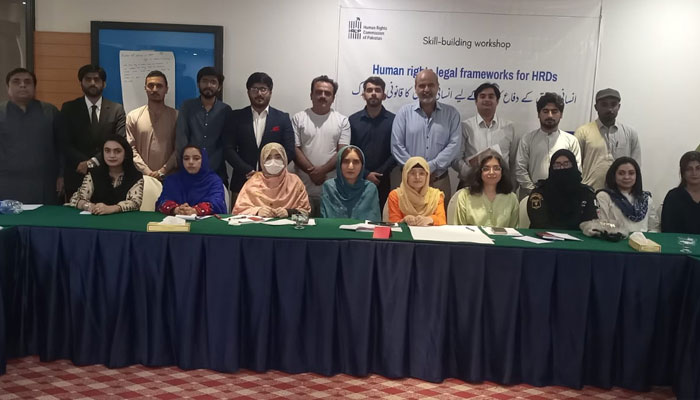
The Human Rights Commission of Pakistan (HRCP) has been doing a great job highlighting issues related to the violation of fundamental rights across the country. It also holds conferences, consultations, discussions, and seminars on related topics such as curbs on freedom of expression, declining standards of education and workers’ issues.
HRCP Chairperson Asad Iqbal Butt and the vice chair for Sindh, Khizar Qazi, organized a seminar ‘Protecting academic freedom’ at the Pakistan Medical Association Hall on May 28. The discussion was so informative and interesting that I can’t help sharing it with my readers. Suppose you listen to speakers such as doctors Aasim Bashir Khan, Arfana Mallah, Ikhtiyar Gumro, Riaz Shaikh, Roshan Soomro, Tauseef Khan and Senator Masroor Ahsan. In that case, you feel enlightened in many ways. All spoke in unison against the shrinking space for academic discussions in Pakistan.
Dr Aasim Bashir Khan set the ball rolling by highlighting some recent changes in the policy of appointing vice-chancellors for universities, especially in Sindh. He quoted some examples from across the world where academics and professors receive appointments at top positions in the government that are normally occupied by bureaucrats. Aasim pointed out that in other countries, you will hardly find any bureaucrat serving as the head of an academic institution. But now in Sindh, the provincial government is bent upon committing this grave mistake of appointing bureaucrats as vice-chancellors of universities.
Aasim Bashir shared with the audience some loopholes in the development budget in the federating units of Pakistan. Interestingly, Punjab and Sindh rely heavily on foreign loans for their development budgets, which may lead these provinces to an abyss of debt from where it will be hard to disentangle in future.
Prof Tauseef Ahmed Khan carried the discussion forward by tracing the recent history of higher education in the country since the creation of the Higher Education Commission (HEC) that Dr Attaur Rehman spearheaded under the dictatorship of General Musharraf. The budget for higher education saw manifold increases during the Musharraf regime at the cost of school and college education. The money the government should have used to improve primary and secondary education ended up in some selected higher education institutions, while many colleges overnight morphed into universities. In the past 25 years, dozens of new universities have sprouted in every nook and corner of the country.
Prof Tauseef specifically focused on the financial crunch that a majority of public-sector universities have been experiencing for many years. Universities nationwide have adopted an undesirable practice of using pension funds for other purposes. To cite just one example, the Federal Urdu University (FUU) has not paid pensions to all who have retired since 2017, and those who retired earlier have not received any pensions for the past six months. All this has happened even though the FUU has over Rs670 million in its accounts.
Though Minister for Federal Education Khalid Maqbool Siddiqi belongs to Karachi, he is also unable or unwilling to help the pensioners of the FUU. Tauseef Khan reminded the audience that in the recent past, as many as nine retired professors have died without receiving any pensions. Most of the VCs act as autocrats whose primary job is to satisfy the demands of their higher-ups while neglecting the problems of their staff and students. With declining academic freedom, even retired teachers cannot arrange a condolence meeting for their deceased colleagues without approval from the university administration.
Research topics in social sciences now revolve around hackneyed issues rather than any critical assessment of problems that universities find unpalatable, as they may trigger a reaction from the super patriots. Several favourite universities in Islamabad and Rawalpindi, where most of the elite youth study, receive preferential funding from the HEC, whereas universities in peripheral areas of the federating units with middle and lower-middle class students remain devoid of adequate funds.
Dr Roshan Soomro agreed with Prof Tauseef about the behaviour of the VCs who consider themselves unaccountable in nearly all matters, especially regarding restricting academic freedom on campuses. Soomro lamented that quality education is not a priority, as most universities now focus on increased enrolment with higher fee structures and reduced academic freedom. When staff and students write letters to the VC, there is normally no response from the management and the letters disappear in thin air, most probably ending up in trash bins. While most universities are facing a financial crunch, the top management enjoys the best of perks and privileges.
Prof Riaz Shaikh was scathing in his remarks about the master narrative that revolves around a security state rather than striving for a welfare state. Underscoring the needs of the academics and intellectuals to be free from economic hardships, he observed: “If our academics and intellectuals are constantly harassed and unable to meet their everyday domestic and family needs, they are under an enormous burden. The state has imposed strict educational, financial, ideological, legal, and religious parameters and perimeters on the entire academic spectrum in the country and that creates a suffocating atmosphere for all students and teachers alike.
Dr Riaz Shaikh cautioned that the rapid decline in the intellectual abilities of the academic staff would result in a massive implosion in society, the signs of which are already visible. Now, even MPhil and PhD students must attend classes that are unnecessary and detrimental to their intellectual growth and consume a lot of energy and time in mostly rote learning. “No intellectual activities occur in most universities apart from discussions on mundane topics and cliched subjects mostly related to the Two-Nation Theory, religiosity, jingoism, and even on self-congratulatory and prideful debates that stir more emotions than intellect.”
Dr Arfana Mallah discussed the absence of policies that provincial HECs should have developed long ago. The institutes of higher education receive orders rather than policy documents from their respective provincial HECs and Sindh is no exception. The order is what the ‘competent authority’ says and that becomes a policy without any policy document. “Now, even for conferences and seminars, the names of the speakers need screening, and topics undergo vetting before they obtain approval. Conferences on topics such as tourism and hospitality management get an instant nod, whereas anything that may generate critical thinking keeps pending.”
Prof Mallah shared her views on academic decisions that have no input from students and teachers involved. Most universities treat student associations and teachers' unions as enemies rather than stakeholders. In fact, there is no concept of any stakeholders in the eyes of the government or the HEC or even the university administration; they just follow orders without discussing anything with student bodies – if there is any – or teachers' unions that have the most stake in the entire learning and teaching process. Every now and then, propaganda starts targeting certain teachers who demand academic freedoms and are vocal about the responsibilities and rights of all stakeholders.
This tendency of certain quarters to discredit teachers, Dr Mallah finds extremely alarming, especially against some female teachers who are always an easy target. She was also critical of new campuses and universities sprouting all over the province without proper homework. “If there are specialised universities – let’s say for arts and architecture or for engineering and medical sciences – they should focus on their primary areas of teaching and researcher rather that spreading their wings all over the place. They should not start awarding degrees in business or chemistry just to earn more money.”
Arfana Mallah said that there were too many campuses of universities that serve no purpose other than pleasing the local MPAs or MNAs, who are least interested in academic freedom, intellectual growth or quality of education. “They simply want to show the campus to their voters as an accomplishment of the politician to secure another victory in the next elections. There is a need for more post-graduate colleges rather than university campuses that do not have adequate funds. Professional universities where elite youth study receive much more money than general universities where low-income youth enrol.”
The writer holds a PhD from the University of Birmingham, UK. He tweets/posts @NaazirMahmood and can be reached at: mnazir1964@yahoo.co.uk


