
Pindi’s water management agencies struggling to address shortages
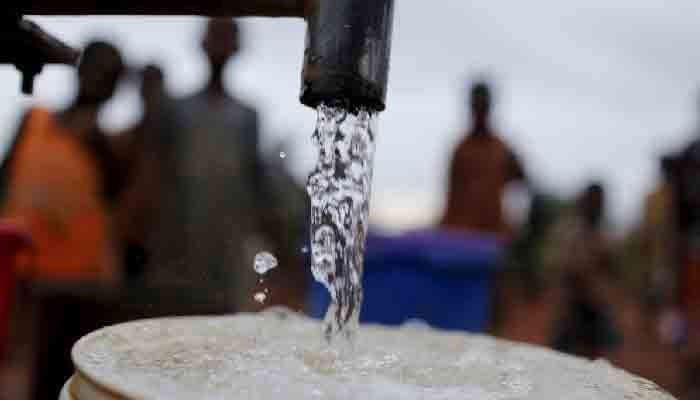
Rawalpindi:Water, the essence of life, is recognised as a universal right, a crucial component of people’s lives, and a country’s security and sustainability.
Water has profoundly impacted human history in the tapestry of civilization across diverse landscapes, geography, and periods, becoming the linchpin of prosperity and progress.Water management refers to planning, implementing and regulating various activities related to the successful sourcing and extraction, sustainable use, distribution, conservation, and treatment of its resources.
It involves a comprehensive approach to ensuring the availability of clean water for various purposes, including drinking, agriculture, industry, sanitation and environmental preservation.
Addressing the water availability challenges of the Garrison City of Rawalpindi requires a multi-faceted approach, including expanding water storage capacity through dams and reservoirs, improving water distribution networks, promoting water conservation measures, and addressing issues like tanker mafia and infrastructure maintenance.
Recognising these challenges, the city’s civic agencies have been taking measures for the construction of new dams like Chahan and Dadhocha dams, and side by side steps for maintaining the storage capacity of existing Rawal and Khanpur dams.
Managing Director (MD) of Water and Sanitation Agency (WASA) Muhammad Saleem Ashraf informed APP that the Garrison City needed a total water supply of around 51 Million Gallons Daily (MGD) in winter, 30.5 MGD of which through 480 tube-wells, 10 MGD from the Rawal Dam and 6 MGD from the Khanpur Dam.
The city had to face a shortfall of around 7 MGD in winter, which rose to around 19 MGD during summer, with the daily water demand reaching over 70 MGD, he added.Both the cantonments (Rawalpindi and Chaklala) also received some 12 MGD water from the Rawal Dam, the Wasa MD said.
For overcoming the water shortage, Saleem said work was already underway on the Developing Resilient Environment and Advancing Municipal Services (DREAMS-I) project, funded by the Asian Development Bank (ADB).
The project’s overall scope involved the treatment and transportation of 14.5 MGD water from Chahan Dam to Rawalpindi city, besides the improvement and replacement of the city?s existing water supply system, he added.
Moreover, he said, the rehabilitation and upgradation of Rawal Lake filtration plants were also in process to supply an additional 5 MGD water to the Garrison City.Similarly, he said, two new heavy pumps were being installed at the Khanpur Dam to increase water supply to 8 MGD.
The project to provide a 24/7 water supply to three union councils of Khayaban-e-Sir Syed was also underway.?This project (DREAMS) of public importance will be completed in two years instead of the stipulated period of three years,? he added.
The MD further said that work on the Chahan Dam treatment plant had been kicked off, which was expected to provide 10 MGD of water to Rawalpindi city.
He said the feasibility of setting up the Dadhocha Dam had been included in the Punjab Annual Development Plan, which would hopefully provide 30.5 MGD water to meet the future needs of the city.
As regards water losses, he said that water leakage and theft from the distribution network were major sources of water loss and needed to be addressed.He said the Punjab Government had banned the establishment of new car washing stations across the province.
In compliance with the orders of the Lahore High Court, the Punjab Environmental Agency (EPA) had imposed a ban on non-essential use of underground water and violators, including car wash/service stations, would have to face heavy fines, he warned.
Chief Executive Officer of Rawalpindi Cantonment Board (RCB) Syed Ali Rizvi apprised APP that the RCB provided some 1.50 MGD water to its residents from 55 tubewells, 11.28 MGD from the Khanpur Dam and 0.03 MGD from the Rawal Dam.


