
Pakistanis capable of driving national, global economic growth: PM
Shehbaz says Pakistan is home to world’s best experts in IT and other fields who could deliver excellent results
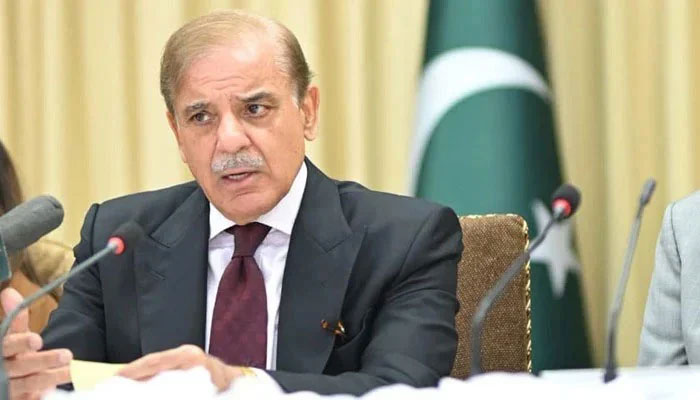
ISLAMABAD: Recognising the contribution of Pakistan’s business and IT companies on the global stage, Prime Minister Shehbaz Sharif on Wednesday said that the people of Pakistan are capable of playing a central role in the development of the country as well as the global economy.
Chairing a meeting on investors participation and opportunities in the process of digital and other reforms in the Federal Board of Revenue (FBR), the prime minister said the Pakistani business community was proving its worth and IT entrepreneurs were offering valuable services in the global market.
Appreciating the investment pledges of $700 million in Pakistan’s IT sector during the Digital Investment Forum held under the Digital Cooperation Conference, he said that Pakistan was home to some of the world’s best experts in IT and other fields who could deliver excellent results if given opportunities in line with their capabilities and potential.
During the meeting, participants were briefed on various phases of the digital reform process in the FBR and available investment opportunities.
Separately, in a meeting with the executives of leading IT companies, participating in Pakistan’s first ‘Digital Foreign Direct Investment Forum 2025,’ held here on April 29-30, the prime minister, highlighting Pakistan’s vision of becoming a regional hub for technology, finance and innovation, assured his government’s full support to IT investors and reaffirmed the commitment to building long-term, mutually beneficial partnerships with them. Welcoming the investors and business leaders in Islamabad, he appreciated the announcement of over $700 million in investment pledges and expressed deep appreciation for their confidence in Pakistan’s potential. He briefed the delegates about the ongoing regulatory reforms, fiscal incentives and digital infrastructure investments. Among those who called on the prime minister included Jabbar Rahim Khan of Russoft, who announced to invest $500 million, Taha Naseem and Ahsan Jamil of sAi Venture Capital who announced $100 million investment, Fernando Morillo and Muhammad Hamayun Sajjad of Mashreq Bank who announced $30 million investment, and Belal Kemal Faruki of Mindhyve.ai $22 million investment.
Meanwhile, in a separate meeting with Digital Cooperation Organisation Secretary-General Deemah Al Yahya, the prime minister, highlighting his government’s efforts to align Pakistan with the global wave of digital transformation, said that the country’s economy was the most suitable market in the region for digital startups and foreign investment. The DCO secretary-general thanked Pakistan for hosting the first forum and called her participation in the inaugural session a great honour.
Meanwhile, the prime minister said Pakistan’s workers now have guaranteed safer workplaces under the National Occupational Safety and Health Profile. In his message on Labour Day (May 1), the prime minister said: “For the first time, every worker in Pakistan benefits from a National Occupational Safety and Health Profile, ensuring safer, healthier workplaces across the country. Our government has taken important steps to broaden the coverage and impact of institutions such as the Employees’ Old-Age Benefits Institution (EOBI) and the Workers Welfare Fund (WWF), ensuring that the fruits of our labour protections are shared more equitably across all segments of the workforce.
“Through digitisation and labour law reforms, we are building a future where every worker has access to dignity, safety and opportunity. At the same time, skill development initiatives, particularly through the National Vocational and Technical Training Commission and the Technical Education and Vocational Training Authorities, are being expanded, with a special focus on empowering youth and women with demand-driven vocational training.”






-
 Katie Price’s Sister Schools Her For Defending Lee Andrews Despite Sex Tape Claims
 -
 Bill O’Reilly Offers Crucial Advice To President Donald Trump During Iran War
 -
 Prince Harry Flips Princess Lilibet In Pool In Meghan’s Holiday Photos
 -
 'Legally Blonde's Luke Wilson Recalls Weird Encounter With Fans
 -
 White House Tracks OpenAI Breach As Lawmakers Push Emergency 'AI Kill Switch'
 -
 Danielle Fishel Shares 'over The Top' Parenting Experience
 -
 20-year-old Suri Cruise Lands Lead Role In Modern Shakespeare Play
 -
 Apple TV+ Announces 'The Morning Show' End After Five Seasons
 -
 Venezuela Earthquakes Caused $19.6B In Damage, $50B In Rebuild: World Bank Estimates
 -
 Rosie O’Donnell Shares Insights About Her Weight Loss Journey
 -
 OpenAI Launches ChatGPT Health For US Users Amid Inaccurate Medical Advice Lawsuit
 -
 Oscar Voters React To 'The Odyssey' As Movie Shatters Box-office
 -
 Multiple BC Communities Set New Temperature Records Amid Heat Wave
 -
 China Targets 50% Growth In Wind And Solar Power Generation By 2030
 -
 University Of Toronto Professor Wins Prestigious Fields Medal, Known As The ‘Nobel Prize Of Mathematics’
 -
 SpaceX Shares Drop 49 Percent From Peak Ahead Of First Earnings Report