
Finance minister advances climate, digital agenda in Washington
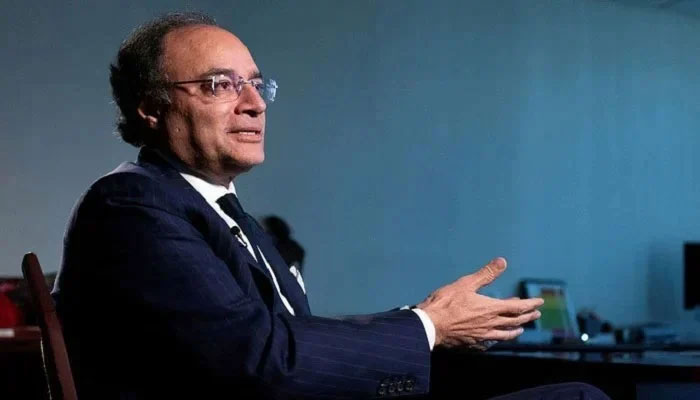
KARACHI: Finance Minister Senator Muhammad Aurangzeb wrapped up a high-profile visit to Washington with a push for global support on climate resilience, digital transformation and economic reform, as the country prepares to re-enter international capital markets.
During the Spring Meetings of the International Monetary Fund and World Bank, Aurangzeb met with top officials from multilateral lenders, ratings agencies and multinational corporations to strengthen investor confidence in Pakistan’s reform agenda.
Speaking at a JP Morgan-hosted seminar, Aurangzeb highlighted Pakistan’s improving macroeconomic indicators -- including twin fiscal and current account surpluses, falling inflation, and strong foreign exchange reserves -- which he said had helped secure Fitch Ratings’ recent upgrade of Pakistan’s sovereign credit rating from ‘CCC+’ to ‘B-‘.
In meetings with Fitch and Moody’s, the minister underscored the government’s structural reforms across taxation, energy and state-owned enterprises. He also pointed to record remittances and fiscal consolidation, stressing that Pakistan remains committed to broadening its tax base and maintaining fiscal discipline.
The finance minister confirmed Pakistan’s intention to return to the international debt markets, including a planned Panda bond issuance supported by a partial credit guarantee from the Asian Development Bank (ADB). Discussions with ADB President Masato Kanda also focused on accelerating the project pipeline under the upcoming Country Partnership Strategy (2026-2030).
Aurangzeb also advanced Pakistan’s digital and financial inclusion agenda in talks with VISA’s regional leadership and the World Bank’s Vice President for Digital Transformation. He praised VISA’s decision to triple the size of its operations in Pakistan and cited ongoing collaboration with local platforms 1-Link and PayPak to enhance digital payments, e-commerce and remittance flows.
In a separate dialogue with Standard Chartered Bank, the minister outlined plans for privatisation, highlighting Pakistan’s improved risk profile following the IMF staff-level agreement under the Extended Fund Facility (EFF) and the Resilience and Sustainability Facility (RSF).
Climate finance was also a central focus. At the Vulnerable Twenty (V20) Ministerial and the High-Level Dialogue of the Fund for Responding to Loss and Damage (FRLD), Aurangzeb described climate change as an “existential threat” to Pakistan. He urged the rapid operationalisation of the Loss and Damage Fund established at COP28, calling for “simplicity, agility and integrity” in the fund’s disbursement process.
The World Bank’s 10-year Country Partnership Framework for Pakistan, which prioritises climate resilience and population challenges, was also discussed as part of Pakistan’s broader development roadmap.







-
 Kayla Nicole Looks Back On Travis Kelce Split, Calls It ‘right Person, Wrong Time’
 -
 Prince William And Kate Middleton Extend Support Message After Curling Team Reaches Olympic Gold Final
 -
 Nvidia CEO Praises Elon Musk, Calls Him An ‘extraordinary Engineer'
 -
 Timothee Chalamet Felt '17 Again' After Reunion With 'Interstellar' Director Christopher Nolan
 -
 Shia LaBeouf's Mugshot Released After Mardi Gras Arrest On Battery Allegations In New Orleans
 -
 Conan O'Brien Speaks First Time After Rob Reiner's Killing
 -
 Giant Tortoise Reintroduced To Island After Almost 200 Years
 -
 Eric Dane Drops Raw Confession For Rebecca Gayheart In Final Interview
 -
 Trump Announces New 10% Global Tariff After Supreme Court Setback
 -
 Influencer Dies Days After Plastic Surgery: Are Cosmetic Procedures Really Safe?
 -
 Eric Dane Confesses Heartbreaking Regret About Daughters' Weddings Before Death
 -
 Nicole 'Snooki' Polizzi Reveals Stage 1 Cervical Cancer Diagnosis
 -
 Timothee Chalamet Admits He Was 'grumpy' Before Beau Kylie Jenner's Unexpected Move
 -
 Hilary Duff’s Son Roasts Her Outfit In New Album Interview
 -
 Alexandra Daddario, Andrew Form Part Ways After 3 Years Of Marriage
 -
 Eric Dane Rejected Sex Symbol Label