
Structural reforms driving steady economic recovery: commerce minister
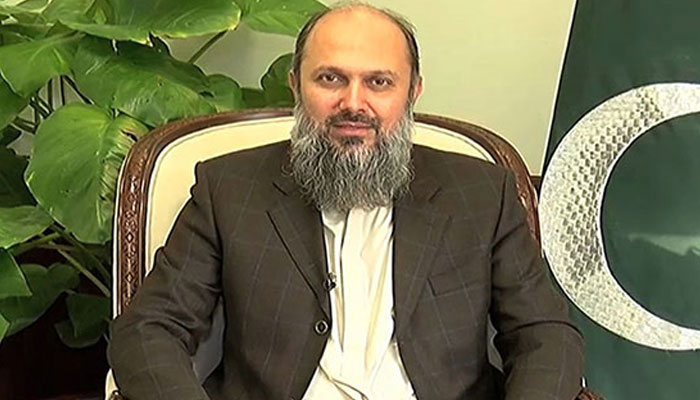
LAHORE: Minister for Commerce Jam Kamal Khan said on Saturday that Pakistan’s economy is on a path of steady improvement, thanks to recent structural reforms, international recognition of economic policies and the continued support of the business community.
He was speaking at the Lahore Chamber of Commerce and Industry (LCCI). The minister noted that while the country faced significant economic challenges until a few months ago, the last 18 months have brought noticeable progress. He added that even global institutions such as the IMF have acknowledged Pakistan’s economic reforms and recovery efforts. The strong participation of international delegates in events such as the HEMS Expo and the Mineral Expo reflects growing global confidence in Pakistan.
Khan said that the export finance scheme (EFS) is being customised to better serve the business sector, and that reforms are being designed through constant consultation with stakeholders. He revealed that the prime minister personally participates in business-to-business meetings during international visits, highlighting the government’s commitment to promoting trade.
He added that the Export Development Fund (EDF) is undergoing restructuring, and that the Trade Development Authority of Pakistan (TDAP) has seen significant institutional reforms. While acknowledging that exports remain limited to a few products and regions, he stressed that there is immense untapped potential in emerging markets such as East Africa.
The minister also said his recent meeting with the Afghan commerce minister helped resolve several key trade-related issues. He emphasised that Afghanistan serves as a vital corridor for overland trade access to Central Asia. A new trade policy is currently being formulated, and for the first time, sector-specific meetings on tariff issues have been held, which will be reviewed by the Tariff Board.
In his address, LCCI President Mian Abuzar Shad emphasised that exports cannot grow unless the challenges faced by the industrial sector are addressed. He highlighted several pressing concerns, including the depreciation of the rupee, high energy tariffs, the imposition of maximum demand indicator (MDI) charges on non-operational industries, soaring land prices in industrial estates, and heavy duties and taxes on raw materials and intermediate goods.







-
 Anti-monarchy Group Reacts To Prince William, Kate Middleton Statement On Epstein Scandal
 -
 Andrew 'must' Apologize Not Wider Royal Family For Jeffrey Epstein Links
 -
 Super Bowl 2026: Why Didn't Epstein Survivors Ad Air On TV?
 -
 'Harry Potter' TV Series Exec Teases 'biggest Event In Streaming': Deets
 -
 Camila Mendes Finally Reveals Wedding Plans With Fiancé Rudy Mancuso
 -
 Beatrice, Eugenie Blindsided By Extent Of Sarah Ferguson’s Epstein Links
 -
 Girl And Grandfather Attacked In Knife Assault Outside Los Angeles Home
 -
 Super Bowl Halftime Show 2026: What Did Trump Say About Bad Bunny?
 -
 Piers Morgan Defends Bad Bunny's Super Bowl Performance, Disagrees With Trump Remarks
 -
 Andrew Lands In New Trouble Days After Royal Lodge Eviction
 -
 Instagram, YouTube Addiction Case Trial Kicks Off In California
 -
 Agentic Engineering: Next Big AI Trend After Vibe Coding In 2026
 -
 Keke Palmer Makes Jaw-dropping Confession About 'The Burbs'
 -
 Cher Sparks Major Health Concerns As She Pushes Herself To Limit At 79
 -
 Former NYPD Detective Says Nancy Guthrie's Disappearance 'could Be Hoax'
 -
 King Charles Publicly Asked If He Knew About Andrew's Connection To Epstein