
KP govt urged to revise draft of law on mines and mineral
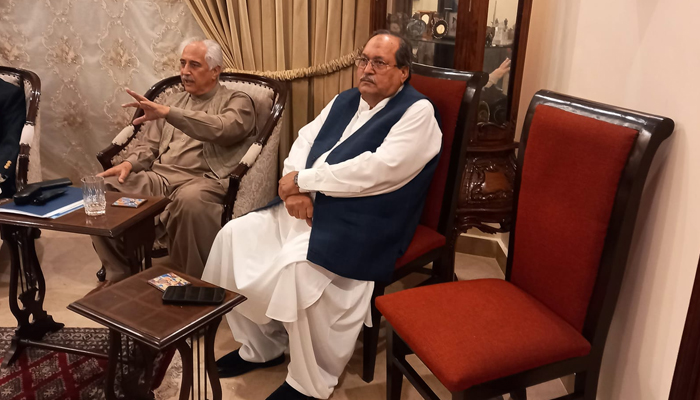
PESHAWAR: Good Governance Forum Chairman Dr Syed Akhtar Ali Shah on Saturday said that several clauses in the proposed legislation on mines and minerals conflicted with the Constitution and undermined provincial autonomy.
In a letter to Chief Minister Ali Amin Gandapur, Dr Akhtar Ali, who is a former inspector general of police, welcomed the Khyber Pakhtunkhwa government’s decision to make public the draft of the KP Mines and Minerals Act 2025 and termed it a positive step towards transparency.
However, he raised serious reservations about the bill’s compatibility with federalism, warning that the restriction on provinces to grant mineral titles especially regarding mineral oil and natural gas violated Article 172(3), which provided for joint ownership between the federation and the provinces.
He noted that references to nuclear energy generated through oil and gas were constitutionally inappropriate, and proposed limiting such mentions to uranium and thorium, which fell within federal jurisdiction.
Criticising what he described as institutional overreach, Dr Akhtar Ali pointed out that constitutionally mandated forums such as the Council of Common Interest (CCI) and National Economic Council (NEC) had been sidelined, particularly in favour of the Special Investment Facilitation Council (SIFC).
He said this undermined the spirit of federalism and weakened the constitutional mechanism for economic planning and coordination.
He objected to the authority granted in the draft law to the federal government and its mineral wing to unilaterally declare “strategic” and “rare earth” minerals, describing it as an encroachment on provincial jurisdiction.
The exclusion of mineral oil and gas from the definition of minerals, he argued, also created legal ambiguity and should be clarified.
Dr Akhtar Ali expressed concern over the mention of the Federal Mineral Facilitation Centre, which he said lacked statutory backing and currently operated under SIFC.
He said that provincial legislation should not refer to bodies without legal standing.
Urging the government to amend the bill, he called for aligning all clauses with constitutional provisions and the post-18th Amendment framework, so that the law upheld the principles of provincial autonomy and cooperative federalism.







-
 Chyler Leigh Pays Moving Homage To 'Grey’s Anatomy' Co-star Eric Dane: 'He Was Amazing'
 -
 Did You Know Tech CEOs Limit Screen Time For Their Own Kids?
 -
 Matthew Lillard Admits Fashion Trends Are Not His 'forte'
 -
 SpaceX Launches Another Batch Of Satellites From Cape Canaveral During Late-night Mission On Saturday
 -
 Princess Beatrice, Eugenie Get Pulled Into Parents’ Epstein Row: ‘At Least Stop Clinging!’
 -
 Inside Kim Kardashian's Brain Aneurysm Diagnosis
 -
 Farmers Turn Down Millions As AI Data Centres Target Rural Land
 -
 Trump Announces A Rise In Global Tariffs To 15% In Response To Court Ruling, As Trade Tensions Intensify
 -
 Chappell Roan Explains Fame's Effect On Mental Health: 'I Might Quit'
 -
 AI Processes Medical Data Faster Than Human Teams, Research Finds
 -
 Sarah Ferguson’s Friend Exposes How She’s Been Since Andrew Mountbatten-Windsor’s Release
 -
 Jelly Roll Explains Living With 'severe Depression'
 -
 Charli XCX Applauds Dave Grohl’s 'abstract' Spin On Viral ‘Apple’ Dance
 -
 Anna Sawai Opens Up On Portraying Yoko Ono In Beatles Film Series
 -
 Eric Dane's Wife Rebecca Gayheart Shares Family Memories Of Late Actor After ALS Death
 -
 Palace Wants To ‘draw A Line’ Under Andrew Issue: ‘Tried And Convicted’