
Drop in private bills, rise in ordinances in Senate in 2024-25: Pildat
34 government bills included 12 introduced in the Senate itself and 22 received from the National Assembly
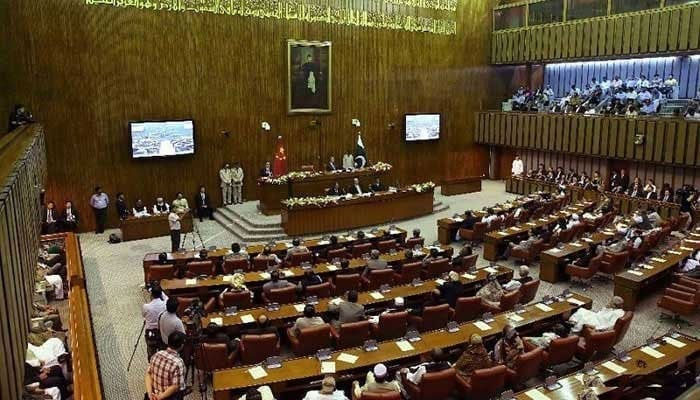
ISLAMABAD: In the analysis of the Senate’s 2024-2025 performance, Pakistan Institute of legislative Development and Transparency (Pildat) has noted a shift in legislative dynamics, highlighting a sharp decline in private members’ bills and a surge in ordinances while the number of sittings increased, but working hours dropped and quorum issues persisted.
The Pildat report “Performance of the Senate of Pakistan-Parliamentary Year 2024-25” raises concerns over procedural transparency and the Senate’s representative effectiveness.
During the 2024-2025, the Senate passed 51 bills, comprising 34 government bills and 17 private members’ bills.
The 34 government bills included 12 introduced in the Senate itself and 22 received from the National Assembly. Compared to the 2023-2024, when the Senate passed 49 government bills, indicating a drop of approximately 30.6 per cent.
In previous years, the Senate passed 18 government bills in 2022-2023, 27 in 2021-2022, 8 in 2020-2021, and 19 in 2019-2020. However, private members’ legislative activity saw a sharp 63.8 per cent decline compared to the previous year.
During the 2024-2025, the Senate passed a total 17 Private Member bills, out of which 11 originated in the Senate and 6 were transmitted from the National Assembly. This represents a 63.8 per cent decrease compared to the 2023-2024 parliamentary year, when the Senate passed 47 Private Member bills. In previous years, the Senate passed 19 Private Member bills in 2022-2023, 13 in 2021-2022, 16 in 2020-2021, and 12 in 2019-2020.
The sharp decline in 2024-2025 marks a significant departure from the previous trend of increasing legislative activity on Private Member bills.
The government’s reliance on ordinances also surged, with 16 ordinances laid in the Senate, marking a dramatic increase from the single ordinance introduced in 2023-2024.
The Senate held 65 sittings, reflecting a 14 per cent increase from the previous year, but working hours dropped by 20.3 per cent, reversing prior gains.
In the 2024-2025, the Senate met for 65 days, reflecting a 14 per cent increase compared to the 2023-2024, when the Senate met for 57 days.
In previous years, the Senate met for 57 days in 2022-2023, 56 days in 2021-2022, 60 days in 2020-2021, and 65 days in 2019-2020. The increase in working days in 2024-2025 marks the highest number of Senate sittings in the past five years, matching the 2019-2020 level.
It is worth noting that this report excludes Joint Sittings of the Parliament.
The Senate is constitutionally required to meet for not less than 110 days in a parliamentary year and not more than 120 days shall elapse between any two sessions.
At least three sessions of the Senate are required to be held in a parliamentary year and for the parliamentary year, 2024-2025, the Senate completed its constitutional requirement and met for 111 days.
In 2024-2025, the Senate met for 117 hours and 22 minutes, reflecting a 20.3 per cent decrease compared to 147 hours and 13 minutes in 2023-2024.
In 2022-2023, the Senate’s total working hours were 132 hours and 51 minutes, while in previous years, the Senate met for 161 hours in 2021-2022 and 183 hours and 45 minutes in 20202021, showing a general decline over time.
The average duration of a Senate sitting in 2024-2025 decreased compared to the previous year, indicating a reduction in overall legislative working hours.
This shift marks a reversal of the improvement seen in 2023-2024 when working hours had increased after a downward trend. The working hours in 2024-25 represented the least number of hours in the past 6 years.
Attendance rates showed improvement, with senators averaging 62 per cent attendance. However, quorum issues remained a concern, as 16 sittings were adjourned due to insufficient attendance.
The Leader of the House recorded a low attendance rate of 28 per cent, the lowest in six years, whereas the Leader of Opposition demonstrated stronger engagement with 80 per cent attendance.
The relatively low attendance of the Leader of the House, Senator Ishaq Dar may be attributed to the foreign travels and engagement with visiting foreign dignitaries as he also holds the portfolio of the Foreign Minister and, in addition, is also the Deputy Prime Minister.
During 2024-2025, Senator Syed Shibli Faraz, Leader of the Opposition, (KP, PTI) emerged as the most vocal Senator with a recorded talk time of 11 hours and 26 minutes.
He was followed by Senator Azam Nazeer Tarar (Punjab, PML-N) who spoke for 10 hours and 56 minutes, Senator Syed Ali Zafar (Punjab, PTI), who spoke for 4 hours and 32 minutes and ranked third, Senator Aimal Wali Khan, (Balochistan, ANP), spoke for 4 hours and 28 minutes while Senator Sherry Rehman (Sindh, PPPP) spoke for 3 hours and 56 minutes.
The report also highlights critical political developments, including the continued vacancy of Khyber Pakhtunkhwa’s 11 Senate seats, raising concerns over provincial representation.
Additionally, controversies surrounding ignored production orders, judicial reforms under the 26th Constitutional Amendment, and the hurried extension of military chiefs’ tenures have further fuelled political tensions.
The Senate’s handling of the State Bank of Pakistan (SBP) bill vote also sparked opposition protests over procedural fairness. These findings underscore the Senate’s evolving role in Pakistan’s governance, with increasing political contestation shaping legislative and procedural dynamics.
The report calls for greater transparency, procedural integrity, and commitment to democratic representation in the upper house.







-
 AI Copyright Battle: ByteDance To Curb Seedance 2.0 Amid Disney Lawsuit Warning
 -
 Savannah Guthrie In Tears As She Makes Desperate Plea To Mom's Kidnappers
 -
 Canada’s Defence Industrial Strategy Targets 125,000 Jobs And Export Growth
 -
 Tre Johnson, Former NFL Guard And Teacher, Passes Away At 54
 -
 Jerome Tang Calls Out Team After Embarrassing Home Defeat
 -
 Cynthia Erivo Addresses Bizarre Rumour About Her Relationship With Ariana Grande
 -
 Prince Harry, Meghan Markle Spotted Cosying Up At NBA All-Star Game
 -
 Lady Gaga Explains How Fibromyalgia Lets Her 'connect With People Who Have It'
 -
 Metro Detroit Weather Forecast: Is The Polar Vortex Coming Back?
 -
 Daniel Radcliffe Reveals Surprising Way Fatherhood Changed Him
 -
 ‘Disgraced’ Andrew At Risk Of Breaking Point As Epstein Scandal Continues
 -
 Alan Cumming Shares Plans With 2026 Bafta Film Awards
 -
 OpenClaw Founder Peter Steinberger Hired By OpenAI As AI Agent Race Heats Up
 -
 Kate Middleton's Reaction To Harry Stepping Back From Royal Duties Laid Bare
 -
 Rose Byrne Continues Winning Streak After Golden Globe Awards Victory
 -
 Ice Hockey Olympics Update: Canada Stays Unbeaten With Dominant Win Over France