
Ministry plans to transform Islamabad’s public schools
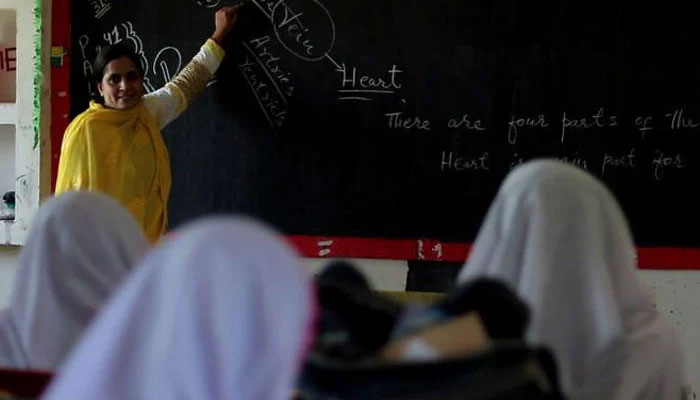
Islamabad:The education ministry has come up with an ambitious strategic plan aimed at transforming government schools in the Islamabad Capital Territory.
The initiative, which focuses on modernising curriculum, enhancing digital infrastructure, strengthening STEM education and improving student welfare, is set to be implemented in the upcoming academic year, according to officials.
They said in a major shift, new textbooks with conceptual illustrations would be introduced, along with a non-assessed curriculum covering entrepreneurship, environmental literacy, financial literacy and coding with artificial intelligence. The officials said those subjects would equip students with essential life skills, from business development and financial management to sustainability and technology.
They said to support digital learning, the government had committed to ensuring 100 per cent internet connectivity in all schools. According to them, more than 200 IT labs will be established and 25,000 Chromebooks will be distributed to students, significantly enhancing access to online education resources. In a move to strengthen STEM education, 250 engineers and scientists from the National Institute of Science and Technology and the Institute of Space Studies will be recruited. These professionals will be deployed across 300 schools and colleges to teach STEM subjects, computer science, and entrepreneurship.
The plan also prioritises student welfare, with the introduction of free school meals for all primary students. Summer camps will be launched for both public and private schools, featuring hands-on STEM workshops, sports activities, art sessions, and career counselling programs designed to guide students toward future success.
Addressing long-standing teacher shortages, the government has set an ambitious target of reducing the teacher deficit to zero within three months. Also, 500 new classrooms will be added to existing schools to accommodate the growing number of students.







-
 Giant Tortoise Reintroduced To Island After Almost 200 Years
 -
 Eric Dane Drops Raw Confession For Rebecca Gayheart In Final Interview
 -
 Trump Announces New 10% Global Tariff After Supreme Court Setback
 -
 Influencer Dies Days After Plastic Surgery: Are Cosmetic Procedures Really Safe?
 -
 Eric Dane Confesses Heartbreaking Regret About Daughters' Weddings Before Death
 -
 Nicole 'Snooki' Polizzi Reveals Stage 1 Cervical Cancer Diagnosis
 -
 Hilary Duff’s Son Roasts Her Outfit In New Album Interview
 -
 Alexandra Daddario, Andrew Form Part Ways After 3 Years Of Marriage
 -
 Eric Dane Rejected Sex Symbol Label
 -
 Avan Jogia Says Life With Fiancee Halsey Feels Like 'coming Home'
 -
 Kate Middleton's Role In Handling Prince William And Harry Feud Revealed
 -
 Tucker Carlson Says Passport Seized, Staff Member Questioned At Israel Airport
 -
 David, Victoria Beckham Gushes Over 'fiercely Loyal' Son Cruz On Special Day
 -
 Taylor Swift Made Sure Jodie Turner-Smith's Little Girl Had A Special Day On 'Opalite' Music Video Set
 -
 Eric Dane Says Touching Goodbye To Daughters Billie And Georgia In New Netflix Documentary
 -
 Channing Tatum Reveals What He Told Daughter After Violent Incident At School