
Recognising our leaders
Bhutto's life was marked by both towering achievements and tragic injustices
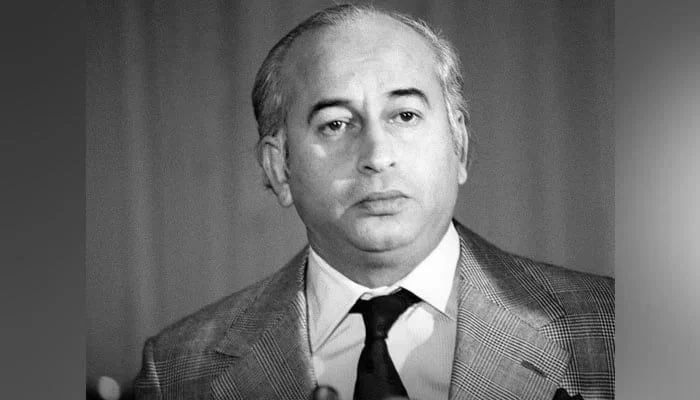
In a long-overdue moment, President Asif Ali Zardari conferred the Nishan-e-Pakistan (posthumous) upon the late Zulfikar Ali Bhutto in recognition of his contributions to public service. For many, this award is a well-deserved acknowledgement of Bhutto's immense contributions to Pakistan -- from giving the country its first consensus-based constitution in 1973 to his commitment to democracy and the people. Bhutto's life was marked by both towering achievements and tragic injustices. Overthrown by a military dictator, he was subjected to a politically motivated trial and eventually hanged in 1979. His judicial murder has remained a stain on Pakistan's legal history. The recent admission by Chief Justice Qazi Faez Isa that Bhutto did not receive a fair trial is an important step towards justice and the Supreme Court's acknowledgement that "fair trial and due process requirements were not met" provides some sense of closure. In this context, the Nishan-e-Pakistan award serves as a recognition of his contributions as well as a symbolic attempt to right historical wrongs.
Despite the significance of this recognition, there has been criticism from some quarters. However, acknowledging political leaders for their contributions should be an evolving tradition. Today, it is Bhutto; tomorrow, it could be Wali Khan, Benazir Bhutto, Akhtar Mengal, Nawaz Sharif, Asif Zardari, Imran Khan, or any other political leader who has played a role in shaping Pakistan. Political leaders have historically paid a heavy price in this country, facing persecution, imprisonment, and even assassination at the hands of unelected interventionists. They are demonised, but their contributions remain undeniable and some would argue that it is because of Pakistan’s politicians that the federation remains intact. The 1973 constitution was a product of political consensus, uniting diverse and often opposing political forces. The 18th Amendment, which empowered provinces and granted them autonomy, was also achieved through political consensus. When the country faced terrorism, political parties stood together to combat it. Now, as Balochistan continues to burn, another political consensus is needed.
History has shown that even when politicians are vilified during their lifetime, their legacies endure. Bhutto’s posthumous recognition is a testament to this fact. It is time Pakistan as a nation stopped persecuting its leaders and started acknowledging their sacrifices. Our political leaders must also rise above personal rivalries and put the people’s interests first. If we truly want to move forward, we must honour those who have given their lives and service to Pakistan, rather than systematically erasing their contributions. This award to Bhutto is a step in the right direction -- but it must not be the last.







-
 Grave Of Prince William And Harry’s Uncle Visited By Charles Spencer’s New Wife
 -
 Savannah Guthrie Begs Nancy's Kidnappers To 'tell Us Where She Is'
 -
 Prince William Issues Statement On France, Spain, UK Wildfires
 -
 Venice Film Festival Chief Faces Gender Bias Claims Over Lone Female-directed Entry
 -
 Trump Says US Is Talking With Iran Right Now
 -
 Law Will Take Its Course As Andrew Mountbatten-Windsor Reluctant To Give Up 'honour'
 -
 China Reaches Major Milestone As Domestic DUV Chip Tools Enter Mass Production
 -
 Nadia Marcinko: Epstein Girlfriend Calls Herself ‘Global Girl On Social Media’
 -
 David Ellison Speaks Out After Judge Pauses Paramount-WBD Mega-merger Deal
 -
 Macron Calls Crisis Meeting Of French Cabinet As Blaze Approaches Bordeaux
 -
 What Led To Kyle Kuzma’s Response To Zohran Mamdani?
 -
 Carly Simon Reveals Quiet Battle With Parkinson's And Past Cancer Shock
 -
 'Andor' Star Diego Luna Set To Receive Coveted Honorary Heart Of Sarajevo Award
 -
 China Vs US Tech Rivalry Escalates As Beijing Accuses Washington Of ‘AI Hegemonism And Distillation’
 -
 Snap Map Rolls Out Now Playing Feature: Check Details
 -
 ‘Destroyer’ Meghan Markle Lands Most Horrid Honor: 'She's The Most Crawled Woman On Earth’