
The forgotten suffering of Kashmiri women
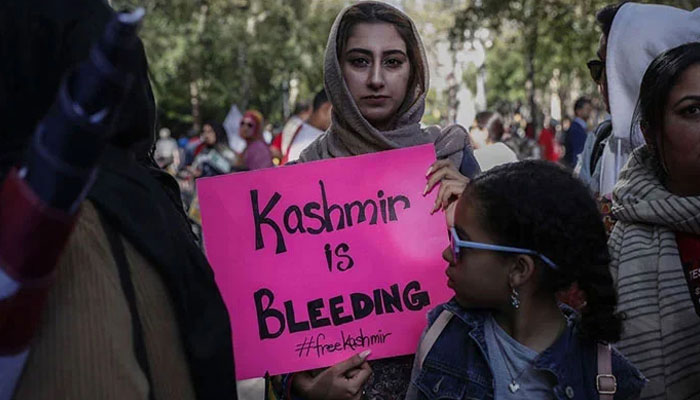
As the world observes International Women’s Day on March 8, celebrating the achievements and resilience of women globally, the plight of Kashmiri women in Indian illegally occupied Jammu and Kashmir (IIOJK) remains a dark and largely ignored chapter. Women in Kashmir have been among the worst victims of state oppression, enduring sexual violence, enforced disappearances, and the trauma of conflict for decades. The global community, despite its rhetoric on women’s rights, has failed to address their suffering, leaving them to fight their battles alone.
For Kashmiri women, life is a continuous struggle against systemic oppression, militarization, and human rights abuses. The Indian military presence in the region has turned homes into prisons, where women live in constant fear of harassment, violence, and even death. The infamous Kunan-Poshpora mass rape incident of 1991 is a grim reminder of the brutality inflicted upon Kashmiri women. On the night of February 23-24, soldiers of the Indian Army gang-raped dozens of women in the twin villages of Kunan and Poshpora in north Kashmir. Despite multiple testimonies and international outcry, justice has remained elusive, as the Indian state systematically denied the survivors their due redressal.
One of the most heart-wrenching aspects of the Kashmir conflict is the phenomenon of half-widows—women whose husbands have been forcibly disappeared by Indian troops or state-backed militias, leaving them in perpetual limbo. As of 2021, and reported by Taylor and Francis Online, the Association of Parents of Disappeared Persons (APDP) and the Jammu and Kashmir Coalition of Civil Society (JKCCS) estimate that there are approximately 1,500 to 2,000 half-widows in Indian illegally occupied Jammu and Kashmir.
According to reports, thousands of Kashmiri men have been taken into custody, never to return, while their wives are left without closure, economic support, or social security. Many of these women are denied the right to remarry, stigmatized by society, and forced into extreme poverty. The Association of Parents of Disappeared Persons (APDP) has repeatedly highlighted their plight, yet both the Indian government and international bodies have largely ignored their cries for justice.
Sexual violence has been used systematically in Kashmir as a tool of repression. Reports from human rights organizations, including Amnesty International and Human Rights Watch, have documented numerous cases where women have been subjected to rape and molestation by Indian security personnel. Yet, there has been little accountability. Courts have either dismissed the cases or delayed justice indefinitely, emboldening perpetrators and deepening the wounds of survivors.
The global community, which often speaks of gender justice and women’s rights, has failed Kashmiri women miserably. While organisations such as the United Nations have mechanisms to address crimes against women in conflict zones, they have remained largely ineffective in Kashmir. Resolutions passed on conflict-related sexual violence have rarely translated into action in Kashmir, as political interests and India’s diplomatic leverage have prevented meaningful interventions.
The UN’s inability to enforce its own resolutions on Kashmir has exposed its selective approach to human rights. Unlike other conflict zones where the UN and international tribunals have taken action, Kashmiri women continue to suffer in silence, with no hope of justice. The lack of international media coverage, coupled with India’s aggressive suppression of dissent, has further pushed the issue into obscurity.
Observing Women’s Day should go beyond celebrating progress; it must also spotlight the unresolved struggles of women in conflict zones like Kashmir. The international community must take decisive action to ensure justice and accountability. Independent investigations into incidents such as the Kunan-Poshpora mass rape should be conducted under international supervision, holding perpetrators accountable without delay. The plight of half-widows—women whose husbands have disappeared but are not officially declared dead—must be recognised through legal frameworks that grant them economic and social rights, including financial assistance and inheritance entitlements. The entrenched culture of impunity for sexual violence committed by Indian forces must end, with those accused of such crimes prosecuted under international law, and draconian protections like the Armed Forces Special Powers Act (AFSPA) revoked. Furthermore, the United Nations must play an active role by appointing a special rapporteur to monitor and report specifically on the condition of women in Kashmir, ensuring sustained international pressure on India to uphold human rights and justice for Kashmiri women.
As the world moves forward with campaigns for women’s empowerment, Kashmiri women continue to remain unheard. Their pain, suffering, and resilience should serve as a wake-up call for the global feminist movement and human rights organisations. Women’s Day should not just be about celebrating achievements but also about demanding justice for those who have been systematically oppressed. The world cannot afford to turn a blind eye any longer; Kashmiri women deserve justice, dignity, and peace—just like every other woman in the world.







-
 King Charles ‘worried’ For Prince William As Heir Doesn’t Have Temperament To Be King
 -
 France Records Around 1,000 Excess Deaths During Deadly Heatwave
 -
 Kris Jenner Crowns Khloe Kardashian 'most Amazing Mother' In Birthday Tribute
 -
 David Beckham Melts Hearts With His Unseen Baby Snaps As Celebrated Mom Sandra
 -
 Which Countries Will Ban Grand Theft Auto VI At Launch?
 -
 Prince Harry’s ‘emotional Safe Haven’ In UK Revealed
 -
 North West Debuts Daring New Facial Piercings At Paris Fashion Week
 -
 Why Tech Firms Are Blaming AI For The Massive Surge In Device And Console Prices
 -
 Prince William’s Secret To A Successful Marriage With Kate Middleton Comes To Light
 -
 Google Gemini AI Capacity Shortage Delays Meta's AI Projects: Report
 -
 Holly Madison Reveals Why She Underwent Plastic Surgery After Pregnancies
 -
 Dean McDermott Expresses Gratitude As He Marks Three Years Of Sobriety
 -
 South Korea, Japan Deepen Defense Ties In Major Security Push
 -
 Andrew Mountbatten-Windsor’s Fears Over His Own Life And Life Span Turn Worrying: ‘You Can’t Erase This!’
 -
 Katy Perry's Long-awaited Return Ends In Disappointment
 -
 Eva Green Hospitalized After Injury On ‘Wednesday’ Set