
Oil slides on OPEC+ output increase, US tariff uncertainty
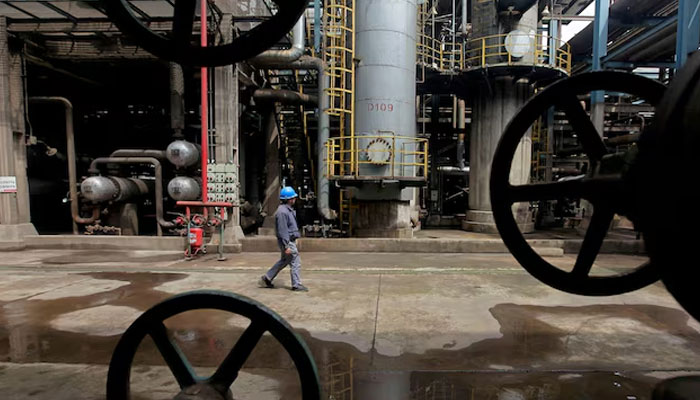
BEIJING/SINGAPORE: Oil prices extended losses on Tuesday following reports that OPEC+ will proceed with a planned output increase in April while markets braced for US tariffs on Canada, Mexico and China to take effect.
Brent futures fell 49 cents, or 0.7 per cent, to $71.13 a barrel at 0455 GMT, as US West Texas Intermediate (WTI) crude eased 26 cents, or 0.4 per cent, to $68.11.
“The current downward trend in oil prices is primarily driven by OPEC+’s decision to increase output and the introduction of US tariffs,” said Darren Lim, commodities strategist at Phillip Nova.
A further complicating factor was geopolitical developments related to the Russia-Ukraine conflict, he added. Trump’s pause in all US military aid to Ukraine followed his Oval Office clash with President Volodymyr Zelenskiy last week.
The Organization of the Petroleum Exporting Countries (OPEC) and allies like Russia, known as OPEC+, decided to proceed with a planned April oil output increase of 138,000 barrels per day, the group’s first since 2022.
“While this decision aims to gradually unwind previous output cuts, it has raised concerns about a potential oversupply in the market,” said Lim.
US President Donald Trump’s 25 per cent tariffs on imports from Canada and Mexico are set to take effect at 12:01am EST (0501 GMT) on Tuesday with 10 per cent tariffs for Canadian energy, while imports on Chinese goods will increase to 20 per cent from 10 per cent.
Analysts expect the tariffs to weigh on economic activity and fuel demand, putting downward pressure on oil prices.
“Market participants are struggling to gauge the impact of the flood of energy-related policy announcements made by the Trump administration this month,” BMI analysts wrote in a note. “However, those weighing to the downside, notably US tariff measures, are currently winning out.”
Further weighing on oil was Trump’s halt of military aid to Ukraine, as the market has viewed the growing distance between the White House and Ukraine as a sign of a potential easing of the conflict.
That in turn could lead to sanctions relief for Russia, with more oil supply returning to the market. The pause followed a Reuters report that the White House has asked the State and Treasury departments to draft a list of sanctions that could be eased for US officials to discuss during talks with Moscow, sources have said.
However, Goldman Sachs analysts say Russia’s oil flows are constrained more by its OPEC+ production target than sanctions, warning that an easing might not boost them significantly.







-
 Microsoft Plans To License AI Agents Like Employees
 -
 OpenAI Eyes NATO Contract For Coalition Networks Following Pentagon Deal, Source Says
 -
 Sam Altman Responds To Criticism Over OpenAI’s Pentagon AI Contract
 -
 Arnold Schwarzenegger Receives Major Honour After Shocking Snub
 -
 China’s Two Sessions 2026: Key Decisions, Economic Targets And Policy Shifts To Watch
 -
 Flames’ New Arena In Calgary Earns Praise From NHL Commissioner After Construction Visit
 -
 New Email Connects Jeffrey Epstein To Beatrice And Eugenie Because Of Sarah Ferguson: ‘They Should Own This Publicly’
 -
 Are You Quitting ChatGPT? Here’s What To Do Before You Switch
 -
 Wild Acquire Michael McCarron From Predators In Trade For 2028 Second Round Pick
 -
 Christopher Reid Gives Update On His ‘heart Failure’
 -
 Cole Smith Joins Golden Knights In Deal With Nashville Predators
 -
 Arber Xhekaj Rumours Surface As Flames Explore Trade Options With Canadiens
 -
 Sarah Ferguson’s Utter Devastation Comes Forward: ‘Her Safety Nets Are Gone’
 -
 Ecuador Drug War Intensifies As US And Local Forces Launch Operations
 -
 South Korea Markets Sink As Kospi Records Worst Day In Decades Amid Iran Conflict
 -
 Social Media Ban: Virginia Appeals Injunction Against Social Media Screen Time Limit For Children