
Stuck in eternal drought, UAE turns to AI to make it rain
Cloud seeding works by increasing size of droplets, which then fall as rain
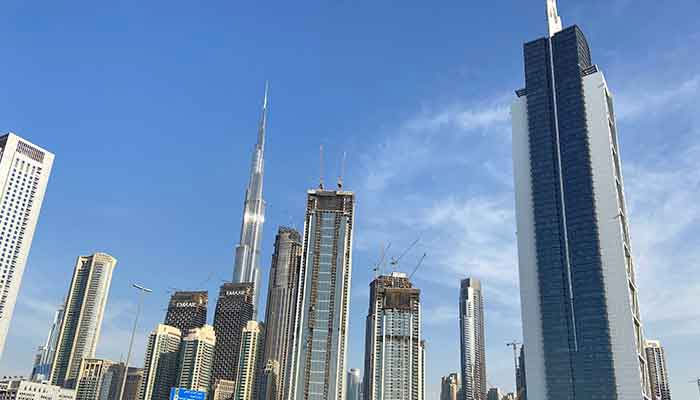
ABU DHABI: In the marbled halls of a luxury hotel, leading experts are discussing a new approach to an age-old problem: how to make it rain in the UAE, the wealthy Gulf state that lies in one of the world’s biggest deserts.
Decades of work and millions of dollars have been ploughed into easing endless drought in the oil-rich UAE, whose mainly expatriate population is soaring undeterred by a dry, hostile climate and hairdryer summer heat.
Despite the United Arab Emirates’ best efforts, rainfall remains rare.
But at last month’s International Rain Enhancement Forum in Abu Dhabi officials held out a new hope: harnessing artificial intelligence to wring more moisture out of often cloudless skies.
Among the initiatives is an AI system to improve cloud seeding, the practice of using planes to fire salt or other chemicals into clouds to increase rain.
“It’s pretty much finished,” said Luca Delle Monache, deputy director of the Center for Western Weather and Water Extremes at the University of California San Diego’s Scripps Institution of Oceanography. “We’re doing the final touches.”
However, Delle Monache conceded that AI was not a “silver bullet” for the UAE, which like other countries has pursued cloud seeding for decades.
Cloud seeding works by increasing the size of droplets, which then fall as rain. It’s estimated to increase rainfall by 10-15 percent, Delle Monache said.
But it only works with certain types of puffy, cumulus clouds, and can even suppress rainfall if not done properly.
“You’ve got to do it in the right place at the right time. That’s why we use artificial intelligence,” he added.
The three-year project, funded with $1.5 million from the UAE’s rain enhancement programme, feeds satellite, radar and weather data into an algorithm that predicts where seedable clouds will form in the next six hours.
It promises to advance the current method where cloud-seeding flights are directed by experts studying satellite images.
Hundreds of such flights occur annually in the UAE.
With only about 100 millimetres (3.9 inches) of annual rainfall, the UAE’s nearly 10 million people mainly rely on desalinated water, piped from plants that produce about 14 percent of the world’s total, according to official figures.
The population is 90 percent foreign and has increased nearly 30-fold since the UAE’s founding in 1971. People are concentrated in the big cities of Dubai, Abu Dhabi and Sharjah, coast-hugging refuges from the vast Arabian Desert hinterland.
However, the country still needs groundwater, replenished by rain and encouraged by a series of dams, for agriculture and industry.







-
 Melania Trump Appears With Humanoid Robot At White House
 -
 ‘Addictive By Design’: Meta, YouTube Found Liable In Historic Verdict
 -
 Bruce Willis' Mom Marlene Makes Another Family Amid Son's Battle With Dementia
 -
 Roblox Safety Warning For Parents: Developer Says Kids Need 24/7 Monitoring
 -
 Chelsea Handler Explains Why She Dates Younger Men
 -
 Chappell Roan's Security Guard Takes 'full Responsibility' For His Interaction With Jorginho's Daughter?
 -
 Rosalía Cuts Concert Short Over Sudden Illness, Fans Shocked
 -
 'Buffy' Star Nicholas Brendon's Death Case Takes Massive Turn
 -
 FKA Twigs Takes Legal Stand Against Ex Shia LaBeouf
 -
 ‘Progressive’ Kate Middleton Snubs Outdated Royal Etiquette
 -
 Kylie Kelce Explains Why She Avoids Raising Kids With 'silver Spoon'
 -
 Meghan Markle Is Above Royal Family ‘empty Threats,’ Says Insider
 -
 Anne Hathaway Opens Up About 'defeated' Feeling As Working Mom
 -
 Shamed Andrew Should Testify In Epstein Case As ‘act Of Service’
 -
 What Really Happened Before Nicholas Brendon Was Found Dead At Home?
 -
 Sarah Ferguson Branded ‘most Famous Missing Person’ In UK Right Now