
Zebra crossings disappearing by foot overbridges
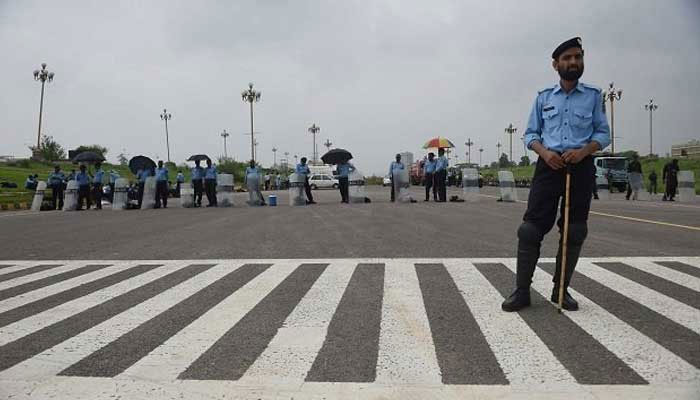
Over the past decades, Rawalpindi’s zebra crossings have been disappearing, replaced by foot overbridges. Emphasising the foot overbridges compared to zebra crossings poses a real problem: it makes movement harder for a certain group of people, for instance, the disabled, people with heart and other medical conditions, pregnant women, and so on.
“Foot overbridges give motorized vehicles a priority over the pedestrians. Foot overbridges are a rarity in the Western world. They rely more on crosswalks. It is not hard to control traffic/pedestrian movement using traffic lights, or conventional hand signals of traffic police members,” says Haider Ali.
“Foot overbridges are structures built over roads that require people to take routes over many lanes of car traffic, without impeding the speed or movement of vehicular traffic. The absence of roof covers on all the Foot overbridges exposes pedestrians to rain and sunlight.
Proponents of these structures argue that these bridges are for the safety of pedestrians, by moving pedestrians out of the way of speeding cars,” says Muhammad Taqi.
“In reality, by displacing people, pedestrian bridges simply reinforce the dominion of vehicles over people on the roads. Separating people from the road reinforces the prioritization of personal motor vehicles while encouraging speeding, driver negligence, and traffic fatalities,” adds Taqi.
“As I climbed the stairs of the foot overbridges at around 9 pm, I found myself in near total darkness as it did not have any lights. It had no roof on the top, limiting light from the road traffic entering it. Using the flashlight from my phone, I climbed further. Soon I found footsteps following me. A man was climbing the stairs behind me. Gripped by fear, I turned around, pretended to make a phone call, and waited until he walked past me,” says Fatima Kulsoom.
“Walking further along the foot overbridges, I found many homeless people sleeping on the side. On the other end, close to where I was to descend, many men were sitting on the stairs smoking and talking. It was obvious from the smell that they were intoxicated. The whole experience left me feeling very unsafe,” adds Fatima.
“Once at street level, I noticed a couple of women trying to cross the same road through a small gap in the median. When I asked them why they were not using the foot overbridges meant for pedestrians, they answered that the foot overbridges is not safe. Even bikers and cyclists use it in a dangerous way,” says Fasiha, a pedestrian.







-
 Bangladesh Sees High Turnout In Landmark National Election
 -
 Lufthansa Cancels Hundreds Of Flights Amid Pilot And Cabin Crew Strike
 -
 Video: Prince Harry Tears Up Talking Of His Court Case & Children: ‘Don’t Feel Shame Even If A Judge Makes Demands'
 -
 King Charles Issues New Statement For ‘carers’ Two Days After Promising To Support Police Action Against Andrew
 -
 Gene Simmons Makes Major Claim Against Rock & Roll Hall Of Fame
 -
 Vladyslav Heraskevych Disqualified From Winter Olympics 2026 Over Helmet Controversy
 -
 Late James Van Der Beek Inspires Bowel Cancer Awareness Post Death
 -
 ByteDance’s New AI Video Model ‘Seedance 2.0’ Goes Viral
 -
 Archaeologists Unearthed Possible Fragments Of Hannibal’s War Elephant In Spain
 -
 Khloe Kardashian Reveals Why She Slapped Ex Tristan Thompson
 -
 ‘The Distance’ Song Mastermind, Late Greg Brown Receives Tributes
 -
 Taylor Armstrong Walks Back Remarks On Bad Bunny's Super Bowl Show
 -
 Pal Exposes Sarah Ferguson’s Plans For Her New Home, Settling Down And Post-Andrew Life
 -
 James Van Der Beek's Impact Post Death With Bowel Cancer On The Rise
 -
 Blake Lively, Justin Baldoni At Odds With Each Other Over Settlement
 -
 Thomas Tuchel Set For England Contract Extension Through Euro 2028