
Gender disparities in educational enrolment highlighted in report
Islamabad : A report titled ‘Girls Education in Pakistan: Trends and Statistics 2022-23’ has highlighted considerable gender disparities in educational enrolment and access throughout the country.
Released by the Pakistan Alliance for Girls Education in partnership with the Pakistan Institute of Education, the report acknowledged the advancements made in enhancing facilities and maintaining enrolment levels. It, however, pointed out the "stalled" growth rate of girls' education, raising concerns about the sustainability of the progress achieved so far.
According to the report, as of the 2022-23 academic year, approximately 21 million girls are enrolled in educational institutions, in stark contrast to 25 million boys from pre-primary through degree levels. The report underscores the ongoing challenge of gender disparity in both access and participation in education. The findings indicate that around 13.71 million girls remain out of school, with girls being seven percent less likely to attend school compared to their male counterparts. Specifically, the out-of-school rate for girls stands at 41.5 percent, compared to 34.9 percent for boys, across the primary to higher secondary education levels. In the Balochistan province, 58 percent of girls are out of school, the highest rate among all provinces.
Pakistan hosts a total of 238,718 educational institutions, comprising 97,509 dedicated to boys, 65,683 for girls, and 74,118 co-educational facilities. This distribution shows that 41 percent of schools and colleges cater exclusively to boys, while only 28 percent serve girls, with the remaining 31 percent offering co-educational environments. The report also revealed that while 66 percent of girls completed grade 5, enrolment in technical and vocational institutions remained critically low, with fewer than 30 percent pursuing STEM education. According to it, women comprise 44 percent of primary school teachers, offering important role models and mentorship for girls.
The report raised concerns about the infrastructure of girls' schools, noting that approximately four percent lack adequate buildings. Among the schools that do have structures, 10 percent are reported to be inadequately constructed. Alarmingly, there are 1,389 schools built from temporary materials and an additional 4,692 using mixed construction materials. Furthermore, 25 percent of girls' schools require repairs, with six percent reported to be in dangerous conditions. Other infrastructural issues were highlighted in the report, with 12 percent of girls' schools lacking boundary walls. Moreover, 14 percent do not have access to toilets, and 17 percent lack drinking water facilities, while 22 percent are without electricity. Notably, the progress in improving school infrastructure has stagnated, with a decline in the availability of electricity and sanitation facilities since the 2021-22 academic year. The report also noted that around two million educators were employed in both public and private schools, with 732,311 male teachers and a larger contingent of 1,234,268 female teachers. However, the data reveal a stark regional disparity across provinces and areas concerning the educational indicators.
The urgent need for policy interventions and community engagement in Pakistan becomes increasingly evident, aiming to bridge the gender gap in education and improve the conditions of girls' schools across the nation, according to the report.
It called for a comprehensive strategy to promote gender equality in education, highlighting the necessity for safe learning environments and substantial investment in educational infrastructure, particularly in under-served areas. The report said targeted initiatives to encourage girls in STEM, along with improved professional development for female educators, were essential for empowering future generations, while community engagement was key to addressing the socio-cultural barriers that hinder girls' access to education.
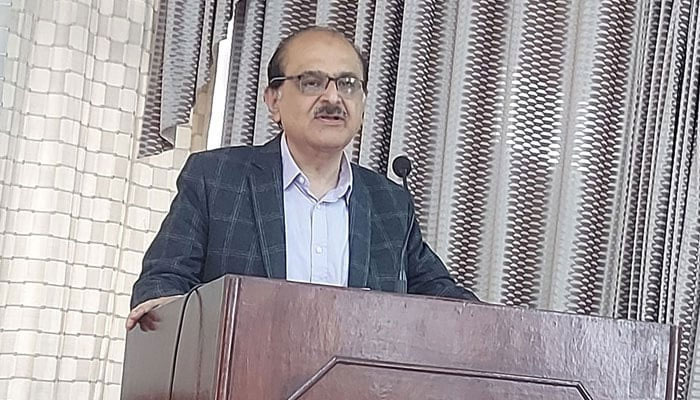
Education secretary Mohyuddin Ahmad Wani said the challenges outlined in the report, including the high number of out-of-school girls and the inequalities in educational facilities, especially in rural regions, underscored the significant work that remained. "It is imperative to address these issues with a sense of urgency and commitment. The future of our nation depends on the education we provide to our children today, especially girls," he said. The secretary said his ministry was committed to working with all stakeholders to address those challenges. "We will continue to develop and implement policies that promote gender equality in education and improve the infrastructure and resources necessary to support our girls in their educational journey," he said.







-
 Gwyneth Paltrow Reveals Deep Personal Connection With Kate Hudson
 -
 Prince Harry, Meghan Markle’s Game Plan For Beatrice, Eugenie: ‘Extra Popcorn For This Disaster’
 -
 OpenAI To Rollout AI Powered Smart Speakers By 2027
 -
 Is Dakota Johnsons Dating Younger Pop Star After Breakup With Coldplay Frontman Chris Martin?
 -
 Hilary Duff Tears Up Talking About Estranged Sister Haylie Duff
 -
 US Supreme Court Strikes Down Trump’s Global Tariffs As 'unlawful'
 -
 Kelly Clarkson Explains Decision To Quit 'The Kelly Clarkson Show'
 -
 Inside Hilary Duff's Supportive Marriage With Husband Matthew Koma Amid New Album Release
 -
 Daniel Radcliffe Admits To Being Self Conscious While Filming 'Harry Potter' In Late Teens
 -
 Director Beth De Araujo Alludes To Andrew's Arrest During Child Trauma Talk
 -
 Video Of Andrew 'consoling' Eugenie Resurfaces After Release From Police Custody
 -
 'Harry Potter' Alum Daniel Radcliffe Gushes About Unique Work Ethic Of Late Co Star Michael Gambon
 -
 Japan: PM Takaichi Flags China ‘Coercion,’ Pledges Defence Security Overhaul
 -
 Angorie Rice Spills The Beans On Major Details From Season 2 Of ' The Last Thing He Told Me'
 -
 Teacher Arrested After Confessing To Cocaine Use During Classes
 -
 Questions Raised Over Andrew Mountbatten-Windsor's Line Of Succession