
Garment factories reopen after Sheikh Hasina’s flight
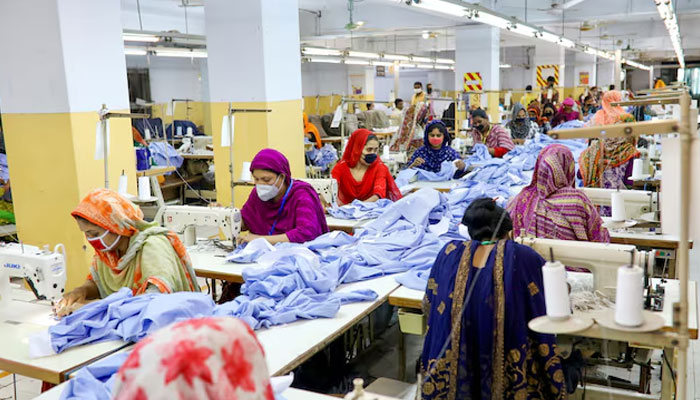
DHAKA: Garment factories in Bangladesh, forecast to account for 90 per cent of the country’s exports, reopened on Wednesday hoping to swiftly resume full operations after production was disrupted by violent protests that ousted Prime Minister Sheikh Hasina this week.
Hasina resigned and fled the country on Monday after around 300 people were killed and thousands injured in a crackdown on student-led protests since July.Garment and textile factories which supply major western brands such as H&M, Zara and Carrefour had been forced to shut under curfews.
“We lost a total of four days, it is too early to make an estimate of the loss. There was little physical damage to factories,” Miran Ali, vice president of the Bangladesh Garment Manufacturers and Exporters Association (BGMEA), told Reuters.
“I am hopeful that in the next few days, we will see complete normalisation,” he said. “I’m confident our buyers will stand by our side.”He added that H&M, which buys from about 1,000 factories in Bangladesh, had already said it would not seek discounts due to the delays. The world's second largest fashion retailer told Reuters on Wednesday its suppliers’ factories were gradually reopening and it welcomed steps taken for greater stability in Bangladesh.
At a factory belonging to apparel maker Urmi Garments in Dhaka, the mainly female employees were back operating sewing machines.“We are poor people depending on daily wages andovertime. If we sit back home, how can we run our families?” 38-year old Razia Begum, an employee at the factory, told Reuters.
Factory manager Emdadul Haq said the factory had lost 228,000 pieces of production worth $107,000. In all, Urmi, which counts H&M, Japan’s Uniqlo and Britain’s Marks and Spencer among its clients, had lost about $2.2 million across three units, he said.
Though factories were reopening, there could be some damage to trade. Hula Global, an Indian apparel producer that serves Western clients, said on Monday it would redirect production for the rest of this year from Bangladesh to India to avert risk.
Pankaj Tuteja, Mumbai-based head of operations at Dragon Sourcing, which helps firms find suppliers, told Reuters that while it expected big brands such as Zara and H&M to stick with Bangladesh, some firms that looked elsewhere could stay away.
“Once the client, then the factories, have invested so much time and money they will not just immediately run back, even when there’s political stability. That can have a long-term impact for Bangladesh,” Tuteja said.
But Bangladesh would remain attractive because of costs that are 15-25 per cent lower than elsewhere, and zero per cent tariffs, Tuteja added.The International Monetary Fund expects the ready-made garments industry will account for 90 per cent of Bangladesh’s $55 billion annual exports in the financial year 2024.Bangladesh was the third-largest exporter of clothing in the world last year, according to the World Trade Organization.







-
 Nancy Guthrie Abduction: Piers Morgan Reacts To 'massive Breakthrough' In Baffling Case
 -
 Adam Mosseri Set To Testify In Court Over Social Media Addiction Claims
 -
 Will Warner Bros Finalize Deal With Paramount Or Stays Loyal With Netflix's Offer?
 -
 Palace Spotlights Queen Camilla For Her Work With Vision-impaired Children A Day After Andrew Statement
 -
 Kim Kardashian Still 'very Angry' At Meghan Markle, Prince Harry
 -
 Texas Father Guns Down Daughter After Heated Trump Argument
 -
 Andrew, Sarah Ferguson Quietly Adopts New Strategy To Control Public Narrative
 -
 Harry Styles Refuses To Apologise For High Tour Ticket Prices In Rude Response: Source
 -
 Ariana Grande Opens Up About ‘dark’ PTSD Experience
 -
 Angelina Jolie Says It Loud: 'Scars Define My Life'
 -
 Climate-driven Wildfires Scorch Some Of World’s Oldest Trees In Patagonia
 -
 King Charles’ Ignorance Over Andrew & Jeffrey Epstein Not True? Foreign Office, MI6’s Work Comes Out
 -
 Police Detained 'innocent' Man In Nancy Guthrie's Kidnapping
 -
 Co-founders Of Elon Musk's XAI Resigned: Here's Why
 -
 Dakota Johnson Reveals Smoking Habits, The Leading Cause Of Lung Cancer
 -
 FAA Shuts Down El Paso Airport, Flights Suspended For 10 Days: Here’s Why