
Solar issues

This letter refers to the article ‘Solar divide’ (Money Matters, May 27, 2024) by Muhammad Wali Farooqi. The writer explains that solar producers are not paying for the infrastructure costs of electric supply such as capacity charges and distribution costs. Generally, solar producers sell electricity during off-peak hours when the grid has excess capacity. During this period, the demand for power decreases due to solar electricity and its capacity remains idle.
Hence, the buy-back tariff is to be reduced to compensate for the idle capacity of the grid. Solar producers should only be allowed to sell electricity when the grid is operating at its full capacity and cannot meet the demand so that charges against idle capacity may not be imposed on solar producers.
Wasi Ahmed Siddiqi
Karachi







-
 Jesy Nelson Reflects On Leaving Girls' Band Little Mix
 -
 World’s First Pokemon Theme Park Opens In Tokyo, Boosts Japan Tourism
 -
 Waymo Trains Robotaxis In Virtual Cities Using DeepMind’s Genie 3
 -
 5 Simple Rules To Follow For Smooth, Healthy Hair
 -
 $44 Billion Bitcoin Blunder: Bithumb Exchange Apologizes For Accidental Payout
 -
 Katie Price Ends Public Feud With Ex Peter Andre After 16 Years
 -
 Apple May Bring ChatGPT And Other AI Apps To CarPlay
 -
 Meghan Markle, Prince Harry Likely To Attend Super Bowl Halftime Show 2026
 -
 AI Next Big Trial: Elon Musk Calls For ‘Galileo Test’ To Prove True Intelligence
 -
 US Appeals Court Affirms Trump’s Immigration Detention Policy
 -
 Bella Hadid, Adan Banuelos Rekindle Romance After Brief Separation
 -
 Jay-Z Shares Bold Advice With Bad Bunny For NFL Super Bowl Halftime Show Appearance
 -
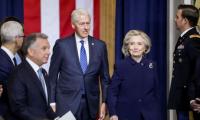 Epstein Probe: Bill, Hillary Clinton Call For Public Testimony Hearing
 -
 Brooklyn Beckham Considers Adoption As Nicola Peltz Can't Carry A Baby
 -
 Expert Discusses 'complications' Of Measles Outbreak
 -
 Kaley Cuoco Recalls Her Divorce With Karl Cook: 'I Was Gonna Die'