
A people’s manifesto
PPP’s manifesto outlines healthcare facilities, education, food security, and women’s empowerment, talks about double real income for wage earners free solar energy of 300 units for poor
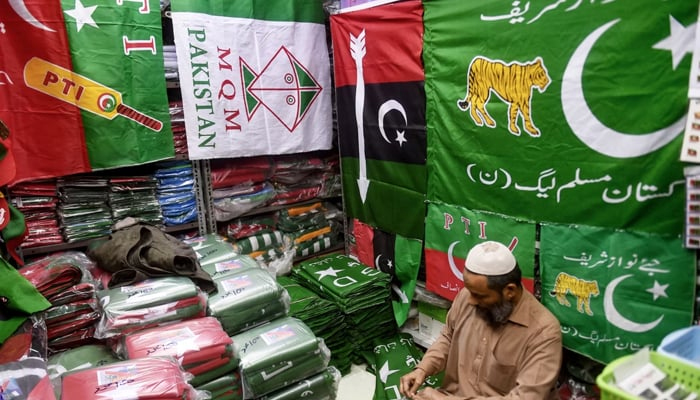
On Saturday, the PML-N finally unveiled its party manifesto, less than two weeks before the February 8 polls. The PPP, which had already given a 10-point agenda earlier as part of a manifesto, also put up its detailed manifesto the same day. Both parties’ manifestos are a reflection of where they stand on various ideological and political questions. The PML-N has expectedly mainly focused on economic policies, while the PPP manifesto mainly focuses on dealing with poverty and providing facilities to the working and lower classes. The PPP’s manifesto outlines healthcare facilities, education, food security and women’s empowerment, talks about double real income for wage earners; free solar energy of 300 units for the poor; green energy parks; education for all; free health for all; three million houses for flood affectees and the poor; welfare schemes; BISP-like programme for farmers and a ‘Youth Card’. On the other hand, the PML-N manifesto promises to provide interest-free loans to small farmers; make government offices environment-friendly; ensure supremacy of parliament; restore Articles 62 and 63 to their original form; abolish NAB; reduce inflation; and create jobs.
These are all wonderful promises. But we have unfortunately been here before: listening to the same parties promise much the same utopia. Trying to show its liberal credentials, the PPP has encouragingly focused on women’s rights, worker’s rights, free health and education, eradicating poverty, providing houses and other welfare schemes. Still sticking to its economic, pro-growth history – despite the PDM tenure black mark – the PML-N has of course focused more on economic policies and how to increase employment so that the country can progress. Interestingly, it has mentioned abolishing NAB, which is something that would benefit all political parties and is something legal experts have also been asking for over the years.
But what do these manifestoes mean in a country that is reeling from not just economic nightmares but also a social structure that is broken down completely. The Human Rights Commission of Pakistan (HRCP) has called on political parties to develop a human rights charter in the face of receding democracy, pre-poll electoral manipulation and severe challenges to human rights. This should be the core of what all political parties should be aiming for – a people’s manifesto. We are now living in the era of hybrid democracy. All political stakeholders must come together after the elections and use parliament as a forum to legislate on these issues that affect all people. When politicians cede political space to non-political entities, then every citizen’s rights are endangered, including those of the political class itself. For this, there needs to be a gradual pushback through parliament. What do the people really want? Have our parties even bothered asking? Do roads matter more or education? What does it mean when a large city's basic amenities become a sort of challenge for its citizens? How do the PML-N and PPP hope to continue ruling over a people who are now not just sceptical but openly fatigued by the many false dawns they have been promised? Education, health, electricity, employment, housing, and crime-free streets: maybe both our mainstream parties can try doing the basics before promising the moon to their voters?







-
 Giant Tortoise Reintroduced To Island After Almost 200 Years
 -
 Eric Dane Drops Raw Confession For Rebecca Gayheart In Final Interview
 -
 Trump Announces New 10% Global Tariff After Supreme Court Setback
 -
 Influencer Dies Days After Plastic Surgery: Are Cosmetic Procedures Really Safe?
 -
 Eric Dane Confesses Heartbreaking Regret About Daughters' Weddings Before Death
 -
 Nicole 'Snooki' Polizzi Reveals Stage 1 Cervical Cancer Diagnosis
 -
 Hilary Duff’s Son Roasts Her Outfit In New Album Interview
 -
 Alexandra Daddario, Andrew Form Part Ways After 3 Years Of Marriage
 -
 Eric Dane Rejected Sex Symbol Label
 -
 Avan Jogia Says Life With Fiancee Halsey Feels Like 'coming Home'
 -
 Kate Middleton's Role In Handling Prince William And Harry Feud Revealed
 -
 Tucker Carlson Says Passport Seized, Staff Member Questioned At Israel Airport
 -
 David, Victoria Beckham Gushes Over 'fiercely Loyal' Son Cruz On Special Day
 -
 Taylor Swift Made Sure Jodie Turner-Smith's Little Girl Had A Special Day On 'Opalite' Music Video Set
 -
 Eric Dane Says Touching Goodbye To Daughters Billie And Georgia In New Netflix Documentary
 -
 Channing Tatum Reveals What He Told Daughter After Violent Incident At School