
Power theft rate in 8 Sindh districts exceeds 50pc: federal secretary
Among 23 districts in Sindh, Tharparkar, Jamshoro are comparatively better off with power theft rates of 11%, 15%, respectively
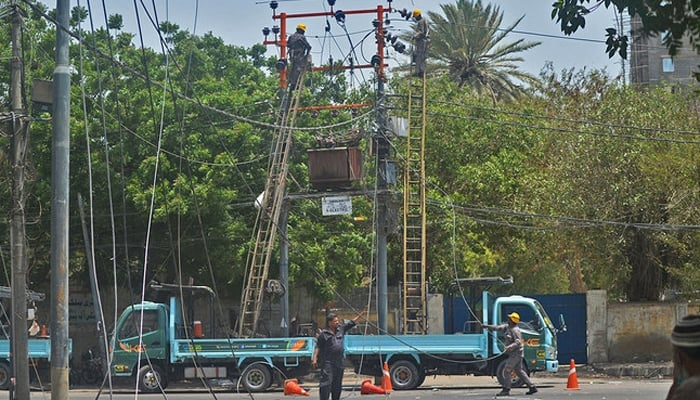
ISLAMABAD: State-run power distribution companies in Sindh are facing a critical issue with an alarmingly high rate of up to 59 percent power theft and non-recoveries of utility bills, according to the latest figures from the Power Division.
Among the 23 districts in Sindh (excluding K-Electric fed districts), Tharparkar and Jamshoro are comparatively better off with power theft rates of 11 percent and 15 percent, respectively. However, in all other districts, power theft ratios range from 27 percent to 59 percent.
This discrepancy means that for every 100 rupees of electricity supplied to these districts, the Sindh-based Discos (Distribution Companies) are only able to recover between 41 rupees to 73 rupees, with the remaining funds disappearing into a black hole, exacerbating losses in the power sector.
These losses contribute to the circular debt issue, which is a pressing concern affecting the entire country. Currently, consumers are bearing the brunt of this crisis, as an additional Rs21 per unit is being collected from them to finance and retire the circular debt, which stands at a staggering Rs2.3 trillion (over $8 billion).
In comparison to Punjab, where four districts have the highest theft/non-recovery ratios in the province, Sindh’s districts appear to be in a worse situation. In Punjab, the low-performing districts include Kasur with a rate of 16 percent, Rajanpur at 14 percent, Okara at 13 percent, and Rahim Yar Khan at 12 percent.
Federal Secretary for Power, Rashid Mahmood Langrial, highlighted the gravity of the situation by sharing a map of Sindh minus K-Electric area through his ‘X’ handle. He revealed that eight districts in Sindh have theft rates exceeding 50 percent. These districts include Jacobabad with 59 percent theft, Sujawal with 58 percent, Larkana with 57 percent, Kashmore with 56 percent, and Shikarpur, Kambar, Dadu as well as Nausheroferoze, each with 52 percent theft.
If the threshold is lowered to 40 percent, the number of districts with high theft rates increases to 15, including district Matiari at 49 percent, Tando Allah Yar and Khairpur, both at 48 percent, Shaheed Benazir Abad (formerly Nawab Shah district) and Mirpur Khas, both at 43 percent. Additionally, Thatta and Ghotki districts have theft/non-recovery ratios of 41 percent each.
Furthermore, there are 19 districts with theft/non-recovery rates exceeding 30 percent. Among these, Hyderabad has a theft rate of 39 percent, Sanghar stands at 32 percent and Badin registers 31 percent.
Districts with theft rates of 30 percent or lower include Sukkur with 30 percent theft, Tando Muhammad Khan at 28 percent, Umerkot with 27 percent, Jamshoro at 15 percent, and Tharparkar at 11 percent. According to circular debt figures the Power Division issued last month, the inefficiencies of Discos, characterized by high losses and low bill recoveries, have placed a substantial burden on the financial health of power sector. These shortcomings in power transmission and distribution have resulted in elevated energy prices and increased business costs.
In FY23, Discos’ losses, inefficiencies, and non-recoveries of bills increased by 26.5 percent to Rs396 billion, up from Rs313 billion in FY22. The major increase came from low bill recoveries, which rose from Rs180 billion to Rs236 billion, while losses and inefficiencies increased from Rs133 billion to Rs160 billion.


