
Sri Lanka’s SC bans Sirisena from sacking legislature
COLOMBO: Sri Lanka’s highest court on Friday banned President Maithripala Sirisena from sacking the legislature until it decides on the legality of his move last month to call snap elections.
The Supreme Court concluded hearing 10 petitions against Sirisena’s move as part of a bitter power struggle with his erstwhile prime minister Ranil Wickremesinghe, but reserved judgement for an unspecified date. The courts reopen on Monday.
Sirisena plunged the country into crisis on October 26 when he fired Wickremesinghe and appointed the contentious Mahinda Rajapakse in his place. He then dissolved parliament on November 9 and called elections nearly two years ahead of schedule on January 5.
Four days after he sacked parliament through a special decree, the Supreme Court issued an interim ruling suspending Sirisena’s action and restoring parliament, which almost immediately passed a no-confidence motion against Rajapakse. "The court issued a fresh order extending the ban on the president until the case is concluded," a court official told reporters after the unusually long hearing on Friday marking four days of legal arguments. Security was stepped up outside the Supreme Court amid expectations of a final ruling on Friday evening. The court’s seven-judge bench is expected to deliver a ruling on the constitutionality of Sirisena’s move as early as Monday.
Sacked premier Wickremesinghe’s party and their allies, who command a majority in the 225-member assembly, have suggested they could begin impeachment proceedings against Sirisena depending on the ruling.
Wickremesinghe’s party loyalists believe the court decision will go in their favour, a view held by many independent lawyers. Problems for Sirisena were compounded on Monday when the Court of Appeal suspended the entire cabinet and asked Rajapakse to explain on what authority he was holding office.
With parliamentary proceedings degenerating into brawls, the United States, the European Union and other powers have raised concerns over the crisis in the strategically important island nation of 21 million people.
Only China has recognised the appointment of Rajapakse, who during his decade as president until 2015 relied heavily on Beijing for diplomatic and financial support.
As president from 2005 until 2015, he ended Sri Lanka’s four-decade civil war in 2009 by crushing the rebel Tamil Tigers. But 40,000 ethnic Tamils were allegedly massacred in the process.







-
 Bangladesh Sees High Turnout In Landmark National Election
 -
 Lufthansa Cancels Hundreds Of Flights Amid Pilot And Cabin Crew Strike
 -
 Video: Prince Harry Tears Up Talking Of His Court Case & Children: ‘Don’t Feel Shame Even If A Judge Makes Demands'
 -
 King Charles Issues New Statement For ‘carers’ Two Days After Promising To Support Police Action Against Andrew
 -
 Gene Simmons Makes Major Claim Against Rock & Roll Hall Of Fame
 -
 Vladyslav Heraskevych Disqualified From Winter Olympics 2026 Over Helmet Controversy
 -
 Late James Van Der Beek Inspires Bowel Cancer Awareness Post Death
 -
 ByteDance’s New AI Video Model ‘Seedance 2.0’ Goes Viral
 -
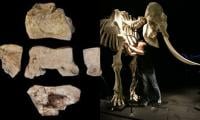 Archaeologists Unearthed Possible Fragments Of Hannibal’s War Elephant In Spain
 -
 Khloe Kardashian Reveals Why She Slapped Ex Tristan Thompson
 -
 ‘The Distance’ Song Mastermind, Late Greg Brown Receives Tributes
 -
 Taylor Armstrong Walks Back Remarks On Bad Bunny's Super Bowl Show
 -
 Pal Exposes Sarah Ferguson’s Plans For Her New Home, Settling Down And Post-Andrew Life
 -
 James Van Der Beek's Impact Post Death With Bowel Cancer On The Rise
 -
 Blake Lively, Justin Baldoni At Odds With Each Other Over Settlement
 -
 Thomas Tuchel Set For England Contract Extension Through Euro 2028