
Govt to spend Rs3.1tr on debt servicing in FY2022
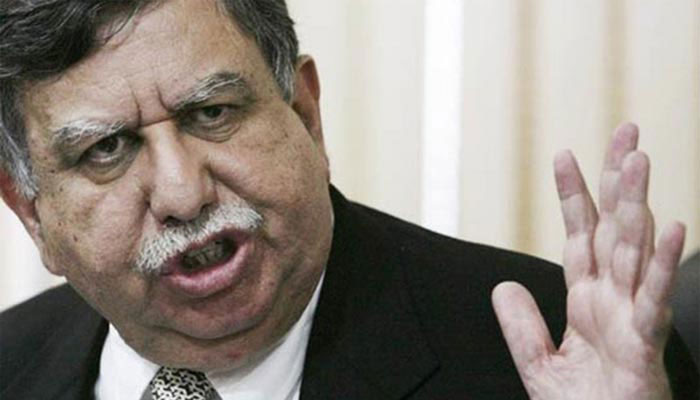
ISLAMABAD: Debt servicing is expected to eat up 35 percent of the total budget outlay of Rs8.4 trillion for the next fiscal year announced by Minister for Finance and Revenue Shaukat Tarin on Friday.
Amid ballooning debt burden, the government has set aside Rs3.1 trillion for interest payments and repayments on domestic and foreign loans – debt servicing – during the next fiscal year. The estimates are up Rs209 billion or 7.3 percent compared to the revised estimate of Rs2.8 trillion in the outgoing fiscal year.
The country will spend Rs302 billion on foreign debt servicing and Rs2.7 trillion on domestic debt servicing. The government spent a huge amount of Rs2.8 trillion on public debt servicing in FY2021 as against the budgeted Rs3.1 trillion.
Pakistan is availing the G-20 debt service suspension initiative for a period of 20 months (May 2020 - December 2021), which will defer the debt servicing impact by $3.7 billion during this period.
Economists believe debt rescheduling will give a cushion to the country to cope with the COVID-19 that has been playing havoc with the economy. The public debt of an economy increases when it is unable to meet its expenditures through its own resources (tax and others) and to bridge the gap (fiscal deficit), it borrows more from local and foreign lenders.
Pakistan’s public debt (domestic and external) has been recorded at a huge Rs38 trillion by end-March 2021. The incumbent government has piled up Rs13 trillion debt on the country since it came into power in 2018.
This total public debt is 79.7 percent of gross domestic product. With the huge borrowings, the country has violated the Fiscal Responsibility and Debt Limitation Act which calls for limiting debt to GDP ratio below 60 percent.
At present, each Pakistani, man, woman and child is indebted with Rs172,727. Of the total public debt, domestic debt was recorded at Rs25.5 trillion as of March. External debt has been recorded at Rs12.4 trillion.
Gross external loan disbursements were recorded at $7.7 billion during the first nine months of 2020/21. Disbursements from multilateral sources amounted to $3.3 billion and accounted for 44 percent of the total disbursements. The main contributors were Asian Development Bank, World Bank and the IMF. The disbursements from the IMF are part of ongoing extended fund facility program while inflows from ADB and World Bank target towards energy, finance and infrastructure development and to address the pandemic repercussions.
Bilateral sources contributed $1.2 billion or 16 percent of total disbursements. Of this, Safe (state administration of foreign exchange) deposits from China amounted to $1 billion and commercial loans contributed $3.1 billion or 40 percent to total disbursements. These commercial loans were mostly obtained to refinance the existing maturities while incremental flows were for balance of payments support.






-
 Victoria Wood's Battle With Insecurities Exposed After Her Death
 -
 Prince Harry Lands Meghan Markle In Fresh Trouble Amid 'emotional' Distance In Marriage
 -
 Goldman Sachs’ Top Lawyer Resigns Over Epstein Connections
 -
 How Kim Kardashian Made Her Psoriasis ‘almost’ Disappear
 -
 Gemini AI: How Hackers Attempt To Extract And Replicate Model Capabilities With Prompts?
 -
 Palace Reacts To Shocking Reports Of King Charles Funding Andrew’s £12m Settlement
 -
 Megan Fox 'horrified' After Ex-Machine Gun Kelly's 'risky Behavior' Comes To Light
 -
 Prince William's True Feelings For Sarah Ferguson Exposed Amid Epstein Scandal
 -
 Nick Jonas Gets Candid About His Type 1 Diabetes Diagnosis
 -
 King Charles Sees Environmental Documentary As Defining Project Of His Reign
 -
 James Van Der Beek Asked Fans To Pay Attention To THIS Symptom Before His Death
 -
 Portugal Joins European Wave Of Social Media Bans For Under-16s
 -
 Margaret Qualley Recalls Early Days Of Acting Career: 'I Was Scared'
 -
 Sir Jackie Stewart’s Son Advocates For Dementia Patients
 -
 Google Docs Rolls Out Gemini Powered Audio Summaries
 -
 Breaking: 2 Dead Several Injured In South Carolina State University Shooting