
Corruption pervasive in Sindh govt departments
‘Aaj Shahzeb Khanzada Kay Saath’ on Thursday
By News Desk
August 08, 2015
KARACHI: The cancer of corruption is taking deeper and deeper roots in each and every department of the Sindh government, Shahzeb Khanzada noted this while presenting his analysis in the telecast of ‘Aaj Shahzeb Khanzada Kay Saath’ on Thursday.
The reports of corruption and embezzlement in development projects and in their budgets were common earlier but greed for money overpowered the officials in such a way that they did not spare even the children and playing havoc with their future in education.
Similar is the case of the police department; high official of the police, especially the Inspector General of Sindh Police, is the target of criticism. The National Accountability Bureau (NAB) has initiated inquiry into corruption in Shuhada Fund against the IGP Sindh and former Additional IG Finance Fida Shah, he pointed out.
Shahzeb Khanzada said the IGP Sindh is still holding his position. There are accusations that the IGP Sindh and other police officials made corruption of billions of rupees in acquisition of weapons, CCTV cameras, bullet-proof jackets and vehicles for police.
Questions are also being raised by the Supreme Court on IGP Sindh and the Sindh police. Judge of the Supreme Court, Justice Ameer Hani Muslim, during the hearing of a case regarding embezzlement in investigation funds, pointed out that corruption in Sindh tripled after Ghulam Haidar Jamali took over the charge of IG Sindh.
Forwarding his analysis further Shahzeb Khanzada stated that very important changes are taking place in the country and the region, but they are being avoided by Parliament - the most important forum.
It was expected that a debate would be there in the ongoing session of the National Assembly on the nuclear agreement of Iran but members did not consider it necessary to discuss this important international issue. Nothing was spoken about killing of the chief of Lashkar-e-Jhangvi, Malik Ishaq by police in an encounter.
There was also the important report on the death of Mulla Omar, ameer of Afghan Taliban during the same period, but the House preferred to remain silent on the matter. Also not sounded in the National Assembly was Indian allegation of Pakistan’s involvement in attack on Gurdaspur.
Sending a letter to the Indian High Commission was a mistake in the International Relations Wing of the Muttahida Qaumi Movement, said the MQM leader Farooq Sattar.He said traditionally the MQM writes regularly on violations of human rights and extrajudicial affairs to those countries, which maintain human rights departments and wings.
Farooq Sattar said he and Nasreen Jaleel look after such correspondence. “We never send such letters to the Indian High Commission,” he said and asserted that the MQM never sought help from India nor would ever do so.
The reports of corruption and embezzlement in development projects and in their budgets were common earlier but greed for money overpowered the officials in such a way that they did not spare even the children and playing havoc with their future in education.
Similar is the case of the police department; high official of the police, especially the Inspector General of Sindh Police, is the target of criticism. The National Accountability Bureau (NAB) has initiated inquiry into corruption in Shuhada Fund against the IGP Sindh and former Additional IG Finance Fida Shah, he pointed out.
Shahzeb Khanzada said the IGP Sindh is still holding his position. There are accusations that the IGP Sindh and other police officials made corruption of billions of rupees in acquisition of weapons, CCTV cameras, bullet-proof jackets and vehicles for police.
Questions are also being raised by the Supreme Court on IGP Sindh and the Sindh police. Judge of the Supreme Court, Justice Ameer Hani Muslim, during the hearing of a case regarding embezzlement in investigation funds, pointed out that corruption in Sindh tripled after Ghulam Haidar Jamali took over the charge of IG Sindh.
Forwarding his analysis further Shahzeb Khanzada stated that very important changes are taking place in the country and the region, but they are being avoided by Parliament - the most important forum.
It was expected that a debate would be there in the ongoing session of the National Assembly on the nuclear agreement of Iran but members did not consider it necessary to discuss this important international issue. Nothing was spoken about killing of the chief of Lashkar-e-Jhangvi, Malik Ishaq by police in an encounter.
There was also the important report on the death of Mulla Omar, ameer of Afghan Taliban during the same period, but the House preferred to remain silent on the matter. Also not sounded in the National Assembly was Indian allegation of Pakistan’s involvement in attack on Gurdaspur.
Sending a letter to the Indian High Commission was a mistake in the International Relations Wing of the Muttahida Qaumi Movement, said the MQM leader Farooq Sattar.He said traditionally the MQM writes regularly on violations of human rights and extrajudicial affairs to those countries, which maintain human rights departments and wings.
Farooq Sattar said he and Nasreen Jaleel look after such correspondence. “We never send such letters to the Indian High Commission,” he said and asserted that the MQM never sought help from India nor would ever do so.







-
 Emma Roberts Stars In 'A Body In The Woods'
 -
 'Our Estrangements Can Kill Us': Meghan's Co-star Weighs In On Anthony Hopkins Interview
 -
 ‘Tone Deaf’ Andrew Called Out Over Arrogant Behaviour Amid Epstein Scandal
 -
 Singing, Dancing & Outperforming: Watch China’s Robot Fair Ahead Of Spring Festival 2026
 -
 WhatsApp Under Fire: EU Steps Up Pressure On Meta Over Claims Of Blocking AI Rivals
 -
 Steven Van Zandt Criticizes Bad Bunny's 2026 Super Bowl Performance
 -
 Katie Price Seen With New Hubby Lee Andrews Weeks After Tying The Knot
 -
 Biggest Order Yet Issued Against Andrew Mountbatten-Windsor: King Charles You Have To’
 -
 ByteDance’s Seedance 2.0 Marks New Era Of Cinematic AI-generated Videos: Here’s How
 -
 Struggling With Obesity? Here's How To Manage It
 -
 How Epstein Scandals Are Impacting King Charles’ Healing As Stress Refuses To Relent: ‘Could Spell His End’
 -
 Why Prince William Releases Statement On Epstein Scandal Amid Most 'challenging' Diplomatic Trip?
 -
 Ciara, Russell Wilson Become Matchmakers For Pals?
 -
 Historic Mental Health Facility Closes Its Doors
 -
 Top 5 Easy Hair Fall Remedies For The Winter
 -
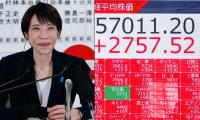 Japan Elections: Stock Surges Record High As PM Sanae Takaichi Secures Historic Victory