
War games and city plans
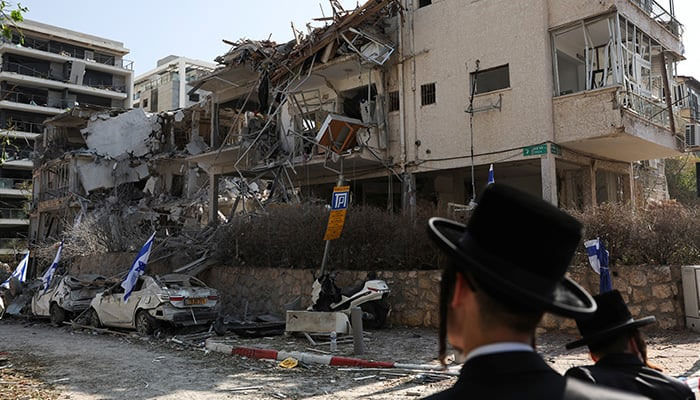
The recent Pakistan–India and Israel-Iran wars show that cities and infrastructure are at great risk during wars. However, we can learn from the strategic aspects of military and defence planning, which accommodate uncertainty, risk, and complexity in their policies and operations.
Dr Stone, King's College London, defines ‘uncertainty’ as a lack of relevant knowledge, ‘complexity’ refers to interactions that hamper the accurate prediction of outcomes, and ‘risk’ is the possibility of an adverse outcome. He explains the following similarities between defence strategies and urban policies and planning.
Theoretically, military and urban planning align their strategies and planning processes to meet political objectives. In practice, the outcomes of wars are complex to predict because the responses of adversaries, international support and supply chain challenges are uncertain; therefore, we must accept some level of risk. Similarly, urban mega-projects are complex and challenging to implement due to the changing nature of the global and national economies, as well as their increased costs and uncertain benefits. Both wars and urban planning involve the dangers of investing too much or spending too little.
This situation can improve if we learn from history and identify the underlying dynamics. History demonstrates how complexities have been addressed and capabilities developed to achieve political objectives. War is a political strategy as much as mega-projects, and professionals play a role in generating the desirable political outcomes.
No plan survives first contact with the enemy. Military operations can never be perfectly controlled and must evolve according to the daily situation and imperfect information. Urban planning is similar, where imperfect information causes delays, overbudgeting, and uncertainty, especially in the case of mega-projects. Both military commanders and urban planners make vital decisions based on partial information and within highly stressful timelines, under intense political pressure.
The solution is to develop and implement a simple, sellable plan that can be flexible according to the evolving situation and changing ground realities. Highly complex blueprint plans, whether in war or urban planning, demand a high degree of coordination and are too fragile to survive demanding and changing conditions.
War is never a rational choice and imposes disproportionate costs, but it is often portrayed as rational when it is conceived in intensely hierarchical ways. Countries that prepare their security policies in these ways always emphasise geopolitical goals over socioeconomic goals and will adopt strategies to achieve their objectives.
Historically, urban planning has been a top-down and hierarchical approach. However, it is widely accepted in liberal democracies that the top-down approach does not achieve its goals, especially during implementation. Therefore, the process of creating spatial and master plans has become participatory, allowing different objectives to be properly weighed.
It is essential for military planners and urban planners to develop an accurate understanding of the context, whether geographic, historic or socio-political, in which they are operating. Local and community politics influenced as much as the national and international politics. For war planners and urban planners, it presents a new form of complexity that is human, rather than technical, and winning local hearts through an engaging, trust-based process is as important as developing state-of-the-art equipment or projects.
The application of IT to warfare is crucial. The current conflicts have shown that continuous improvement in and adoption of technology can lead to success. However, the dependence on technology creates uncertainty.
Urban planners should utilise AI, GIS and other technologies to achieve better outcomes. Just as the military employs technology to overcome resistance, urban planning can leverage technology to address local opposition. This suggests that investing in such technologies can yield efficiencies and advantages. While technology may not eliminate the element of risk, it can reduce it.
In ‘hybrid warfare’, armed force is blended with other means (eg, misinformation, cyber attacks, etc). The recent wars have used hybrid warfare via electronic and social media to create uncertainty without deploying troops. In urban planning, misinformation operates like hybrid warfare, targeting specific groups. If not addressed appropriately, it may undermine objectives. Clear communication is essential in urban planning, from a project’s development to implementation, to avoid counter-productivity in uncertain environments.
After WWII, nuclear weapons were a ‘trophy project’ that could prevent potential wars and place a country on the map. In urban planning, professionals want to build iconic mega-projects (eg, the highest building) to showcase their city. However, these projects pose more risk than providing, say, affordable housing. Mega-projects disrupt the socioeconomic development of the communities they aim to serve. This thinking creates undue risk in urban planning. No country can afford to let mega-projects get out of control; therefore, we need to revisit mega-projects and their policies.
Both urban and military planners must balance modesty and ambition. The incremental approach to sustainable transportation and affordable housing may be insufficient, but ambitious plans and projects to address it risk failure and opposition. The possible ambition must balance the probable modesty.
Urban planners can learn from military models, which work under ambiguity, uncertainty and complexities, during the preparation and implementation of their spatial plans.
The writer is a professor of transport and urban planning at Massey University, New Zealand.







-
 Milo Ventimiglia Calls Fatherhood 'pretty Wild Experience' As He Expects Second Baby With Wife Jarah Mariano
 -
 Chinese Scientists Unveil Advanced AI Model To Support Deep-space Exploration
 -
 Anthropic’s New AI Tool Wipes Billions Off Cybersecurity Stocks
 -
 Trump Announces He Is Sending A Hospital Ship To Greenland Amid Rising Diplomatic Tensions
 -
 'Never Have I Ever' Star Maitreyi Ramakrishnan Lifts The Lid On How She Avoids Drama At Coffee Shops Due To Her Name
 -
 Inside Prince William’s Plans For Prince Harry: What Will Happen To Duke Once He’s King
 -
 Chyler Leigh Pays Moving Homage To 'Grey’s Anatomy' Co-star Eric Dane: 'He Was Amazing'
 -
 Did You Know Tech CEOs Limit Screen Time For Their Own Kids?
 -
 Matthew Lillard Admits Fashion Trends Are Not His 'forte'
 -
 SpaceX Launches Another Batch Of Satellites From Cape Canaveral During Late-night Mission On Saturday
 -
 Princess Beatrice, Eugenie Get Pulled Into Parents’ Epstein Row: ‘At Least Stop Clinging!’
 -
 Inside Kim Kardashian's Brain Aneurysm Diagnosis
 -
 Farmers Turn Down Millions As AI Data Centres Target Rural Land
 -
 Trump Announces A Rise In Global Tariffs To 15% In Response To Court Ruling, As Trade Tensions Intensify
 -
 Chappell Roan Explains Fame's Effect On Mental Health: 'I Might Quit'
 -
 AI Processes Medical Data Faster Than Human Teams, Research Finds