
Straightening the spine of the state
The republic never designed its regulators to be mere file-keepers or penalty machines. They were created as sentinels: watchtowers of public trust. They were meant to see what line ministries could not cross, to protect ordinary citizens from abuse and to help honest enterprise flourish without fear. But over the decades, this grand idea of the state’s invisible scaffolding has twisted. What should have been a clear, confident structure of public service has turned into a maze: tangled, opaque and often feared.
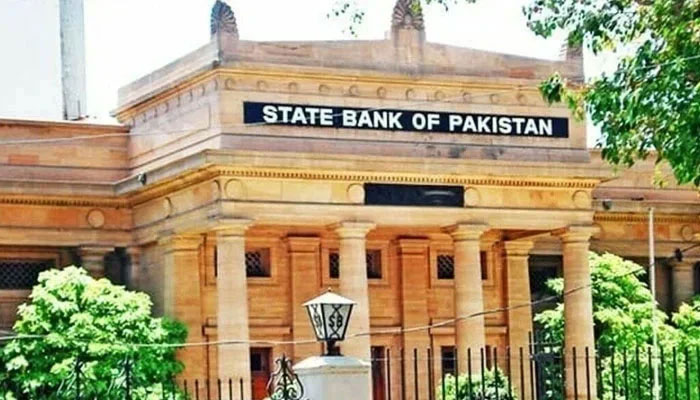
And yet, even within this confusion, some lights still shine. The State Bank of Pakistan, for example, remains a rare example of foresight and competence. In recent years, it has licensed a new breed of branchless, fully digital banks – something only a handful of emerging economies have attempted. It has built Raast, a real-time payments system that now moves trillions of rupees a year, connecting ordinary citizens and small businesses with instant, cost-free money transfers. Not just window-dressing, this is nation-building through infrastructure.
The Securities and Exchange Commission has also taken bold steps. It’s live regulatory sandbox now allows young fintech companies to test new products – digital insurance, crowdfunding, tokenised assets – under the regulator’s eye before going to market. This is how innovation can grow safely, without waiting years for permission or fearing arbitrary shutdowns. It’s not perfect, but it is the right direction.
However, these few successes only throw the failures into sharper relief. While the State Bank and SECP move forward, the rest of Pakistan’s regulatory estate largely lags behind or, worse, hardens. Nepra, the power regulator, publishes reports that confirm what millions already know: the power grid leaks and loses energy on such a scale that Rs591 billion vanished into circular debt last year alone. One can’t call this regulation. This is surrender. Consumers are billed for power they never received, and companies are punished for costs they didn’t cause.
At Ogra, a rushed attempt to deregulate fuel pricing without transitional planning has thrown the future of domestic refining into chaos. Six billion dollars’ worth of refinery upgrades, already underway, may now be abandoned due to policy uncertainty. This is not reform but regulatory vandalism. No investor, foreign or local, can operate in an environment where the rules change mid-game or where those applying them are more focused on protocol than performance.
The situation smacks of inefficiency but also of design failure. Pakistan’s regulators do not coordinate with each other. They do not measure their own effectiveness. They do not report outcomes in language that an ordinary person can understand. They do not face consequences for underperforming. And, most damaging of all, they do not command public trust.
Let us ask, then, the simplest and most essential question: why regulate at all?
The answer is as old as the modern state. Regulation exists to do three things: fix market failures where competition fails or information is hidden; protect the public from unsafe food, unsafe drugs, unsafe buildings or unsafe financial products; and promote innovation by allowing space for experimentation within established guardrails. The best regulators in the world do all three – and they do so with humility, clarity and results.
India has understood this well. With its Jan Vishwas Act, it has begun to strip criminal penalties from commercial laws and replace them with civil fines, sending a message to investors and entrepreneurs alike: we want compliance, not intimidation. It has consolidated 13 corporate approvals into a single digital form, resulting in a dramatic improvement in ease of doing business and local investment.
In the UK, the Financial Conduct Authority has extended its regulatory reach not just to balance sheets, but to boardroom behaviour. From 2026, any bank or broker that tolerates bullying, racism or misconduct will face licensing action. Culture, in this model, is compliance.
Singapore goes further still. The Monetary Authority of Singapore (MAS) allows fintech startups to join its sandbox, sell real products to real customers, receive grants, and exit to a full licence if successful. They have reduced the cost of innovation by reducing the fear of overregulation. They have created not only a more dynamic economy but also a more trusted one. The results are visible in Singapore’s rapid rise among global financial centres, where it now sits just behind London and New York.
Pakistan must take lessons from all this – and not just in slogans, but in its structure.
First, we must shift from regulating activity to regulating outcomes. A refinery should not be forced to file dozens of forms; it should be required to meet safety, emissions and efficiency targets and then left to innovate. A bank should not be judged by its office footprint, but by its financial stability, consumer fairness and risk controls. When we stop policing boxes and start measuring results, we will finally begin to modernise.
Second, our regulators must coordinate with each other. There are over 20 federal regulators, and most operate in silos. A company dealing with the SECP has no assurance that the FBR, Ogra or Nepra will recognise the same data. Investors must explain themselves again and again across portals that don’t speak. The first act of reform must be to weld these portals into one digital window: the Pakistan Business Gateway, where any application – licence, tariff, permission or exemption – has a fixed timeline, a visible tracker and a binding clock.
Third, regulators must measure themselves and report openly. Every year, each regulator should be required to issue a letter to parliament and the public answering a few plain questions: did prices fall or services improve in your markets? How long did it take you to process applications? How many new firms survived under your watch? What share of your budget came from fines and what was done with it? How much of your work is fully digital? None of these requires new laws. The data already exists. What is missing is the will to be judged by it.
But no reform can take hold if appointments continue to be made by favour rather than merit. Every chair and chief executive must be selected through a transparent, performance-based process. A shortlist should be proposed by an independent commission, evaluated in public hearings and appointed on a single, non-renewable seven-year term. A portion of their salary should be performance-based and released only when independent audits confirm results. This is the model used in credible institutions across the world. When applied, it works.
Finally, we must place this commitment in law. A constitutional right to efficient regulation should be enshrined, so that any citizen or company can seek judicial redress if a decision is unreasonably delayed or arbitrarily denied. The power of the state must be matched by the duty to deliver on time, with reason and without bias.
Trust in government will not return through advertising campaigns or social media slogans. It will return when a farmer sees his excessive electricity bill reversed because the regulator used real-time data. It will return when a small businesswoman receives her digital licence within days, without paying a bribe. It will return when citizens see public servants held to the same standard of performance that the public itself is expected to meet.
Regulation, at its core, is not about control but confidence. It is not about punishing failure but about preventing harm. And most of all, it is not about red tape but about redress.
Pakistan does not need fewer laws. What it needs is better law-keepers. It does not need more penalties but rather more performance. And it does not need new slogans but new standards.
The spine of the state has been bent for too long under the weight of arbitrary rules, scattered authorities and absent accountability. It is time to straighten it with clarity, courage and an unshakable belief that service to the public is a duty and not a gift.
Let us begin that work firmly, methodically and without excuse – so that the generations that follow may inherit a regulatory system that defends the weak, enables the bold and stands as proof that a republic can still reform itself from within.
The writer is a political economist, public policy commentator, and advocate for principled leadership and regional cooperation across the Muslim world.







-
 Melania Trump Appears With Humanoid Robot At White House
 -
 ‘Addictive By Design’: Meta, YouTube Found Liable In Historic Verdict
 -
 Bruce Willis' Mom Marlene Makes Another Family Amid Son's Battle With Dementia
 -
 Roblox Safety Warning For Parents: Developer Says Kids Need 24/7 Monitoring
 -
 Chelsea Handler Explains Why She Dates Younger Men
 -
 Chappell Roan's Security Guard Takes 'full Responsibility' For His Interaction With Jorginho's Daughter?
 -
 Rosalía Cuts Concert Short Over Sudden Illness, Fans Shocked
 -
 'Buffy' Star Nicholas Brendon's Death Case Takes Massive Turn
 -
 FKA Twigs Takes Legal Stand Against Ex Shia LaBeouf
 -
 ‘Progressive’ Kate Middleton Snubs Outdated Royal Etiquette
 -
 Kylie Kelce Explains Why She Avoids Raising Kids With 'silver Spoon'
 -
 Meghan Markle Is Above Royal Family ‘empty Threats,’ Says Insider
 -
 Anne Hathaway Opens Up About 'defeated' Feeling As Working Mom
 -
 Shamed Andrew Should Testify In Epstein Case As ‘act Of Service’
 -
 What Really Happened Before Nicholas Brendon Was Found Dead At Home?
 -
 Sarah Ferguson Branded ‘most Famous Missing Person’ In UK Right Now