
Our healthcare workforce crisis
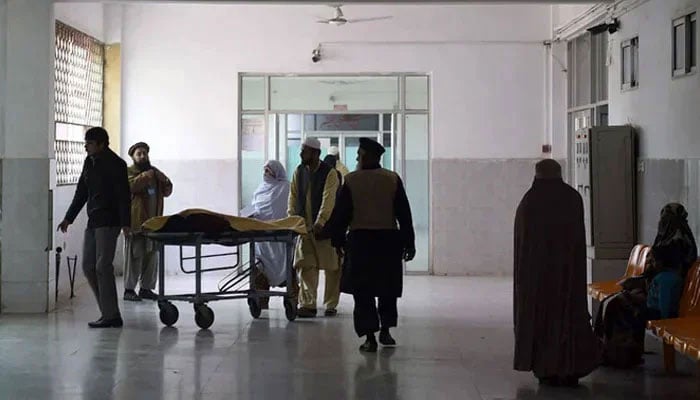
Imagine a country where a woman dies every 50 minutes from pregnancy-related complications. That’s not fiction – that’s Pakistan in 2024, according to the UNFPA. Now add a healthcare system that gets just 1.0 per cent of GDP, and you’ve got a national emergency that threatens both our public health and economic survival.
Pakistan’s system is built upside-down. It’s hospital-centric and doctor-heavy, but deeply neglects primary care and paramedics, who are the backbone of healthcare worldwide. We have three times more doctors than nurses, which is contrary to global standards that recommend the opposite. We face a shortage of over one million nurses and allied health professionals, the very people needed to deliver basic and preventive care.
The consequences are fatal. Over 60 per cent of Pakistanis live in peri-urban or rural areas, yet quality care remains out of reach. Where care exists, it’s often hospital-based and expensive. In emergencies, transportation alone can account for up to 22 per cent of the cost of care and just getting to a facility can financially break a family. This is not just a health crisis. It’s a crisis of social justice and one that risks spiralling into broader unrest.
What’s causing the collapse? Chronic underinvestment is the first culprit. Pakistan’s healthcare budget is among the lowest in the region. Infrastructure is crumbling, training is outdated, and frontline workers – nurses, paramedics, and community health workers – are paid poorly, treated poorly, and offered no career ladder.
Second, our system is skewed towards tertiary hospitals, which cost upwards of $50 million each to build. Hospitals draw headlines and photo opportunities, but not value-for-money health outcomes. Meanwhile, unglamorous but essential community-based care is starved of attention and funding even though it’s far more cost-effective.
Third, workforce burnout and attrition. The foundation of the healthcare workforce – the allied health workers – are not adequately trained, and so everyone ends up doing everyone else's job. Doctors do nurses’ work, nurses cover for paramedics and paramedics handle cleanliness and upkeep of patient wards. The result: high burnout, low quality, and deep dissatisfaction. It’s a system that overworks everyone ye underutilises healthcare talent.
But there’s hope if we act boldly. Here are three strategic solutions that can flip the system right-side up:
Upgrade and expand paramedic training. The future of Pakistan’s healthcare lies less in producing more doctors or investing in more hospitals. It lies in producing better-trained and better-equipped paramedics and community health workers.
We must significantly scale up diploma and certificate programmes that focus on hands-on, real-world training. These should be offered across underserved regions with modern curricula, strong regulations, and mandatory clinical apprenticeships in hospitals and community-based care settings. Simulation labs, e-learning platforms and quality audits can help deliver scale and quality.
Standardised accreditation and licensing will ensure consistency nationwide, so patients in Dera Ghazi Khan get the same quality of care as those in Karachi.
Use digital health to expand access: Telemedicine can revolutionise access if we do it right. AI diagnostics, remote consultations and mobile health monitoring can bring specialists to even the most remote villages.
But that needs real infrastructure. The government must invest in nationwide internet access, simple end-to-end platforms for both patients and providers and secure digital medical records.
Equally critical is training. Thousands of community health workers can be upskilled quickly through digital modules, enabling them to monitor vital signs, identify emerging threats and contribute data that informs smarter public health policy.
Retain and empower the workforce: Training is useless if we lose people faster than we train them. Pakistan must offer competitive salaries, secure contracts and clear career paths for nurses and paramedics. This isn’t a luxury. It should be the bare minimum for workforce retention.
Healthcare has a female-majority workforce. Therefore, gender-sensitive policies are vital, including scholarships for women, daycare facilities and hub-to-hub transport services. These are enablers of professional dignity, performance and ultimately retention.
Healthcare is the single-largest reason that households fall into poverty. Therefore, poor health leads to poor productivity, increasing poverty and growing resentment towards a state that can’t deliver on its most basic duty of healthcare for the underserved.
This is not theoretical. Every $1 invested in health returns $4 in improved productivity and economic growth. A healthy population is the engine of a stable society.
Public-private partnerships can accelerate this transformation. Philanthropic funding, university-industry collaborations and private training centres can help plug gaps the state cannot fix alone. International partnerships can help fast-track standards, knowledge exchange and tech adoption.
But let’s be clear: this is everyone’s job, not just the government. Business leaders, civil society, medical institutions, and educators must all pull in the same direction.
Let’s go back to where we started: a woman dies every 50 minutes in Pakistan from something we know how to prevent. That’s not a statistic. That’s an indictment.
We are at a crossroads. Keep neglecting our frontline healthcare workforce, and we risk deeper inequality, greater instability and slower economic growth. But invest smartly – and we build a nation that is healthier, more prosperous and more resilient.
The writer is a venture builder, aprivate equity investor andinvestment banker. He tweets/posts @AhmadJalal_1







-
 King Charles ‘worried’ For Prince William As Heir Doesn’t Have Temperament To Be King
 -
 France Records Around 1,000 Excess Deaths During Deadly Heatwave
 -
 Kris Jenner Crowns Khloe Kardashian 'most Amazing Mother' In Birthday Tribute
 -
 David Beckham Melts Hearts With His Unseen Baby Snaps As Celebrated Mom Sandra
 -
 Which Countries Will Ban Grand Theft Auto VI At Launch?
 -
 Prince Harry’s ‘emotional Safe Haven’ In UK Revealed
 -
 North West Debuts Daring New Facial Piercings At Paris Fashion Week
 -
 Why Tech Firms Are Blaming AI For The Massive Surge In Device And Console Prices
 -
 Prince William’s Secret To A Successful Marriage With Kate Middleton Comes To Light
 -
 Google Gemini AI Capacity Shortage Delays Meta's AI Projects: Report
 -
 Holly Madison Reveals Why She Underwent Plastic Surgery After Pregnancies
 -
 Dean McDermott Expresses Gratitude As He Marks Three Years Of Sobriety
 -
 South Korea, Japan Deepen Defense Ties In Major Security Push
 -
 Andrew Mountbatten-Windsor’s Fears Over His Own Life And Life Span Turn Worrying: ‘You Can’t Erase This!’
 -
 Katy Perry's Long-awaited Return Ends In Disappointment
 -
 Eva Green Hospitalized After Injury On ‘Wednesday’ Set