
Vanishing biodiversity
I often marvel at Margalla Hills that cradle the city a microcosm of Pakistan's wider ecological treasure
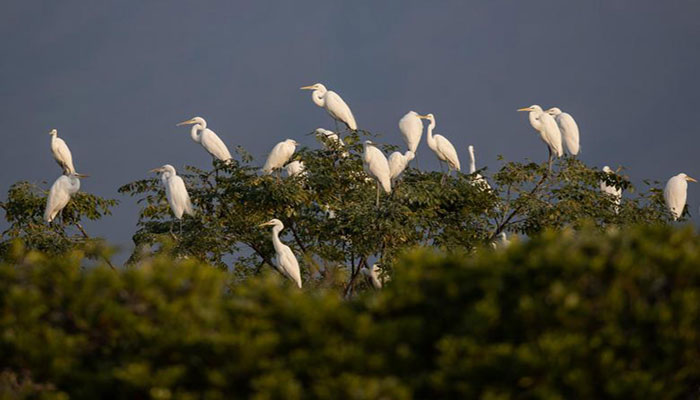
Pakistan is confronted with an often overlooked but urgent truth: biodiversity in the country is under siege. The causes are many: climate change, habitat loss, overexploitation, and pollution. But beneath these threats lies a fundamental problem: we continue to view biodiversity conservation as an external concern, rather than an integral part of our national development and community wellbeing.
This year’s theme for the recently observed International Day for Biological Diversity, ‘Be part of the Plan’, could not be more fitting, particularly for Pakistan, where participation and local ownership are the missing links in our conservation narrative. The need is no longer to protect forests and species in isolation merely, but to embed biodiversity into the core of our policymaking, economy, and education systems.
Living in Islamabad, I often marvel at the Margalla Hills that cradle the city- a microcosm of Pakistan's wider ecological treasure. Yet even these protected areas are increasingly threatened by unplanned urban sprawl, illegal logging and insufficient enforcement of environmental regulations. The contradiction is stark: how can we speak of climate adaptation and sustainable development while our capital city fails to safeguard its ecological lungs?
What Pakistan urgently needs is a paradigm shift – one that reimagines conservation not as a burden, but as an opportunity to uplift communities, enhance resilience and build a new economy rooted in sustainability. The answer, in my view, lies in scaling up community-based conservation (CBC) models, which place local people at the heart of environmental stewardship. These initiatives have already proven their worth.
Take, for example, the Makran Coastal Conservation Project. By empowering local fishermen to embrace sustainable practices, marine resources were preserved and livelihoods were improved. Similarly, in the snow-clad mountains of northern Pakistan, herders who once viewed the endangered snow leopard as a threat are now its protectors thanks to innovative schemes that compensate for livestock losses and promote alternative income sources like ecotourism and handicrafts.
These examples are signposts for the future. Imagine the impact if such community-driven conservation efforts were replicated in rural Sindh, Balochistan and Punjab. Imagine a Pakistan where protecting biodiversity is synonymous with boosting local economies, preserving cultural heritage and strengthening social cohesion. What stands in the way? The reality is that CBC in Pakistan still faces significant barriers: lack of awareness, inadequate funding, weak institutional coordination, and political short-sightedness. But these are not insurmountable. The real challenge is conceptual; we need to fundamentally rethink who conservation is for and who should lead it.
For too long, biodiversity conservation in Pakistan has been the domain of elite-led organisations and government departments, often disconnected from the people most impacted by ecological degradation. We must break this top-down model and invest in bottom-up change. That means training local youth as biodiversity ambassadors, integrating traditional knowledge with modern science, and offering microgrants for village-led eco-projects. It also means using digital tools, such as mobile apps for wildlife reporting or AI-powered platforms for tracking deforestation, to democratise data and make conservation participatory.
In Islamabad, where policy dialogues are frequent but implementation often lags, we must lead by example. Biodiversity should be a central pillar in the city’s urban planning strategy. Green roofs, rain gardens and pollinator corridors are not utopian ideas; they are practical, cost-effective solutions that many global cities have embraced. Why can’t Islamabad be the biodiversity capital of South Asia? Why not turn every park, school and mosque garden into a micro-habitat that supports local flora and fauna? This would improve urban resilience to climate shocks and reconnect people with nature.
Education is key to this transformation. We must go beyond one-off awareness campaigns and embed biodiversity into the school curriculum, not as a chapter in a textbook, but as a lived experience. Field trips to wetlands, biodiversity audits in schoolyards, and storytelling sessions led by local elders are the kinds of immersive activities that build environmental empathy from a young age. Let us teach our children to name the Indus River Dolphin or the Markhor and also understand why their survival matters.
Policy, of course, remains a vital lever. Pakistan must align its biodiversity goals with its climate and development agendas. This means updating outdated environmental laws, increasing budgetary allocations for the Ministry of Climate Change and incentivising private-sector participation in biodiversity-friendly projects. Whether it's green bonds to fund the restoration of degraded forests or tax rebates for organic farmers, the government has a range of tools to build what I would call a ‘nature-positive economy. But this will only work if civil society, academia, and local governments are brought into the fold. Too often, biodiversity is seen as the sole responsibility of environmental ministries. In reality, it cuts across every sector: agriculture, water, health, tourism and education.
During this dire situation, I urge my fellow Pakistanis, especially policymakers, youth and the media to think outside the box. Let us reimagine our relationship with nature not as dominators, but as caretakers. Let us draw inspiration from our past, from the indigenous wisdom of communities who have lived in harmony with nature for generations. And let us look to the future with a bold, inclusive vision that sees biodiversity not as a luxury, but as a lifeline.
The stakes could not be higher. Biodiversity is not just about tigers and turtles; it is about the very systems that sustain life: clean water, fertile soil, breathable air. In losing biodiversity, we risk losing ourselves. But if we get it right, if we put people at the center of conservation, if we dare to innovate, and if we align our policies with the planet’s needs, then Pakistan can emerge not as a victim of environmental decline, but as a leader of ecological renewal.
We have the tools. We have the knowledge. What we need now is the will to be part of the plan.
The writer is a policy analyst and
researcher with a Master’s degree in public policy from King’s College London.






-
 Lamar Odom Reflects On 'awkward' Reunion With Ex Khloé Kardashian: 'I Was Under Attack'
 -
 'Ted Lasso' Star Phil Dunster Reveals Famous Actor He Finds To Be 'the King'
 -
 Rihanna Gives Inside Details Into Horrific Home Shooting
 -
 Princesses Eugenie, Beatrice’s Fears Mount Against Prince William: ‘It’s Getting Precarious’
 -
 Timberwolves Make NBA History With Record-breaking Overtime Comeback
 -
 Is X Down Globally? Thousands Of Users Report Problems
 -
 Trump’s China Trip Rescheduled For May Amid Conflict With Iran
 -
 AI Music Tools Surge As Industry Faces Shift In Creation
 -
 Shaquille O'Neal Addresses Claims He Sent Explicit DMs To Sabrina Carpenter
 -
 24 Dead In Bangladesh After Bus Plunges Into River During Ferry Boarding
 -
 Dana Carvey Recalls Doing 'SNL' Creator Lorne Michaels' Impersonation: 'My First Reaction Is Terror'
 -
 Everything We Know About Taylor Swift And Travis Kelce Honeymoon Plans
 -
 Metformin’s Hidden Brain Pathway Uncovered After 60 Years
 -
 How Dogs Became Man’s Best Friend 15,800 Years Ago: New Study Reveals
 -
 Prince Harry And Meghan Markle Respond To Major Meta And YouTube Ruling
 -
 Why Josh Duhamel Believes His Fans Will Be 'alienated' If He Talks Politics