
‘Pakistan needs EPR policy on plastics’
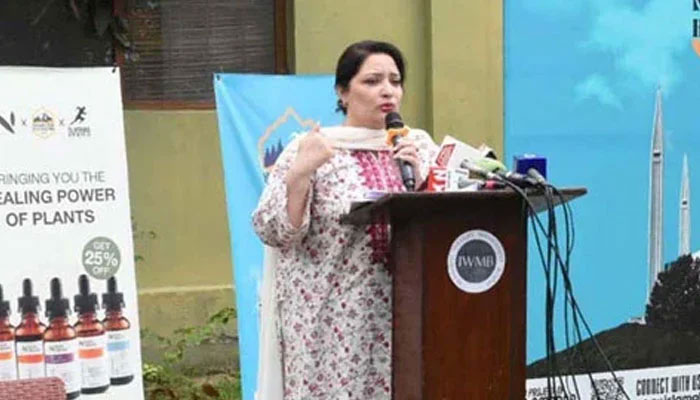
Islamabad:Prime Minister’s Coordinator for Climate Change and Environmental Coordination, Romina Khurshid Alam, has described Extended Producer Responsibility (EPR) a “transformative opportunity” saying it is not a choice between economy and environment but a strategy to align both.
Ms Romina was speaking at a Consultation on “EPR Framework for plastics” jointly organised here by Sustainable Development Policy Institute (SDPI) and European Union’s SWITCH-Asia. The consultation aimed to assess the current status of EPR in Pakistan, reviewing policies, stakeholder roles and identifying key barriers and enablers while drafting inclusive and actionable recommendations for a national EPR framework.
Ms Romina added that EPR can attract investments, create formal jobs in recycling, reduce our plastic imports and enhance competitiveness. Dr Abid Qaiyum Suleri, Executive Director, SDPI, urged the producers to prepare for upcoming EU and UK trade policies as the EU’s Carbon Border Adjustment Mechanism (CBAM) coming into effect on Jan 1, 2026, and the UK’s on Jan 1, 2027. He said EPR will be a critical compliance tool under the new global trade regimes, he maintained.
Stressing the need for green production practices, national recycling targets, producer registration systems, consumer-paid recycling fees and incentives for eco-certifications, he called for integrating the informal sector, launching national awareness campaigns and expanding EPR to include textiles and e-waste.
Dr Zinaida Fadeeva, Team Leader of the SWITCH-Asia Policy Support Component, emphasised the importance of policy support in shaping national strategies around green procurement, sustainable product standards and circular economy roadmaps including the development of EPR responsibilities.
Thomas Lindhqvist, the Swedish academic who coined the term EPR, presented a global perspective on rising plastic consumption. He highlighted that EPR policies in Europe led to improved waste management and product design, while countries like Taiwan, Japan and South Korea implemented effective EPR systems in Asia. Pointing out poor governance, he said that governments must supervise honestly and effectively. Without strong control, EPR can’t succeed, he inferred.
Zainab Naeem fron SDPI said the EU’s support under its Green Deal and Global Gateway would help countries like Pakistan in their transition toward a low-carbon, resource-efficient and circular economy. She highlighted that the SWITCH-Asia programme, which supports 42 countries, plays a pivotal role in advising governments on sustainable consumption and production practices. She presented a detailed overview of Pakistan’s waste landscape, quoting the country generates around 49.6 million tons of solid waste annually, with plastic waste making up a significant portion of urban waste.


