
India’s reckless provocation risks nuclear catastrophe —the world must act now
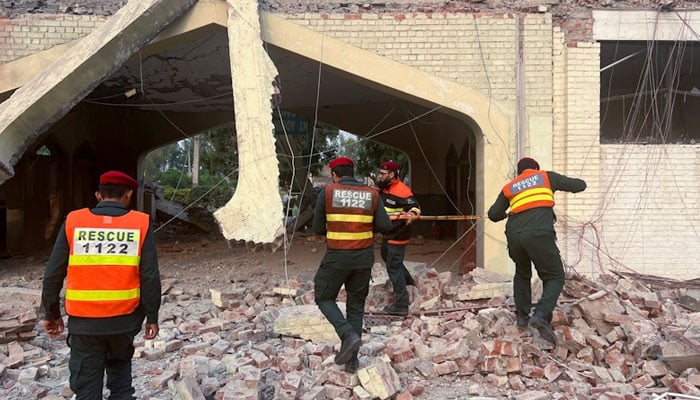
South Asia is once again on the brink—and this time, the stakes are terrifyingly higher. India’s missile strikes on Pakistan, including populated areas in Azad Jammu and Kashmir, are not just a reckless provocation; they are a blatant act of war. Pakistan’s swift response has been firm, but measured. Yet, the question is no longer about who will retaliate. It is now about who will step in to stop this spiral before it explodes into an uncontrollable catastrophe.
On May 6, 2025, India crossed a line. Missiles rained down on civilian and infrastructure targets inside Pakistan and the territory of Azad Jammu and Kashmir. Prime Minister Shahbaz Sharif rightly condemned the assault as a “cowardly act” and a violation of every principle of international law. In his words: “The enemy will never be allowed to succeed in its nefarious objectives.”
The phrase sounds resolute—and it must be. Because this is not a routine border skirmish. It is a strategic escalation by a nuclear state in one of the world’s most volatile regions. And disturbingly, global reactions so far have ranged from lukewarm expressions of concern to outright silence. The United Nations, while urging restraint, has yet to call out India’s aggression for what it is—a unilateral act of war. The United States, a self-professed champion of democracy and rule of law, has chosen ambiguity over accountability. Even U.S. President Donald Trump, known for his bluntness, simply called it “a shame” and moved on.
But shame is not a policy. And silence is not neutrality. When two nuclear-armed states exchange fire across international borders, the time for half-measures and vague statements is over. The world cannot afford to treat this as just another India-Pakistan flare-up. It isn’t.
This moment demands principled leadership and immediate diplomatic action. Every hour lost brings us closer to a miscalculation that could cost millions of lives—not just in Islamabad or Delhi, but in Kabul, Tehran, Beijing, and beyond.
Pakistan has called on the United Nations Security Council to intervene, and it has urged the Organisation of Islamic Cooperation (OIC) to mount a unified response. Its position is clear: We seek peace, but we will not be bullied. Foreign Minister Ishaq Dar’s appeal to global conscience was both pointed and poignant: “This is not just a regional issue; it’s a matter of international peace and security.” Pakistan, in the face of India’s blatant aggression, retains every right under Article 51 of the United Nations Charter to defend itself against armed attack. This provision, which affirms the inherent right of individual or collective self-defense, is not just a legal formality—it is a sovereign imperative. Pakistan’s measured but resolute military and diplomatic response is grounded in this principle. While Islamabad remains committed to peace, it cannot and will not allow Indian missiles to strike its territory with impunity. If the world fails to halt New Delhi’s belligerence, Pakistan reserves the right to protect its people and territorial integrity through all necessary means permitted under international law.
India’s justification—a retaliatory response to a terrorist incident—is a tired script with dangerous consequences. Even if the provocation was real, does that justify state-sanctioned missile strikes on civilian areas? Does it grant impunity to violate sovereign borders? If any other country had done this, the world would be calling for sanctions—not silence.
It is time the international community applied one standard to all nations. If the rules-based order means anything, then India must be held accountable.But accountability alone isn’t enough. What’s needed now is de-escalation through high-level diplomacy. China, the United States, the Gulf nations, and the European Union must jointly initiate an emergency peace process. The goal must be an immediate ceasefire, independent verification of claims, and the revival of backchannel negotiations.
This isn’t 1999. It isn’t even 2019. The reality of 2025 is that both India and Pakistan are better armed, more politically entrenched, and dangerously nationalist. One misstep, one failed intercept, one pilot too deep into enemy airspace—and we are no longer talking about limited warfare. We’re talking about a nuclear exchange.
And in a nuclear exchange, there are no victors—only survivors, if any.The world must choose: act decisively now or regret forever what was allowed to unfold on its watch.







-
 King Charles ‘worried’ For Prince William As Heir Doesn’t Have Temperament To Be King
 -
 France Records Around 1,000 Excess Deaths During Deadly Heatwave
 -
 Kris Jenner Crowns Khloe Kardashian 'most Amazing Mother' In Birthday Tribute
 -
 David Beckham Melts Hearts With His Unseen Baby Snaps As Celebrated Mom Sandra
 -
 Which Countries Will Ban Grand Theft Auto VI At Launch?
 -
 Prince Harry’s ‘emotional Safe Haven’ In UK Revealed
 -
 North West Debuts Daring New Facial Piercings At Paris Fashion Week
 -
 Why Tech Firms Are Blaming AI For The Massive Surge In Device And Console Prices
 -
 Prince William’s Secret To A Successful Marriage With Kate Middleton Comes To Light
 -
 Google Gemini AI Capacity Shortage Delays Meta's AI Projects: Report
 -
 Holly Madison Reveals Why She Underwent Plastic Surgery After Pregnancies
 -
 Dean McDermott Expresses Gratitude As He Marks Three Years Of Sobriety
 -
 South Korea, Japan Deepen Defense Ties In Major Security Push
 -
 Andrew Mountbatten-Windsor’s Fears Over His Own Life And Life Span Turn Worrying: ‘You Can’t Erase This!’
 -
 Katy Perry's Long-awaited Return Ends In Disappointment
 -
 Eva Green Hospitalized After Injury On ‘Wednesday’ Set