
Rupee’s slide could be strategic: report
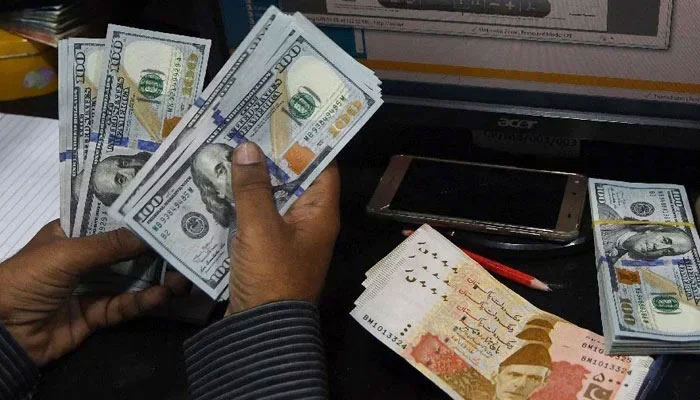
KARACHI: The gradual depreciation of the Pakistani rupee against the dollar could help the country navigate through a difficult global trade landscape and diminishing foreign exchange reserves, according to a report.
On Monday, the rupee closed at 280.86 per dollar in the interbank market. However, it dipped to 281.07 on Thursday and closed at 280.97 on Friday.
This week, Fitch Ratings has predicted a gradual depreciation of the Pakistani rupee as economic activity in the country picks up, which could add pressure to the current account.
According to a Bloomberg report, Fitch anticipates that the rupee will fall to 285 against the US dollar by June 2025 and further to 295 by the end of the next fiscal year in June 2026. This forecast reflects Fitch’s expectation that the State Bank of Pakistan will allow the rupee to weaken gradually to alleviate current account pressures as the economy gains momentum.
Tresmark, a financial terminal, noted in a note to clients that the rupee closed above 281 this week, breaking 15 months of stability, despite the dollar index having declined nearly 10 per cent in recent months. This isn’t just a temporary fluctuation; it coincides with rare current account surpluses and record remittances.
The rupee/dollar exchange rate volatility has significantly increased over the past month, largely due to market fluctuations triggered by Trump’s tariff announcements. Additionally, the report highlights that this situation is not solely about the forex reserves slipping by $226 million week-on-week or $492 million year-to-date.
“A key factor in the rupee’s weakness isn’t just exports to the US taking a hit, but what’s about to happen in the Eurozone. If Chinese exports to the US slow down, they will flood the Eurozone instead -- and that could seriously dent Pakistan’s exports to Europe,” it said.
Pakistan’s central bank’s foreign exchange reserves dropped by $367 million to $10.21 billion in week ended April 18 due to external debt repayments.
The total liquid foreign reserves held by the country decreased by $226 million to $15.436 billion. However, the reserves of commercial banks increased by $141 million to $5.23 billion.
“If you look back at every episode where the rupee spiralled out of control, it boiled down to three things: west-border smuggling, hundi/hawala channels, and a gigantic CA deficit fuelled by imports,” the report said.
“This time, it is different. It feels more like a managed depreciation strategy -- a move that could actually help Pakistan navigate a hostile global trade environment and eroding reserves, but only if it is done very, very gradually,” it added.






-
 Hilary Duff Opens Up About Marriage Fears Despite Strong Bond With Matthew Koma
 -
 ‘Grey’s Anatomy’ Star Eric Dane Breathes His Last At 53
 -
 Donald Trump Breaks Silence On Andrew’s Arrest: ‘It’s A Shame’
 -
 DJ Khaled Shares Weight Loss Progress
 -
 Jennifer Aniston And Jim Curtis Share How They Handle Relationship Conflicts
 -
 Shamed Andrew Real Birthday Plans As Cops Showed Up At Door
 -
 Pete Davidson’s Girlfriend Elsie Hewitt Says 'everything Hurts' After Sudden Medical Emergency
 -
 Princess Beatrice 17 Holidays Per Year Exposed Amid Andrew Arrest
 -
 Who Is 'Queen Of Woke'? UK First Female Civil Head
 -
 Dwayne Johnson Confesses What Secretly Scares Him More Than Fame
 -
 Elizabeth Hurley's Son Damian Breaks Silence On Mom’s Romance With Billy Ray Cyrus
 -
 Shamed Andrew Should Be Happy ‘he Is Only In For Sharing Information’
 -
 Daniel Radcliffe Wants Son To See Him As Just Dad, Not Harry Potter
 -
 Apple Sued Over 'child Sexual Abuse' Material Stored Or Shared On ICloud
 -
 Nancy Guthrie Kidnapped With 'blessings' Of Drug Cartels
 -
 Hailey Bieber Reveals Justin Bieber's Hit Song Baby Jack Is Already Singing