
‘India’s strategic culture embodies realpolitik and covert tactics’
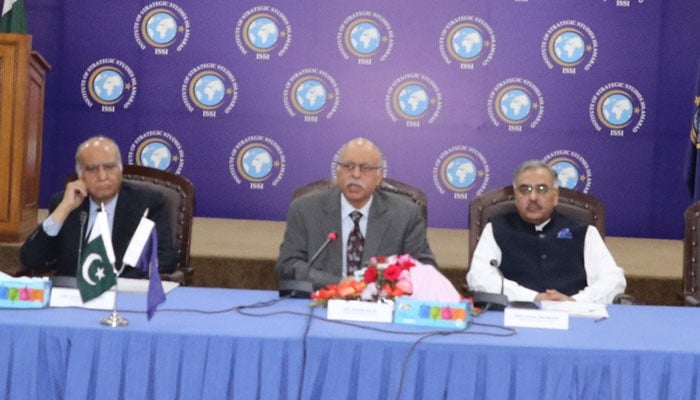
Islamabad:Brigadier (r) Naeem Salik, Executive Director, Strategic Vision Institute, has stressed the need of deeper study for better understanding of Indian strategic culture.
Dr Salik was addressing as keynote speaker at a seminar on “Understanding fundamentals of India’s contemporary strategic culture” organised here by Institute of Strategic Studies Islamabad (ISSI).
Dr Salik said that the term strategic culture, coined by Jack Snyder, refers to enduring beliefs and norms shaping security policies. He stated that while strategic culture evolves slowly, strategic policy adapts to international environments but remains influenced by cultural foundations.
He said that India’s strategic culture, rooted in Arthashastra and Mandala theory, emphasises realpolitik, expansionism and covert tactics. Historical figures like Chandragupta and Ashoka shaped India’s nationalist identity. Modern doctrines, from Nehruvian pacifism to Indira Gandhi’s Monroe-like South Asia dominance, reflect evolving strategies, he explained adding that the Doval Doctrine and Modi’s diplomacy highlight assertiveness and autonomy. In the end, he ruled out the possibility of Pakistan-India diplomatic engagement as India’s contemporary strategic doctrine under Modi government avoids regional engagement.
Dr Asma Shakir Khawaja, Executive Director, Centre for International Strategic Studies (CISS), AJK, stated that strategic culture provides valuable perspectives of state’s behaviour and policy choices. Indian strategic culture, shaped by Hindu Brahmin traditions, mythological texts, classical realism and geography, emphasises statecraft, military preparedness, complete destruction of the enemy, and regional supremacy.
She rejected the famous notion that India had lacked a strategic culture, considering such claims a myth. She stated that Indian strategic culture is inherently defensive. The sacred books of Hinduism mainly glorify and legitimise war, she said adding that India perceives threats from the north/northeast and considers it a disruptor of its envisioned Hindu-centric South Asia. She considers India as a state with revisionist tendency prioritising dominance. She concluded that this culture rejects balance of power, viewing peace as a sign of weakness.







-
 Hilary Duff Opens Up About Marriage Fears Despite Strong Bond With Matthew Koma
 -
 ‘Grey’s Anatomy’ Star Eric Dane Breathes His Last At 53
 -
 Donald Trump Breaks Silence On Andrew’s Arrest: ‘It’s A Shame’
 -
 DJ Khaled Shares Weight Loss Progress
 -
 Jennifer Aniston And Jim Curtis Share How They Handle Relationship Conflicts
 -
 Shamed Andrew Real Birthday Plans As Cops Showed Up At Door
 -
 Pete Davidson’s Girlfriend Elsie Hewitt Says 'everything Hurts' After Sudden Medical Emergency
 -
 Princess Beatrice 17 Holidays Per Year Exposed Amid Andrew Arrest
 -
 Who Is 'Queen Of Woke'? UK First Female Civil Head
 -
 Dwayne Johnson Confesses What Secretly Scares Him More Than Fame
 -
 Elizabeth Hurley's Son Damian Breaks Silence On Mom’s Romance With Billy Ray Cyrus
 -
 Shamed Andrew Should Be Happy ‘he Is Only In For Sharing Information’
 -
 Daniel Radcliffe Wants Son To See Him As Just Dad, Not Harry Potter
 -
 Apple Sued Over 'child Sexual Abuse' Material Stored Or Shared On ICloud
 -
 Nancy Guthrie Kidnapped With 'blessings' Of Drug Cartels
 -
 Hailey Bieber Reveals Justin Bieber's Hit Song Baby Jack Is Already Singing