
Reclaiming the deferred dream
It is time to assess how far we have come in upholding these principles
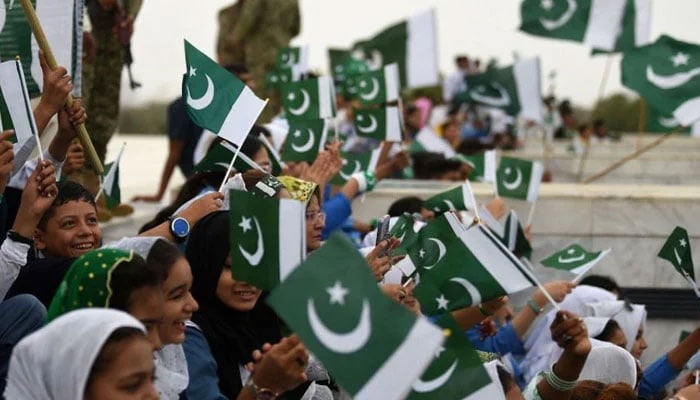
As we celebrate 23rd March, commemorating the historic Lahore Resolution of 1940, we reflect on the moment that laid the foundation of Pakistan. The resolution, passed at Minto Park (now Iqbal Park) in Lahore, was not just a demand for a separate state but a commitment to the principles of justice, equality, and progress-values meant to define the nation’s political and ideological framework.
It is time to assess how far we have come in upholding these principles. The Lahore Resolution was more than a call for statehood; it was a vision for a nation built on justice, equality, and progress. However, as we reflect on Pakistan’s journey, we must ask: Has this dream been realised, or has it been perpetually deferred?
Justice was envisioned as the cornerstone of the new nation, yet economic and legal disparities persist. Pakistan’s legal system favours the powerful. Cases involving political and business elites often face prolonged legal battles or are dismissed on technical grounds, while ordinary citizens grapple with a backlogged judicial system, exorbitant legal costs, and slow proceedings.
Forced disappearances remain a grave concern, with families encountering legal obstacles in seeking justice. Even when cases reach the courts, the process is painfully slow, raising questions about accountability. The phrase “justice delayed is justice denied” aptly describes Pakistan’s legal landscape, where verdicts often take decades, fueling public distrust. Women, in particular, face systemic barriers in accessing justice, especially in cases of domestic violence and workplace harassment. Many abandon their legal battles due to endless hearings, societal pressure, and prohibitive costs. Survivours of gender-based violence often endure years of legal limbo while perpetrators secure bail, reinforcing a culture of impunity.
The intersection of gender and climate justice presents additional challenges. Women, particularly those dependent on agriculture, face systemic obstacles in land and livelihood disputes. Those displaced by natural disasters or climate change often struggle for legal recognition and compensation, exacerbating their vulnerability. According to the World Justice Report 2024, Pakistan ranks 129th out of 142 countries on the Rule of Law Index, with a stagnant score of 0.38 since 2014. Reclaiming the spirit of the Pakistan Resolution requires urgent, structural legal reforms. Modernising case management, streamlining judicial appointments, and integrating technology into court proceedings are critical steps toward restoring public faith in the judiciary. Without these reforms, the promise of a just and equitable society, envisioned in 1940, will remain unfulfilled.
The Pakistan Resolution envisioned a society where all citizens enjoyed equal rights. Yet, economic disparity, gender discrimination, and regional inequalities have only deepened. Access to education, healthcare, and employment remains unequal, with entrenched barriers limiting opportunities for marginalised communities. A recent World Economic Forum report ranks Pakistan among the lowest in the global ranking in economic parity.
Pakistan ranks 145th out of 146 countries in economic gender equality, with only Sudan faring worse. According to the World Bank’s 2024 report on women’s economic empowerment, Pakistani women earn 18% less than men for the same work, and 47 million women remain out of the labour force. In the agricultural sector, where 68% of the female workforce is employed, 76% work without pay, compared to 24% of men. Women entrepreneurs also face significant barriers in accessing financial resources and business opportunities.
The widening wealth gap is another pressing issue. The tax system disproportionately favours the wealthy, while the burden of indirect taxation falls on the lower and middle classes. Pakistan operates two parallel economies-one for the elite, who enjoy access to world-class healthcare, education, and financial security, and another for the underprivileged, who struggle for basic necessities. Climate change disproportionately affects the poor, particularly rural communities, yet government relief efforts remain inadequate.
Wealth inequality surpasses income inequality, with a stark gap of 70.7% compared to 32.7% (Burki, Hussain & Khan, 2021). Economic reform must focus on progressive taxation, wealth redistribution, and investment in human capital to foster inclusive growth.
Pakistan has made measurable progress in infrastructure, technology, foreign direct investment, and the services sector, yet political instability, weak governance, and inconsistent policies have hindered sustainable development. The World Development Report 2024 ranks Pakistan 164th out of 193 countries in the Human Development Index, placing it in the “low human development” category.
A deferred dream is not a lost dream. The ideals of the Pakistan Resolution remain within reach-but only if we, as a nation, actively work toward reclaiming them. Strengthening institutions, ensuring equitable economic policies, and investing in education, research, and technology are essential steps toward sustainable progress.
The Pakistan Resolution was a pledge to build a just, equitable, and progressive society-one that must be reaffirmed today. Moving forward, empowering youth and women, fostering inclusive development, and strengthening democratic institutions are critical. The dream of 1940 must not remain a distant hope; it must become a lived reality.
The question remains: Will we reclaim the dream or continue to defer it?
-The author is a political economist and the recipient of the prestigious Martin Luther King Award.







-
 Robbie Williams Confirms ‘exciting’ Performance At FIFA World Cup Final
 -
 Taylor Swift, Travis Kelce's ‘top-secret’ Wedding Location Still A Mystery?
 -
 Matt Damon Talks About Filming ‘The Odyssey’ With No ‘special Treatment’
 -
 Meghan Markle Gives Prince Harry Key Assurance Before Meeting King Charles In UK
 -
 It's Scary': US Congressman Reacts To Anthropic's Powerful AI Model
 -
 King Charles ‘worried’ For Prince William As Heir Doesn’t Have Temperament To Be King
 -
 France Records Around 1,000 Excess Deaths During Deadly Heatwave
 -
 Kris Jenner Crowns Khloe Kardashian 'most Amazing Mother' In Birthday Tribute
 -
 David Beckham Melts Hearts With His Unseen Baby Snaps As Celebrated Mom Sandra
 -
 Which Countries Will Ban Grand Theft Auto VI At Launch?
 -
 Prince Harry’s ‘emotional Safe Haven’ In UK Revealed
 -
 North West Debuts Daring New Facial Piercings At Paris Fashion Week
 -
 Why Tech Firms Are Blaming AI For The Massive Surge In Device And Console Prices
 -
 Prince William’s Secret To A Successful Marriage With Kate Middleton Comes To Light
 -
 Google Gemini AI Capacity Shortage Delays Meta's AI Projects: Report
 -
 Holly Madison Reveals Why She Underwent Plastic Surgery After Pregnancies