
Border crisis
Torkham is busiest trade routes between Pakistan, Afghanistan and Central Asia, facilitating over $3 million in daily trade
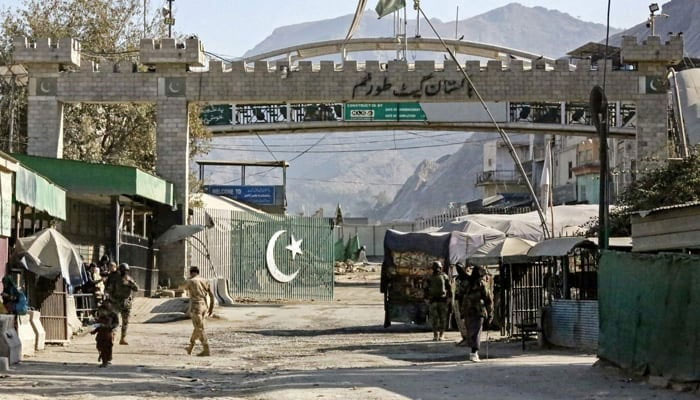
The continued closure of the Pak-Afghan Torkham border could be seen as a manifestation of just how complicated our border with Afghanistan is -- marked by history, family, tradition, ethnicity and also violence. The border, a crucial trade and transit route but also an important route for many families, has been rendered inactive due to hostilities, leaving thousands stranded and disrupting the lives of countless traders, transporters and civilians. This closure, triggered by the construction of a bunker by Afghan forces near Zero Point, has led to casualties and financial loss -- the most recent cross-border firing left several of our security personnel injured.
Torkham is one of the busiest trade routes between Pakistan, Afghanistan and Central Asia, facilitating over $3 million in daily trade. With over 5,000 trucks laden with perishable goods stranded on both sides, traders are suffering heavy financial losses. The plight of daily wage workers, transporters and local businesses that depend on cross-border trade only compounds the urgency of the crisis. There is also the humanitarian matter of medical travel for Afghan patients, many of whom rely on Peshawar’s hospitals for critical treatment. All of this has to be seen in the larger geopolitical context: Pakistan has consistently urged Afghanistan to take stronger action against the TTP, which continues to operate from Afghan soil. The Afghan Taliban regime, however, has failed to curb the activities of these groups. Islamabad’s concerns have been validated by reports presented to the United Nations Security Council, which confirm the TTP’s operational capabilities in Afghanistan.
Despite these tensions, there have been attempts to resolve the issue through dialogue. Khyber Pakhtunkhwa Chief Minister Ali Amin Gandapur has indicated that KP would like to open direct negotiations with Kabul. It is easy to understand why the federal government would be hesitant to go ahead with such strategy. Foreign policy must ideally be left to the Foreign Office and the ministry in charge in the centre. That however does not discount the fragile place KP finds itself in -- having to bear most of the brunt of the Afghan Taliban's refusal to crack down on terror. What we need now is urgent coordination by both federal and provincial governments to engage Afghanistan in meaningful dialogue, ensuring that border tensions do not spiral further. The Afghan government must be pressed to prevent its territory from being used as a launching pad for militant attacks against Pakistan. It is impossible to continue forever with 'diplomacy', though, if the other side just plainly refuses to budge. Meanwhile, Pakistan must also adopt a pragmatic approach that balances national security with economic interests. Without swift diplomatic intervention, the Torkham standoff will only deepen mistrust. And without the Afghan Taliban cracking down on the TTP, border issues will continue to rise. We need to do better.


