
Roundtable on public health held at PIPS
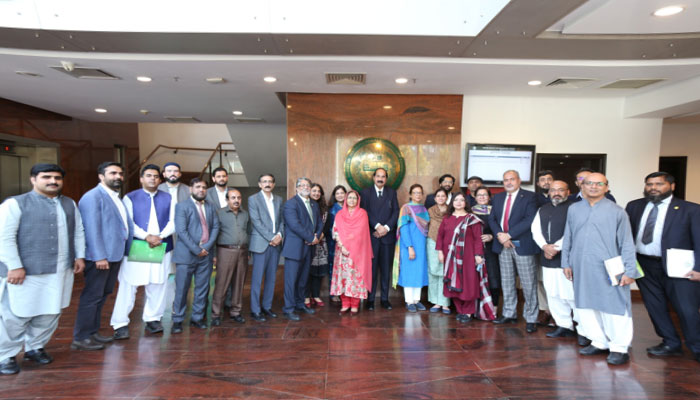
Islamabad : A high-level Parliamentary Roundtable on ‘Industrially Produced Trans-Fatty Acids (iTFAs), Partially Hydrogenated Oils (PHOs), and Human Health’ was held at the Pakistan Institute for Parliamentary Services (PIPS).
The event, organised collaboratively by Pakistan Youth Change Advocates (PYCA), Centre for Peace and Development Initiatives (CPDI), and PIPS under the Transform Pakistan campaign, brought together parliamentarians, health experts, civil society representatives, and regulatory authorities to discuss urgent measures for protecting public health through robust regulation of iTFAs and a legislative ban on the production and distribution of PHOs.
The session commenced with welcome remarks from Muhammad Rashid Mafzool Zaka, Executive Director of PIPS, who emphasised the institute's commitment to bridging civil society and parliamentarians for meaningful discourse. “PIPS is happy to facilitate this first important dialogue between legislators and public health experts on the eradication of industrial trans fats and PHOs from our dietary sources to ensure food safety across Pakistan,” he said.
In her opening remarks, PYCA’s Executive Director Areebah Shahid set the agenda, highlighting the alarming health risks associated with industrial trans fats and the critical need for regulatory and legislative action. “While PSQCA has made some progress in the past to regulate a few food categories, it is important to ensure that all foods are covered under a mandatory governmental iTFA regulation and legislators take the lead in banning the primary raw material for the production of iTFAs, i.e., PHOs. The latter is the main reason for initiating today's conversation,” she noted.
Dr. Tausif Janjua from the Ministry of National Health Services, Regulations, and Coordination (MNHSR&C) delivered the keynote address. “58% of all death in Pakistan annually are attributed to non-communicable diseases (NCDs) and iTFAs are a leading contributor to NCDs such as cardiovascular diseases, diabetes, stroke, Alzheimer’s, obesity and various cancers.” He underlined the pressing need for comprehensive regulatory measures to reduce the burden of NCDs caused by iTFAs.
Munawar Hussain, in-country coordinator for the Global Health Advocacy Incubator (GHAI), who presented international best practices.
At the end of the first session, Dr. Shazia Sobia Aslam Soomro, Member of the National Assembly, acknowledged the issue and pledged her support. “I wish this had been brought to my notice earlier. Nonetheless, now that it has, I will ensure that I play my role for food safety across Pakistan,” she said. Civil society leaders, including Mukhtar Ahmed, Executive Director of the Centre for Peace and Development Initiatives, highlighted the need for strategic partnerships.







-
 Why Prince William Releases Statement On Epstein Scandal Amid Most 'challenging' Diplomatic Trip?
 -
 Historic Mental Health Facility Closes Its Doors
 -
 Top 5 Easy Hair Fall Remedies For The Winter
 -
 Japan Elections: Stock Surges Record High As PM Sanae Takaichi Secures Historic Victory
 -
 Prince William, Kate Middleton Finally Address Epstein Scandal For First Time: 'Deeply Concerned'
 -
 Kim Kardashian Promised THIS To Lewis Hamilton At The 2026 Super Bowl?
 -
 Andrew Mountbatten-Windsor Throws King Charles A Diplomatic Crisis
 -
 Barack Obama Hails Seahawks Super Bowl Win, Calls Defense ‘special’
 -
 Pregnant Women With Depression Likely To Have Kids With Autism
 -
 $44B Sent By Mistake: South Korea Demands Tougher Crypto Regulations
 -
 Lady Gaga Makes Surprising Cameo During Bad Bunny's Super Bowl Performance
 -
 Paul Brothers Clash Over Bad Bunny's Super Bowl Performance
 -
 South Korea: Two Killed As Military Helicopter Crashes During Training
 -
 Elon Musk Unveils SpaceX’s Moon-first Strategy With ‘self Growing Lunar City’
 -
 Donald Trump Slams Bad Bunny's Super Bowl Performance: 'Absolutely Terrible'
 -
 Jake Paul Criticizes Bad Bunny's Super Bowl LX Halftime Show: 'Fake American'