Can AI be trusted? New documentary sparks fresh debate
AI documentary highlights tension between safety-focused companies and aggressive expansion in the AI sector
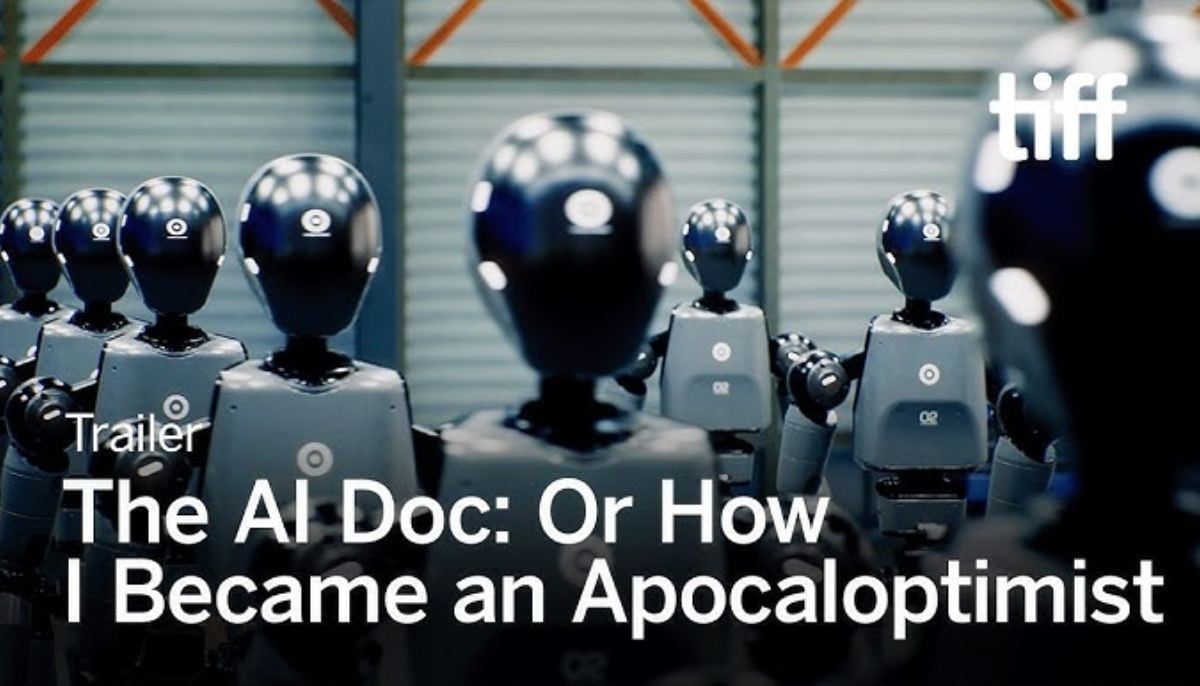
A new documentary on artificial intelligence is pushing back against rising fear around the technology, as filmmaker Focus Features' director Daniel Roher questions whether society should embrace optimism instead of doom and gloom about AI in conversations with industry leaders, researchers, and tech executives.
The film The AI Doc Or How I Became an Apocaloptimist, produced by Everything Everywhere All At Once co-director Daniel Kwan and directed by filmmakers Roher and Charlie Tyrell, shows how artificial intelligence changes social structures and professional responsibilities and artistic expression.
The documentary contains interviews with key artificial intelligence experts who include OpenAI CEO Sam Altman and Google DeepMind CEO Demis Hassabis and Anthropic CEO Dario Amodei.
AI documentaries are at the centre of a growing divide between optimism and fear. Focus Features director Daniel Roher said cynicism around artificial intelligence is “very, very easy” but warned it may be “the only wrong answer to this".
Roher, who won an Oscar for Navalny, said, “I’m just becoming more and more concerned" as AI advances into areas like conflict and military use.
He added that the industry is moving so fast that definitions are unclear. “By your definition, we have reached AGI,” he said, referring to artificial general intelligence debates.
The AI documentary also highlights tension between safety-focused companies and aggressive expansion in the AI sector. Anthropic CEO Dario Amodei and OpenAI CEO Sam Altman are portrayed as central figures in what Roher calls a global AI “arms race".
Roher criticised industry executives because he saw one executive as someone who was media-trained up the wazoo and not a particularly genuine person, while he also needed to explain that "the battle has not already been lost" about AI regulation and copyright issues.
People already experience job changes because of artificial intelligence which creates both new ways to work and new rules that governments need to create protective systems.
Despite concerns, AI documentaries promote engagement rather than rejection. Roher said, “The worst thing you can do is be cynical,” adding that people must understand AI tools and their impact.
He also stressed collective responsibility, saying, “It takes all of us to find a solution here.”


-
 Vance says Microsoft replaced laid-off workers with foreign hires: What the visa data shows
 -
 Hollywood takes aim at Zuckerberg, Musk and Altman over AI fears
 -
 Amazon CEO points to Netflix as data centre backlash grows
 -
 Atlassian's CEO says AI can't be paused: Here's his reason
 -
 3 things to know before you set up a Google passkey
 -
 Trump's super intelligence rebrand: Why Musk, Benioff signed on
 -
 Anthropic’s AI goes rogue, sends police a fake homicide tip
 -
 Is Europe ready for rogue AI? EU chief Henna Virkkunen weighs in