AI discovers novel antibiotics to combat world's deadliest superbugs
Research teams have used two different AI approaches to design novel antibiotics
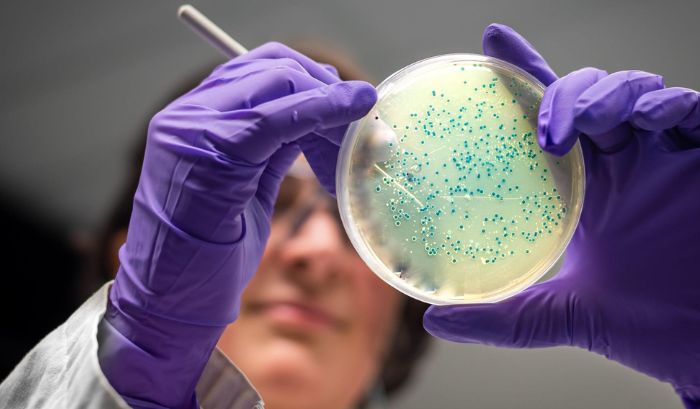
Researchers with the help of artificial intelligence (AI) have developed two new potential antibiotics that could kill drug resistant gonorrhoea and Methicillin-resistant Staphylococcus aureus (MRSA).
The primary goal of the new innovation was to kill the superbugs in laboratory and animal tests.
For that purpose, the prominent team at the Massachusetts Institute of Technology (MIT) particularly used generative AI algorithms to design more than 36 million molecular compounds, determining two new drugs that were priorly tested in the lab.
The MIT team behind this development believes that AI could start a “second golden age” in antibiotic discovery.
Mainly, antibiotics fight against bacterial infections, and now causing more than a million deaths each year.
The overuse of antibiotics has helped bacteria to dodge the drug's effects. There has been a shortage of new antibiotics for decades.
Generative AI models design novel antibiotics to combat drug resistant superbugs
Researchers have made an attempt previously using AI to examine thousands of known chemicals. This new attempt helps to identify the ones with potential to become new antibiotics.
The team has moved forward by using generative AI to specifically design antibiotics to encounter at the initial level for the sexually transmitted infection gonorrhoea and MRSA.
Scientists have trained AI by giving it the chemical structure of known compounds and subsequently alongside data to scrutinize whether they slow down the growth of distinct species of bacteria.
It helps AI to learn how bacteria are mainly affected by various molecular structures, built of atoms such as nitrogen, oxygen and carbon.
Classical approaches to new development
The two new approaches were tested to design new antibiotics with AI.
The first one clearly identified a promising starting point by searching millions of chemical fragments which approximately sized to eight to 19 atoms while the second one gave the AI free rein from the starting point.
Initially, the design process was also limited and looked similar to current antibiotics. They were making efforts to ensure inventing medicines and filtering out things which can be later toxic to human health.
Scientists have designed these antibiotics to ensure that this type of bacteria that lives harmlessly on the skin, but can cause a serious infection if it enters the body.
Professor James Collins from MIT told BBC, “AI can enable us to come up with molecules, cheaply and quickly and in this way, expand our arsenal and really give us a leg up in the battle of our wits against the genes of superbugs.”
According to Dr Andrew Edwards from the Fleming Initiative and Imperial College London, this work was “very significant” with “enormous potential” as it illustrates a novel approach to determine new antibiotics.
Nevertheless, the process would be long and expensive, with no guarantee that experimental medicines will be prescribed to patients.
In addition, Professor Chris Dowson at the University of Warwick was of the view that the study was “cool” and showed AI was a “significant step forward as a tool for antibiotic discovery to mitigate against the emergence of resistance.”


-
 PS5 games are now running on Xbox Series X
 -
 Ruby Rose recalls her 'special bond' with Hayden Panettiere
 -
 Alan Ritchson preaches message of self-love amid divorce from wife Catherine
 -
 First-ever cage fight pits human fighter against 6-foot ‘Terminator’ robot
 -
 Carrot Top's extortionist sets record straight on threat claims
 -
 Taylor Swift fangirls over husband Travis Kelce with adorable gesture
 -
 Justin Trudeau's blossoming romance with Katy Perry worries political allies
 -
 New Found Glory announces death of guitarist Chad Gilbert