
Jinnah’s Pakistan
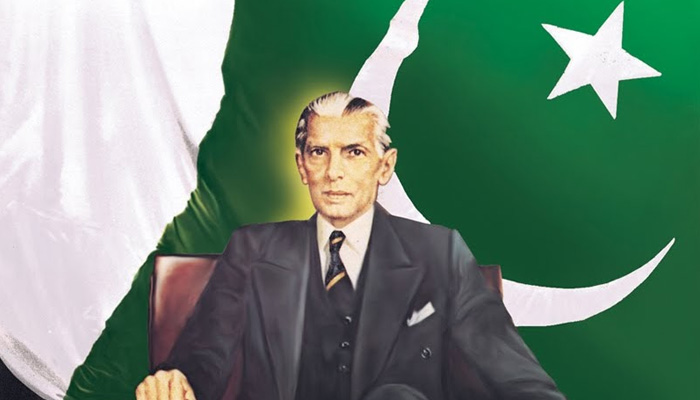
It was the 27th of Ramazan that God blessed Indian Muslims with Pakistan. That was the fulfillment of the dream of Quaid-i-Azam and his colleagues, which they had seen just seven years back and shared it with the people in Lahore in the form of “Pakistan Resolution” on 23 March 1940. Quaid-i-Azam, a one-time ambassador of Hindu-Muslim unity, was so dejected with the ground realities that in this address at the Aligarh Muslim University on 5 February, 1939, explained: “The position was most unfortunate. The Mussalmans were like dwellers in No Man’s Land; they were led by either the flunkeys of the British Government or the camp followers of the Congress. Whenever attempts were made to organize the Muslims, toadies and flunkeys on the one hand and traitors in the Congress camp on the other frustrated the efforts. I began to feel that neither could I help India, nor change the Hindu mentality, nor could I make the Mussalmans realize their precarious position. I felt so disappointed and so depressed that I decided to settle down in London. Not that I did not love India; but I felt utterly helpless.” In such an hapless situation, Iqbal considered Jinnah asthe only Muslim capable of leading the Indian Muslims through the storm of the political crisis they confronted. He believed that the future of Islam in Asia largely rested on complete organization of Indian Muslims.
This evolutionary process had come to an end on 23 March 1940. After passing the Pakistan Resolution at Lahore, Quaid-i-Azam Mohammad Ali Jinnah and his colleagues were firmly set on course to create an independent state for Muslims of India. The vision Quaid had for this state is reflected in his sayings. While talking to Mr. Doon Campbell, Reuter’s correspondent in New Delhi in 1946, he said, “The new state would be a modern democratic state with sovereignty resting in the people and the members of the new nation having equal rights of citizenship regardless of religion, caste or creed.”
His yearning for independence is reflected in what he wrote in May 1947 and as recorded by Dr. Z. H. Zaidi in The Jinnah Papers that, “Pakistan means not only a matter of power and security; there are things of the spirit involved in it. It means sovereignty of people and it will be all that it stands for. Will not people say with those Arabs who said, What does it matter, how weak and poor our homelands are, if only we are masters in them.”
In line with the Quranic injunctions, he wanted Pakistan to be a nation state. While talking to the people of United States in a broadcast talk on 26 February 1948, he said, “Pakistan is not going to be a theocratic state – to be ruled by priests with a divine mission.” He in fact wanted to create a state that would foster socio-economic justice. In a public address in Chittagong on 26 March, 1948, he said, “Pakistan should be based on (the) sure foundations of social justice and Islamic socialism – no other ‘ism’ – which emphasise equality and brotherhood of man.” He was averse to nepotism and in his presidential address to the Constituent Assembly on 11 August 1947, he said, “I want to make it quite clear that I shall never tolerate any kind of jobbery, nepotism or any influence directly or indirectly brought to bear upon me. Wherever I will find that such a practice is in vogue, or is continuing anywhere, low or high, I shall certainly not countenance it.” He staunchly believed in civil equity and had repeatedly asserted that the citizens of Pakistan would be equal irrespective of there caste or creed. While making a statement on protection of minorities in Pakistan in New Delhi on 13 July, 1947, he said that, “Minorities to whichever community they belong, will be safeguarded... They will be, in all respects, the citizens of Pakistan without any distinction of caste or creed.” He always considered women as an important segment of the society and wanted abolition of evil customs and discrimination against them. While addressing Muslim League Annual Session in Lahore on 22 March, 1940, he said, “if political consciousness is awakened amongst our women, remember your children will not have much to worry about ….”
In Quaid-i-Azam Mohammad Ali Jinnah, we had one of the most extraordinary leaders that humanity could ever produce. His acumen and political vision won us the independence and in his saying lays the golden principles that would lead to our salvation only if we follow these.







-
 AI Revolution Will Create More Jobs, Not Replace Them, Says Nvidia CEO
 -
 Princess Beatrice, Eugenie Resort To Begging King Charles: ‘We Won't Go Quietly!’
 -
 Australian Scientists Develop World’s First Quantum Battery In Major Energy Storage Breakthrough
 -
 Elon Musk Says Winning Oscar Becomes 'embarrassment' As Audience Drops
 -
 Argentina Exits World Health Organization Following US Lead: What It Means For Public Health And Diplomacy?
 -
 How Keith Urban Is Holding Up With Nicole Kidman's Rumoured 'romance' With Costar Simon Baker
 -
 ‘Emotionally Loaded’ Prince Harry Exposes Himself And Meghan Markle With ONE Mistake
 -
 Robert Pattinson Teases ‘extraordinary’ Storyline For ‘The Batman: Part II’
 -
 Gamers Reacts To NVIDIA DLSS 5, Label It AI Slop
 -
 Zendaya Reveals Inside Details Of Filming 'Euphoria 3'
 -
 'Nickelodeon' Actor Chris O’Neal Arrested In Malibu
 -
 Can You Trust AI With Science? Study Finds ChatGPT Often Gets Facts Wrong
 -
 Nvidia DLSS 5 Games List: Every Confirmed Title We Know So Far
 -
 Prince William Gets Forced Into A Tough Spot: ‘Its Outrageous Cut Them Loose!’
 -
 Adam Melchor Gets Roasted Recalling Childhood Bond With Michael B. Jordan: 'So Brave Adam Continue Sharing Your Truth'
 -
 Mysterious AI Model Sparks DeepSeek V4 Speculation