Australian scientists develop world’s first quantum battery in major energy storage breakthrough
Quantum battery prototype took femtoseconds to charge and stored the energy for nanoseconds
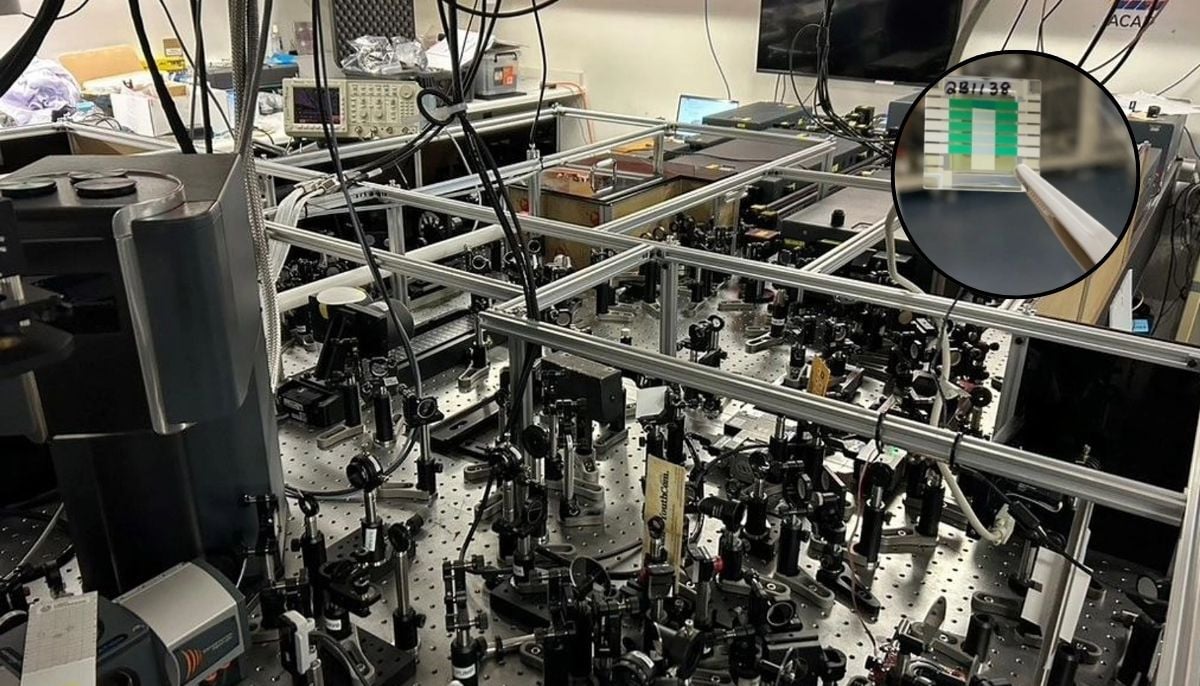
In a major energy breakthrough, Australian scientists have developed the world’s first proof-of-concept quantum battery.
The researchers led by the Commonwealth Scientific and Industrial Research Organisation (CSIRO), have developed a next-generation battery prototype, which can be charged wirelessly with a laser, marking a major step towards the energy storage future.
Quantum batteries often work on the principles of quantum mechanics to store energy and are more efficient than conventional ones.
According to the study lead author and researcher Dr. James Quach of the CSIRO, the first prototype is efficient in completing a full cycle of a battery, meaning once you charge the battery, you store energy and can discharge it.
The prototype is different from the conventional batteries as traditional ones take more time to charge.
On the other hand, “quantum batteries have this really peculiar property where the larger they are, the less time they take to charge,” said Quach.
The difference in charging capacity is due to a distinguished feature known as “collective effects” in which quantum cells charge faster as the number of cells increases.
Quach and his team first demonstrated this property in 2022, but back then they did not come up with a way to extract energy from that prototype.
Features of quantum battery
The new quantum battery prototype which is documented in the journal Light: Science & Applications took femtoseconds to charge and stored the energy for nanoseconds.
According to Quach, if the battery took 1 minute to charge, six orders of magnitude would keep it charged for a couple of years.
With the capacity of only a few billion electron volts, the current prototype is not powerful enough to power anything useful.
“What we need to do next is … to increase the storage time. You want your battery to hold charge longer than a few nanoseconds if you want to be able to talk to someone on a mobile phone.” Quach added.
Prof Andrew White, who leads the quantum technology laboratory at the University of Queensland, said, “Quantum batteries could provide energy “coherently … with the minimum energy cost to the quantum computers.”


-
 China’s bold Mars plan: Map entire Red Planet by 2028
 -
 Swiss drought reveals Roman secrets that could redraw ancient maps
 -
 SpaceX’s Starship engine failure raises questions over NASA’s moon mission
 -
 SpaceX Starship Flight 14 reaches orbit after successful insertion burn
 -
 Asteroid Bennu: NASA samples reveal how it was born from fire and ice
 -
 Harvard scientists detect mysterious radio signal from planet outside our solar system
 -
 Scientists may have found a way to grow food on Mars
 -
 Why Earth’s 24-hour day isn’t quite as fixed as you think