Scientists map hidden Antarctic Marginal Ice Zone in Southern Ocean for first time
MIZ is dynamic boundary of the Southern Ocean where waves, sea ice, climate, and Antarctic wildlife meet
Scientists for the first time have developed a more accurate way to measure the Antarctic Marginal Ice Zone (MIZ) across the Southern Ocean by using revived 1980s radar technology.
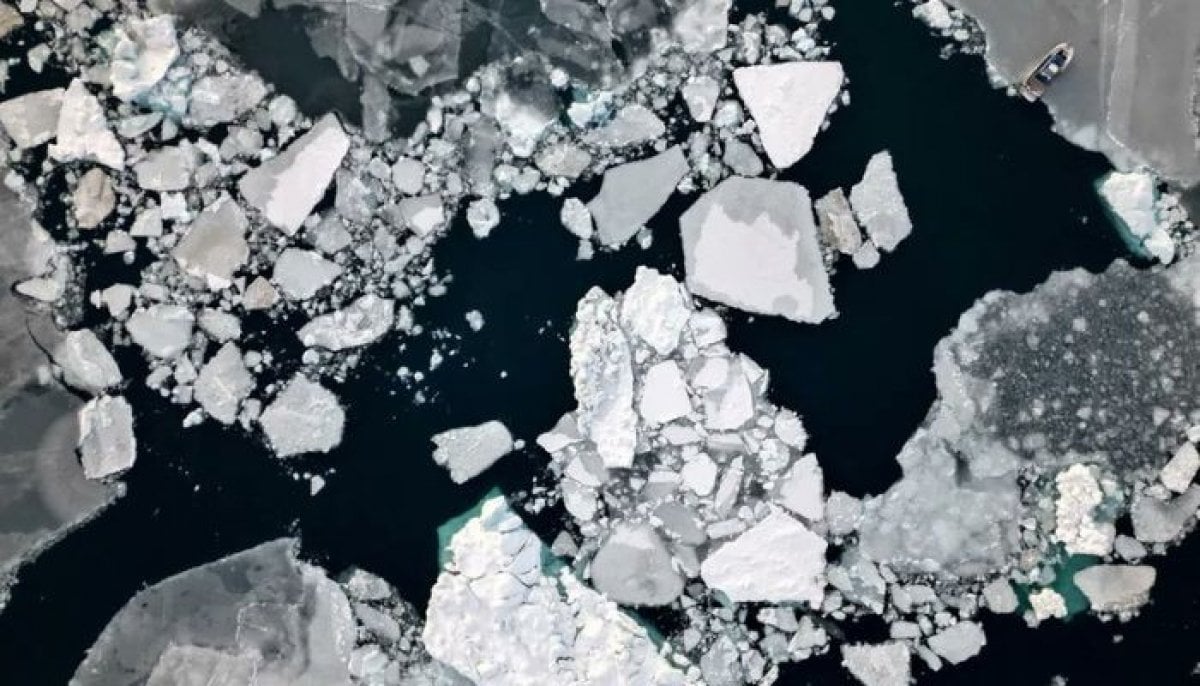
Marginal Ice Zone is the outer, wave-affected edge of the Antarctic sea-ice system where waves from the Southern ocean break up and move ice chunks.
The recent study led by the University of Tasmania (UTAS), in collaboration with the University of Melbourne and other institutions. According to lead author Dr Alex Fraser from the Australian Antarctic Program Partnership at UTAS, the recent research aims to unlock secrets regarding the true nature of MIZ.
As per findings published in Nature Communications, around 16 percent of Antarctica’s sea-ice zone is affected by waves , thereby rejecting the traditional definition of MIZ which defines this zone using only sea-ice concentration.
Moreover, the width of this zone also varies between roughly 35km to 180 km depending on season and longitude.
"Traditionally, the MIZ has been defined as the region with sea-ice concentration between the arbitrary thresholds of 15% and 80%, as seen by satellites.”
According to researchers, “However, sea-ice concentration has nothing to do with the actual MIZ definition from the World Meteorological Organization (WMO): 'the region of ice cover which is affected by waves and swell penetrating into the ice from the open ocean.'”
The findings also explore how breaking up sea ice is responsible for the increased exchange of moisture, heat and gases between atmosphere and ocean.
Owing to this process, the phytoplankton flourishes in the region, a critical element in the Antarctic food web.
"The wave action makes the MIZ a highly dynamic region of intensive ocean-ice-atmosphere interaction, but before our study, we didn't really know how the Antarctic MIZ varies seasonally in space and time," Dr. Fraser said.
The Marginal Ice Zone in the Southern Ocean holds significant importance as this is the region where ice, atmosphere, ocean and wildlife interact most intensely. For instance, the zone helps in climate regulation and sea-ice protection. It also acts as a marine ecosystem hotspot and used in better forecasting to track sea ice decline.
The recent findings will prove beneficial for future prospects, such as navigational precision, allowing the researchers to accurately target the MIZ for future research voyages.
Understanding these wave-ice interactions is considered important to unlocking the reasons behind the dramatic decline in Antarctic sea-ice extent observed since 2016.


-
 Starship flight 14: Why SpaceX’s first-ever orbital test matters to NASA’s Artemis
 -
 New study explains 364-day Qumran calendar puzzle
 -
 Why does time feel faster as you age? Science explains
 -
 Scientists name newly discovered snake after Guns N' Roses' Slash
 -
 SpaceX secures three new NASA crew flights: What to know
 -
 Sovereign AI fund in talks to back Political Sciences: What to know
 -
 What recent discovered Moon Crater Means for Future Astronauts
 -
 Scientists discover new wild cat species in Bolivia for the first time in a century