Blue Origin's next launch date? NASA chief reveals recovery timeline, lunar mission plans
The tragic incident occurred in Cape Canaveral, Florida, during the test flight on May 29
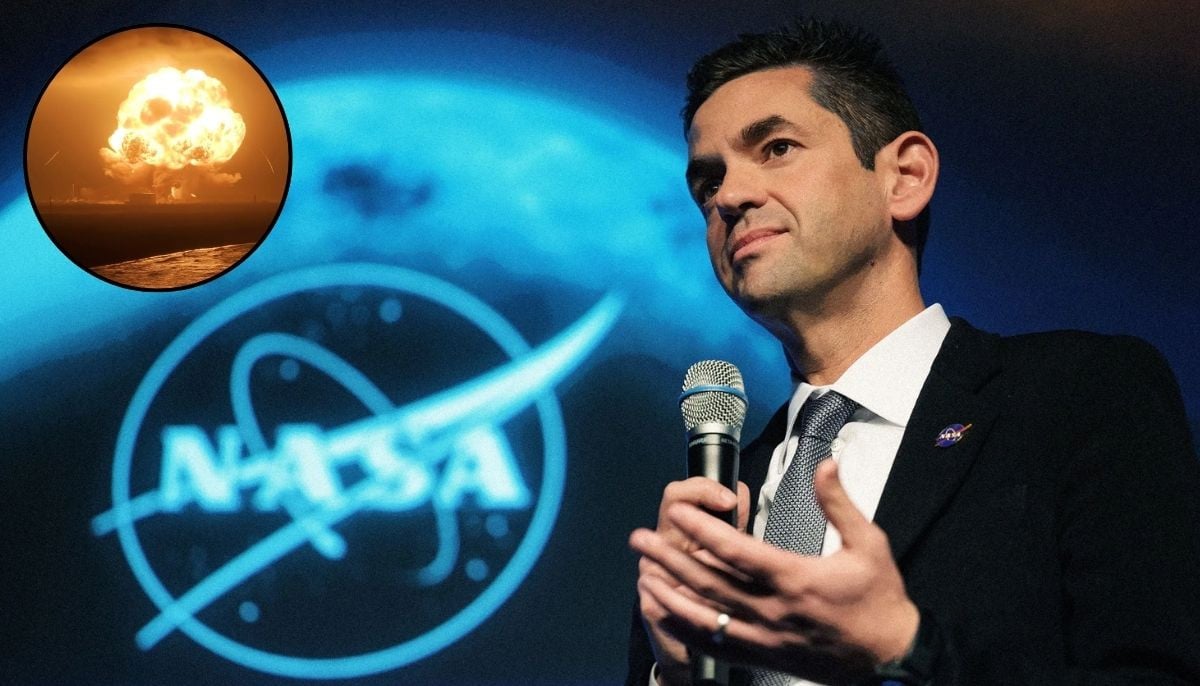
Jeff Bezos-owned Blue Origin suffered a major setback earlier this week when its New Glenn rocket exploded on a launchpad during the test flight.
Besides Blue Origin, this explosion-turned-into massive fireball also caused major concerns for NASA as well as this is the same rocket which is going to be involved in 2028 uncrewed lunar missions.
On Monday, talking to CNBC’s Morgan Brennan at the CEO Council Summit, NASA administrator Jared Isaacman revealed the timeline regarding the recovery of the New Glenn rocket and the space agency's upcoming lunar mission plans.
According to Isaacman, the recovery “will take some serious time” to restore the launchpad. “A 2028 timeframe is within the realm of a possible launchpad recovery,” Isaacman said.
NASA chief continued, “We’re all getting organized generally around the idea that we certainly want to see Blue Origin be very successful. So recovering, getting the pad recovered, providing subject matter expertise, root cause analysis for sure. Let’s figure out what’s broken, and then we have to keep moving forward.”
The unexpected explosion is going to impact NASA plans as well as the US space agency has awarded contracts to Blue Origin in pursuit of the highly-anticipated Artemis program. Under this mission, the agency is aiming to return the astronauts to the lunar surface by 2028.
The partnership includes the upcoming launch of Blue Origin’s uncrewed MK1 Blue Moon lander, which would set to fly atop the New Glenn rocket later this year.
Now Isaacman argued that delivering heavy payloads and landers to the moon will require a rocket that could withstand such load.
He suggests that these requirements will likely necessitate the use of SpaceX’s Falcon Heavy owned by Elon Musk, a super heavy-lift rocket capable of transporting the significant mass required for such missions.
“In terms of heavy lift, you know, real heavy lift, you’ve got SpaceX and Blue Origin, and obviously one of them is down a pad right now,” Isaacman said.
Blue Origin designed New Glenn to take on Elon Musk’s SpaceX’s Falcon 9 rocket. However, the tragic incident has somehow dampened the ambitions of the company to enter and win the space race.






-
 Astronomers just solved a 10-billion-year-old Milky Way mystery
 -
 Why China is crashing a spacecraft into asteroid 2015 XF261
 -
 Australia's Great Barrier Reef at extreme risk of ‘ecosystem collapse’, scientists warn
 -
 James Webb Space Telescope reveals how black holes feed themselves
 -
 Japan’s upper-close asteroid flyby: Why scientists said it was too dangerous
 -
 Scientists find hidden structure inside Orion Nebula
 -
 China launches first of 1,000 space-computing satellites
 -
 Perseid meteor shower 2026: Here is everything to know about peak dates and best viewing times