Astronomers find universe's faintest planet after 11 years of hide-and-seek
The planet is considered a 'young Jupiter'
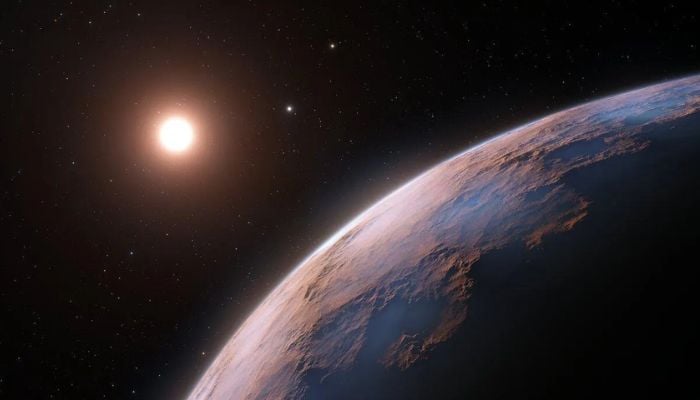
Astronomers have discovered the universe’s dimmest planet orbiting a young star, Beta Pictoris, after more than a decade of cosmic hide-and-seek.
In a recent breakthrough, two separate research teams, one led by Scottish and German scientists and other by a California led spotted the cold giant planet within days of each other late last year.
To detect it, the team used different telescopes including the European Southern Observatory’s Very Large Telescope (VLT) in Chile and NASA’s James Webb Space Telescope.
The discovery holds significant importance as the newly discovered faintest planet has been hidden for 11 years in archival data, blurred by the glare of its host star and two other known companion planets.
Speaking about the characteristics of the planet, it is slightly larger than Jupiter, having an orbital period of 91 years. It is approximately 100 times fainter than the other planets in the system. The planet is located in Beta Pictoris star which is 63 light-years.
The planet is considered a "young Jupiter," providing researchers with a unique view of a planetary system still in the process of stabilizing.
“The giant planets have formed, but smaller terrestrial planets could still be forming. Beta Pictoris is probably our best look at a planetary system just after it has formed and is still in the process of stabilizing” from hurtling asteroids and comets,” University of California San Diego’s Aidan Gibbs, who led the second team, said.
According to University of Edinburgh’s Ben Sutlieff, “We’ve now built a picture of this planet and we are very excited to see what more can be learned about it.”





-
 US finally confirms weapons in orbit: What it means for space warfare
 -
 How China's FAST telescope is mapping the cosmic gas behind star birth
 -
 Did Sun eat super-Earth? New study says maybe
 -
 Did Sun swallow a super-Earth? Scientists search for its ‘fingerprints’
 -
 Blue Origin sets sights on Mars with new NASA network
 -
 NASA, IBM launch open-source lunar foundation AI model to help map ice, craters on moon
 -
 Bacteria can remember without brain, new study finds
 -
 Fast radio bursts may unlock secrets of dark matter, energy and neutrinos