Are Milky Way’s coldest stars actually alien megastructures? New study explores
Among all stars, red and white dwarf are ideal candidates to host such structures

Researchers in a recent breakthrough study have found the possibility of structures in the Milky Way that could be built by advanced alien civilizations.
In the research study conducted by Amirnezam Amiri of the University of Arkansas, the team explores that the coldest objects appeared in our galaxy may not be the stars at all but they could be alien-made energy-collecting structures,
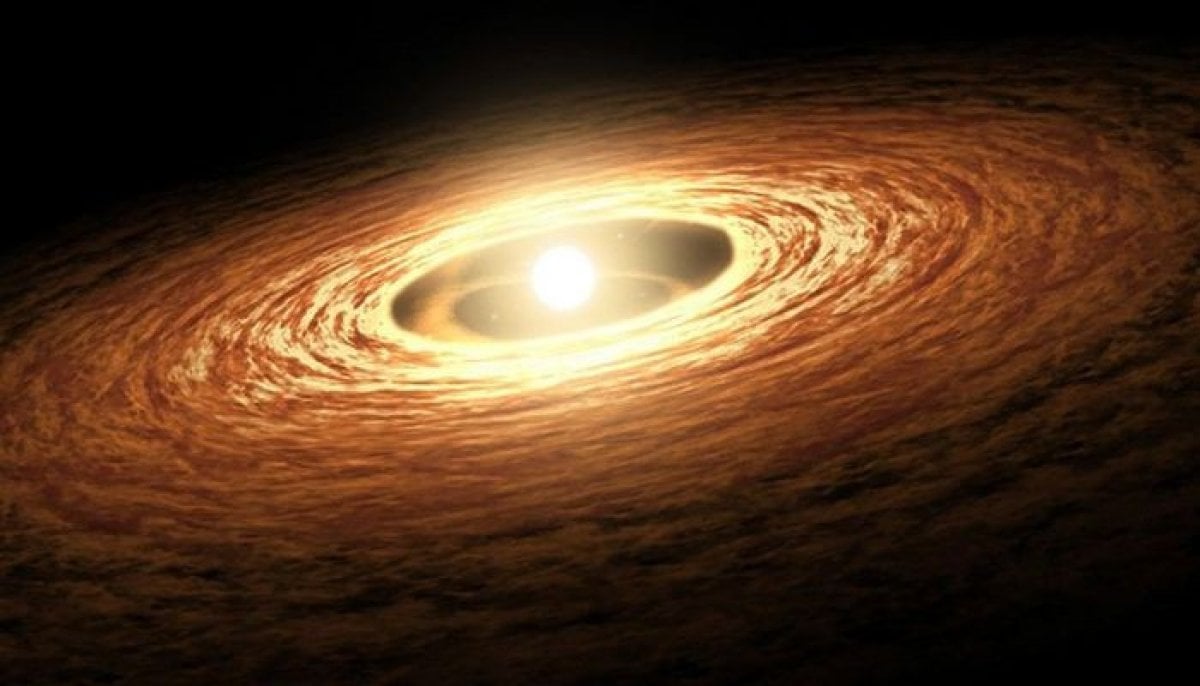
The research also explores the emergence of hypothetical “Dyson swarms”, the concept first proposed by physicist Freeman Dyson in 1960.
As per findings, scheduled to be published in the journal Universe, modern science favors the “Dyson swarm” model which is a collection of independent orbiting structures over a single solid shell. Because the scientists believe that a star cannot be surrounded by this shell due to engineering limitations.
Speaking about the types of stars which can host these megastructures, red dwarfs are ideal candidates given their expanded lifecycle and small size.
According to the study, “a Dyson swarm could orbit a red dwarf at a distance of roughly 0.05 to 0.3 AU, requiring far less construction material than one built around a larger star like the Sun.”
Besides red dwarfs, the white ones are also highly suitable due to their compact nature, making them more energy-efficient for an advanced civilization.
If proven, the study could change the understanding of astronomers about the stars. For this purpose, the James Webb Space Telescope is the primary apparatus for their search due to its superior infrared sensitivity.Moreover, projects like Hephaistos are searching the millions of stars for these signs.


-
 Scientists develop technology to send smells through phones
 -
 Earth’s close encounter with giant asteroid Apophis is less than 3 years away
 -
 Chinese astronomers discover real-life three-body system unlike Liu Cixin’s fiction
 -
 Hunter’s Moon 2026: When and how to watch October’s full moon
 -
 Elon Musk’s Mars colonization dream faces reality check from Nobel laureate
 -
 NASA competition model 2.0 cuts mission selection by 45%
 -
 A ‘neglected’ neutrino may hold the key to why the Universe exists
 -
 Can cancer drugs be made in space? Here’s what the new mission aims to find out